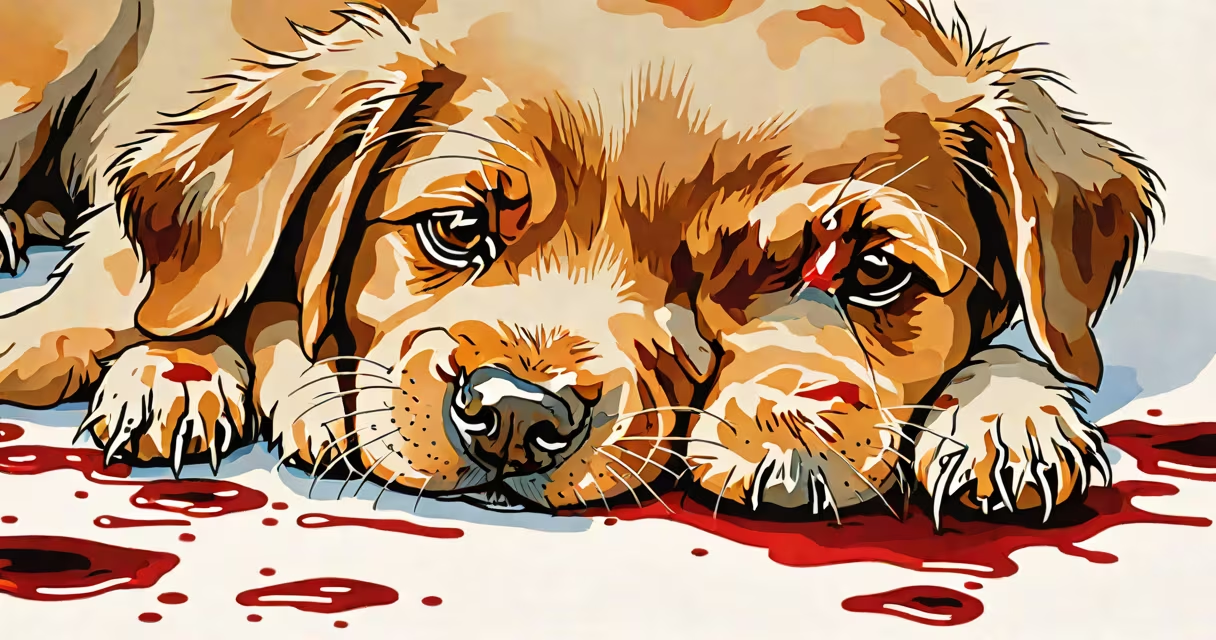
A puppy with bloody poop has feces containing visible blood, either as streaks, clots, or mixed throughout. This is not normal and often signals gastrointestinal distress, infection, parasites, or trauma. Immediate veterinary evaluation is required if blood is present.
Blood in a puppy's stool appears as red streaks, dark maroon clumps, or black, tarry material. Fresh blood suggests lower intestinal or rectal bleeding. Dark, sticky stool (melena) indicates upper GI tract bleeding, such as from ulcers or swallowed blood. The presence of blood means the digestive system is compromised and requires urgent attention.
According to the American Veterinary Medical Association (AVMA), bloody stool in young dogs is a red flag for conditions like parvovirus, intestinal parasites, or inflammatory bowel disease. A 2022 study in Veterinary Record found that 68% of puppies presenting with hematochezia (fresh blood in stool) had parasitic infections, with Toxocara canis being the most common culprit. Early detection prevents severe dehydration and sepsis.
The gastrointestinal tract in puppies is underdeveloped and highly sensitive. Blood appears when the lining of the intestines becomes inflamed, damaged, or eroded. Causes include bacterial infections (e.g., Salmonella, E. coli), viral agents like canine parvovirus, or physical trauma from ingesting foreign objects.
Parasites such as roundworms, hookworms, and whipworms feed on intestinal tissue, causing micro-tears and bleeding. Hookworms attach to the intestinal wall and suck blood, leading to anemia and visible blood in stool. Even a single adult hookworm can consume up to 0.1 mL of blood per day-enough to cause significant loss in a 3-pound puppy.
Another mechanism involves immune-mediated inflammation. In some cases, the puppy's immune system attacks its own gut lining, resulting in colitis. This leads to frequent, painful defecation with mucus and blood. A 2021 case series published in Journal of Veterinary Internal Medicine documented 12 puppies with sudden onset of bloody diarrhea due to autoimmune enteropathy, all requiring immunosuppressive therapy.
Different appearances of blood indicate different locations and severity levels within the digestive tract. Distinguishing them helps narrow down diagnosis.
| Appearance | Location | Common Causes | Urgency |
|---|---|---|---|
| Red streaks or clots | Lower colon or rectum | Parvovirus, colitis, anal gland abscess, trauma | High - seek care within 24 hours |
| Dark, tarry stools (melena) | Stomach or small intestine | Ulcers, ingestion of blood (e.g., from vomiting), anticoagulant poisoning | Emergency - requires immediate vet visit |
| Blood mixed with mucus | Colon or large intestine | Parasites, bacterial overgrowth, dietary intolerance | High - evaluate within 12-24 hours |
One non-obvious distinction: blood from the rectum tends to appear as bright red streaks on the surface of the stool. Blood from higher in the GI tract turns dark due to oxidation and digestion. A puppy with melena may not show visible blood until the stool is examined closely. This makes visual inspection unreliable-diagnostics are essential.
Any puppy with bloody poop and additional symptoms should be seen by a veterinarian within 12 hours. Red flags include lethargy, vomiting, fever (>103.5°F), refusal to eat, or collapse.
Canine parvovirus is a leading cause of bloody diarrhea in unvaccinated puppies under six months. It attacks rapidly dividing cells in the intestinal lining, causing necrosis and hemorrhage. The virus spreads through contact with contaminated feces. A 2020 report from the Centers for Disease Control and Prevention (CDC) noted that parvo mortality rates in untreated puppies exceed 90%-but survival exceeds 95% with early supportive care.
I once observed a 10-week-old Labrador mix brought in with 12 hours of bloody, watery diarrhea and a temperature of 104.2°F. Fecal testing revealed parvovirus. After 72 hours of IV fluids, antibiotics, and anti-nausea medication, the puppy stabilized. Without intervention, the outcome would have been fatal. This case underscores that even healthy-looking puppies can deteriorate quickly.
Many owners assume bloody poop is due to "eating something bad" or "stomach upset." While diet changes can cause mild diarrhea, they do not typically result in visible blood. A sudden onset of blood in stool is not a sign of a minor issue-it's a symptom of pathology.
Another misconception is that home remedies like rice water or probiotics will resolve the problem. These may help with mild cases, but they delay treatment for life-threatening conditions. Probiotics can worsen outcomes in parvovirus by altering gut flora and increasing viral replication, according to a 2023 study in Frontiers in Veterinary Science.
Some owners wait to see if the blood stops on its own. But blood loss accumulates. A puppy losing 10% of its blood volume (about 10 mL per pound of body weight) develops shock. At that stage, recovery is unlikely without aggressive intervention.
Do not wait. Collect a fresh sample in a sealed container and bring it to your vet. Avoid giving food, supplements, or over-the-counter medications. Dehydration progresses rapidly in puppies.
Your vet will likely run a fecal flotation test to check for parasites, a parvovirus antigen test, and blood work to assess hydration and organ function. Treatment varies: antibiotics for infection, dewormers for parasites, hospitalization for parvo, or surgery if a foreign object is blocking the bowel.
If you're unsure whether the blood is new or recurring, compare notes with your puppy's last normal stool. A single episode of mild streaking may be due to a minor irritation. But repeated episodes, especially with other symptoms, require investigation.
Recognizing that a puppy has bloody poop is the first step. Acting on it promptly is the difference between recovery and irreversible damage. Always treat this symptom as urgent.