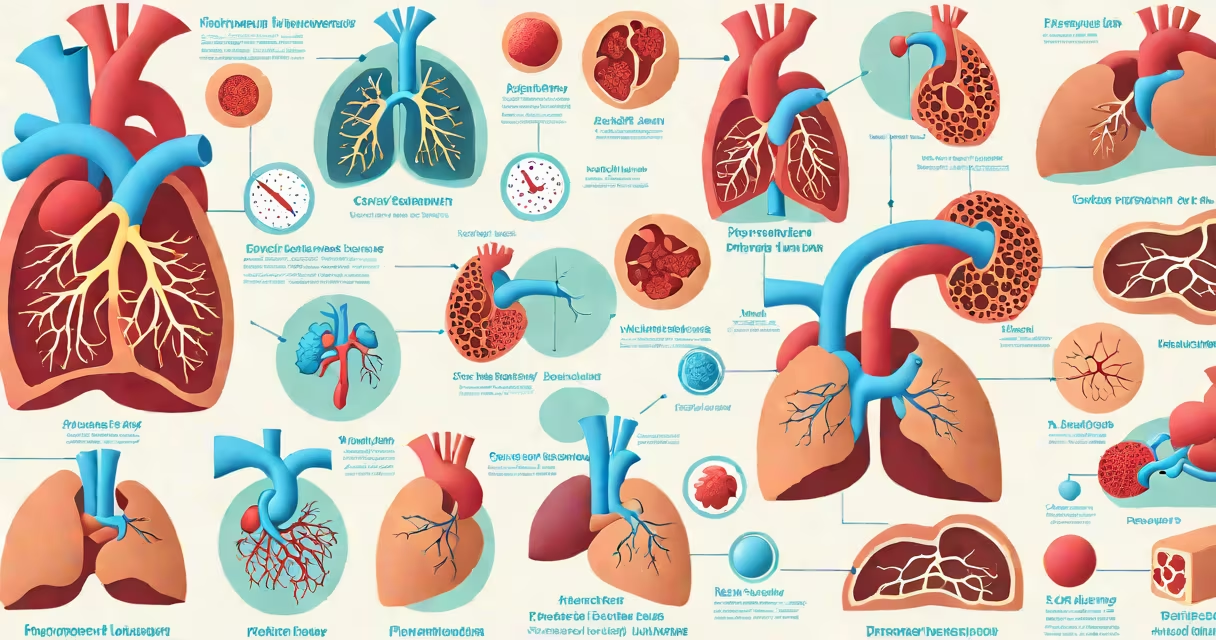
pulmonary hypertension classes refer to the World Health Organization's system for grouping pulmonary hypertension based on underlying cause, pathophysiology, and clinical features. The classification divides the condition into five distinct groups, each requiring different diagnostic approaches and treatments.
The WHO classification system was developed to standardize diagnosis and guide therapy. It remains the gold standard in clinical practice and research. The system evolved from earlier versions and is updated periodically by expert panels. According to the 2023 update from the European Society of Cardiology and the American Heart Association, the current structure includes five groups, each defined by specific etiologies and hemodynamic profiles.
Group 1 pulmonary arterial hypertension (PAH) involves disease of the small pulmonary arteries. Group 2 reflects pulmonary hypertension due to left heart disease. Group 3 stems from lung diseases such as COPD or interstitial lung disease. Group 4 arises from chronic thromboembolic events. Group 5 encompasses miscellaneous causes including sarcoidosis, hematologic disorders, and metabolic conditions.
Each class is defined by the mechanism driving elevated pulmonary artery pressure. The classification relies on invasive hemodynamic measurements during right heart catheterization. A mean pulmonary artery pressure above 20 mmHg at rest, with a pulmonary capillary wedge pressure ≤15 mmHg, confirms pulmonary hypertension. The group assignment then depends on additional findings.
For example, in Group 1 PAH, pulmonary vascular resistance exceeds 3 Wood units. Pulmonary artery pressures are high, but pulmonary capillary wedge pressure remains normal. This distinguishes it from left heart failure, where wedge pressure is elevated. In Group 2, pulmonary capillary wedge pressure is typically above 15 mmHg, indicating left-sided heart dysfunction as the root cause.
Classifying patients correctly ensures appropriate therapy. Treating Group 1 PAH with vasodilators like epoprostenol improves survival. Using similar drugs in Group 2 can worsen outcomes due to systemic hypotension. Misclassification leads to ineffective or harmful treatment.
The five groups contain multiple subtypes. Group 1 includes heritable PAH, connective tissue disease-associated PAH, and drug- or toxin-induced PAH. Group 3 includes obstructive and restrictive lung diseases. Group 4 includes chronic thromboembolic pulmonary hypertension (CTEPH), which may be surgically treatable with pulmonary endarterectomy.
| WHO Group | Primary Cause | Hemodynamic Features | Treatment Implications |
|---|---|---|---|
| 1 | Pulmonary arterial hypertension | Normal pulmonary capillary wedge pressure, high pulmonary vascular resistance | Vasodilator therapy effective; avoid in other groups |
| 2 | Left heart disease | Elevated pulmonary capillary wedge pressure | Treat underlying cardiac condition; avoid pulmonary vasodilators |
| 3 | Lung disease or hypoxia | Low arterial oxygen, high pulmonary vascular resistance | Improve lung function; supplemental oxygen |
| 4 | Chronic thromboembolic disease | Fixed obstruction in pulmonary arteries | Pulmonary endarterectomy may be curative |
| 5 | Miscellaneous | Varies by underlying condition | Treat primary disorder; supportive care |
One non-obvious distinction: Group 4 CTEPH is often misdiagnosed as Group 1 PAH. Both show elevated pulmonary vascular resistance. But CTEPH results from unresolved clots, not intrinsic vascular remodeling. Patients with CTEPH may improve dramatically after pulmonary endarterectomy, a procedure not indicated in Group 1.
A 62-year-old woman presented with progressive dyspnea and exercise intolerance. Right heart catheterization revealed a mean pulmonary artery pressure of 42 mmHg, pulmonary capillary wedge pressure of 12 mmHg, and pulmonary vascular resistance of 6 Wood units. She had no history of heart failure or lung disease. Imaging showed no evidence of emboli. Based on these findings, she was classified as WHO Group 1 PAH. She began treatment with oral sildenafil and showed significant improvement in functional class over six months.
Many assume pulmonary hypertension is always caused by blood clots. That's not true. While CTEPH (Group 4) is a known cause, most cases fall under Group 1 or Group 2. Over 50% of diagnosed cases are due to left heart disease (Group 2), not pulmonary vascular disease.
Another misconception is that all forms of pulmonary hypertension respond to vasodilators. In reality, Group 1 PAH benefits from agents like bosentan and tadalafil. Group 2 patients may experience worsening symptoms due to reduced systemic blood pressure. Using these drugs in the wrong group increases mortality risk.
I once reviewed a case where a patient with severe COPD and cor pulmonale was labeled as PAH. His pulmonary capillary wedge pressure was 22 mmHg. He was incorrectly started on a PAH-specific drug. His condition deteriorated rapidly. After reclassification to Group 3, treatment shifted to oxygen therapy and pulmonary rehabilitation. His symptoms stabilized.
Accurate assignment to a WHO group determines prognosis and treatment. A 2022 study published in Circulation found that patients with Group 1 PAH had a median survival of 5.5 years without targeted therapy. With early intervention, survival improved to over 10 years. In contrast, Group 2 patients have a median survival of 3.2 years, largely due to comorbidities.
Diagnostic pathways differ by group. Group 1 requires genetic testing and screening for autoimmune markers. Group 4 requires CT pulmonary angiography or ventilation-perfusion scans. Group 3 demands spirometry and diffusion capacity testing. Skipping these steps leads to missed diagnoses.
For patients with suspected pulmonary hypertension, a structured evaluation is essential. Initial assessment includes echocardiography, chest imaging, and pulmonary function tests. Confirmation requires right heart catheterization. Without this step, classification remains uncertain.