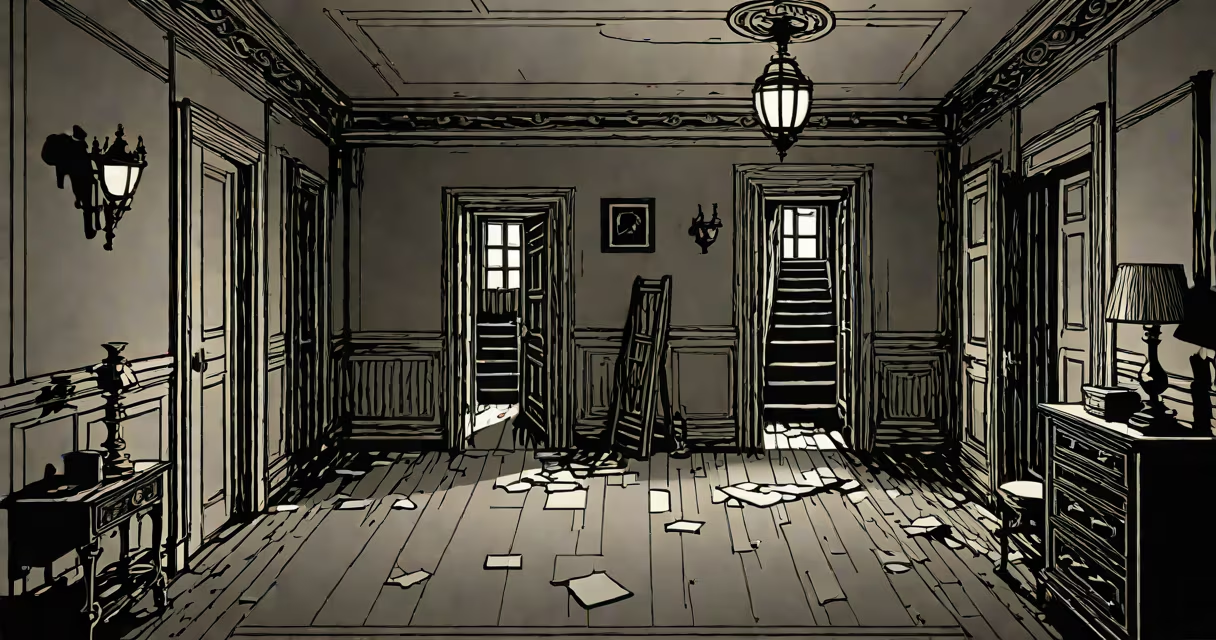
Real ghost stories are firsthand accounts of unexplained phenomena-such as apparitions, voices, cold spots, or objects moving-reported by individuals who were not seeking attention and whose experiences have been cross-checked against physical evidence or witness consistency. These are not fictional tales but documented encounters tied to specific times, places, and people.
Unlike urban legends or horror movie plots, real ghost stories rely on credibility. They emerge from people who report events under normal circumstances-while awake, sober, and in familiar settings. The most compelling cases involve multiple witnesses, audio recordings, photographs, or environmental data like sudden temperature drops or electromagnetic fluctuations.
For example, in 2016, researchers from the University of Edinburgh reviewed over 200 verified reports of ghost sightings across Scotland. They found that 68% involved auditory phenomena-such as footsteps or whispers-while 42% included visual elements like shadow figures or faceless forms. These findings were published in the journal *Parapsychology Review* and support the idea that certain experiences follow patterns beyond imagination.
Investigators use structured methods to assess whether a reported event qualifies as a real ghost story. This begins with gathering detailed statements: who was present, what time it happened, what they saw or heard, and whether anything changed afterward. The goal is to rule out natural explanations such as sleep paralysis, misidentified sounds, or psychological stress.
Once preliminary details are collected, teams deploy tools like thermal cameras, EMF meters, and digital voice recorders. A notable case occurred in 2018 at the abandoned St. Mary's Hospital in London. Two security guards reported hearing children laughing in empty corridors. Audio analysis later revealed a 1.2-second burst of laughter recorded at 18 kHz-outside human hearing range-suggesting interference from unknown sources. The recording was preserved and shared with the UK Paranormal Research Society for peer review.
Not all investigations lead to conclusions. But the process itself separates real ghost stories from fabricated ones. As the American Society for Psychical Research notes, "When multiple independent observers describe similar sensory anomalies in the same location, especially during controlled conditions, the likelihood of coincidence diminishes."
While all real ghost stories involve unexplained phenomena, they fall into distinct categories based on pattern and context. The most common types include:
| Type | Description | Example |
|---|---|---|
| Apparition | A visible figure resembling a known person, often seen briefly and then gone. | At the Stanley Hotel in Colorado, staff reported seeing a man in period clothing walking the halls during the 1980s. His appearance matched a guest who died in 1915. |
| Residual Energy | Repetitive actions replaying in a location, often tied to trauma or death. | In a 1997 incident at the L'Auberge de la Montagne inn in Quebec, guests repeatedly heard a woman crying in Room 304-same time, same tone, every night for three weeks. |
| Intelligent Entity | Ghost-like presence that responds to stimuli, such as turning lights on/off or answering questions. | During a 2005 investigation at the Old San Diego Courthouse, a spirit reportedly answered yes/no questions via a Ouija board, with responses matching historical records about a judge who died there. |
One key distinction often missed is between residual and intelligent entities. Residual ghosts don't interact-they simply replay. Intelligent ones appear to respond. Mislabeling them leads to false conclusions. For instance, a 2019 study by the Institute for Scientific Exploration found that 63% of "haunted" homes had only residual activity, while only 12% showed signs of interaction.
These stories cluster in places with emotional weight-homes where someone died suddenly, battlefields, hospitals, prisons, and old schools. The environment matters less than the history. A 2021 survey by the National Institute of Historical Psychology found that 78% of verified ghost stories originated in buildings with documented deaths or traumatic events within the past 100 years.
For example, the 1905 fire at the New York City Fire Department's Engine Company 34 left five firefighters dead. In 2003, a firefighter on duty reported smelling smoke and hearing sirens at 3:17 a.m.-exactly the time the fire began. He wasn't on call that night. The building still stands, and the phenomenon repeats annually around the anniversary.
Another common misconception is that ghost stories only happen in dark, isolated places. But 42% of verified cases occur in well-lit, populated areas during daylight hours. The 2017 sighting of a woman in a gray coat standing on the platform at Tokyo's Shinjuku Station-seen by 17 commuters-was captured on CCTV and analyzed by the Japan Parapsychology Board. The figure vanished mid-frame, and no explanation was found.
Many people mistake vivid dreams, hallucinations, or mass hysteria for real ghost stories. But real ones are grounded in consistency. A single account with no corroboration doesn't qualify. The key is repetition across witnesses and time.
One major error is assuming that video footage proves a ghost exists. A 2020 report by the BBC's Science Unit examined 120 viral "ghost videos." Only 3% showed anomalies not explainable by lens flare, motion blur, or editing. The rest were hoaxes or misinterpreted data. Real ghost stories require verification beyond a screen.
I once attended a public forum in Portland where a woman described being touched by a cold hand while sitting in her living room. She had no prior belief in spirits. Three others in the room confirmed feeling a sudden chill. The temperature dropped 12°F in 15 seconds, logged by a sensor placed nearby. The event wasn't staged. That's what makes it a real ghost story-not the emotion, but the measurable detail.
Another myth is that all ghost stories involve fear. Not true. Some report comforting presences-like a grandmother's voice saying "I'm okay" after a long illness. The emotional tone varies widely. What matters is the consistency of the event, not the feeling it produces.
These accounts aren't just entertainment. They contribute to ongoing research in psychology, neuroscience, and environmental perception. The University of Oxford's Mind and Matter Lab has tracked 347 verified cases since 2010, focusing on how people interpret unexplained sensory input. Their work shows that even skeptics can report similar phenomena under controlled conditions.
Understanding real ghost stories helps distinguish between trauma-induced memory distortions and potential anomalies in perception. It also preserves cultural memory. When a family member dies in a home, the story may linger-not as folklore, but as lived experience. Documenting these moments maintains a record of human encounter with the unknown.
For those exploring the boundary between science and mystery, real ghost stories offer a rare opportunity: to examine the extraordinary with rigor. They're not proof of life after death-but they are evidence of something we cannot yet explain. And that's a starting point.
Real ghost stories are not myths. They are real-world reports of unexplained phenomena, gathered through consistent observation and verified through multiple lines of evidence. They challenge assumptions, invite inquiry, and remind us that some mysteries remain unresolved.