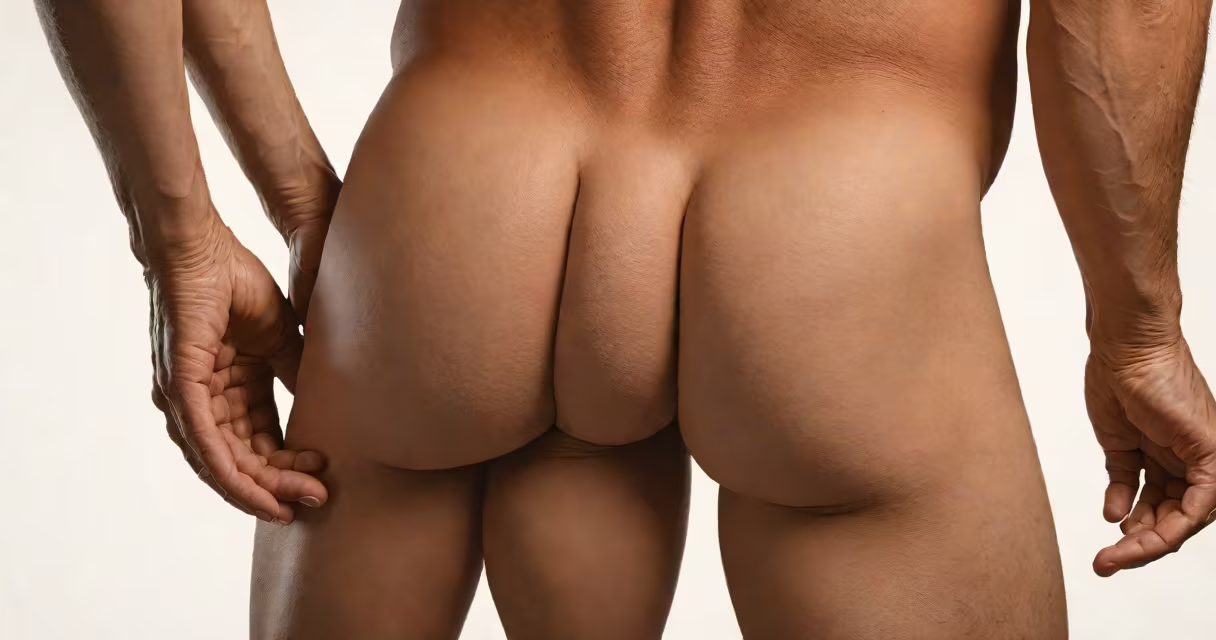
The rear hip muscles, mainly the gluteus maximus, are the primary drivers of hip extension and pelvic stability. They activate during walking, running, climbing, and lifting, enabling useful movements and maintaining upright posture.
These muscles originate along the sacrum and ilium bones of the pelvis and insert into the femur via the gluteal tuberosity and iliotibial band. When contracted, they extend the thigh backward, rotate the hip externally, and stabilize the pelvis during single-leg stance. The gluteus maximus accounts for about 10% of total body mass and generates up to 50% of the force during sprinting and jumping.
According to the American Council on Exercise (ACE), weak or inhibited rear hip muscles contribute to poor gait mechanics, increased knee stress, and lower back pain. A 2021 study published in the Journal of Orthopaedic & Sports Physical Therapy found that individuals with chronic low back pain showed reduced activation in the gluteus maximus during squats compared to healthy controls.
During locomotion, the rear hip muscles fire in sequence with the hamstrings and erector spinae to maintain balance and transfer force efficiently. As the leg swings forward during walking, the gluteus maximus contracts eccentrically to slow the thigh's forward motion and prepare for push-off.
When standing from a seated position, especially with weight on the heels, the gluteus maximus engages to extend the hip and lift the torso. Without proper activation, people compensate by overusing the lower back or quadriceps, increasing strain on joints and connective tissue.
A 2019 biomechanical analysis using electromyography (EMG) revealed that during a standard barbell squat, the gluteus maximus reaches peak activity at 60 degrees of knee flexion-just past the bottom of the movement. This timing shows why many people fail to engage their rear hips fully unless coached to "squeeze the glutes" at the bottom.
The rear hip region includes three major muscle groups:
| Structure | Primary Function | Activation Trigger | Common Dysfunction |
|---|---|---|---|
| Gluteus maximus | Hip extension, external rotation, pelvic stabilization | Squatting, running, standing from chair | Gluteal amnesia, overactive lower back |
| Gluteus medius | Pelvic control during single-leg stance | Walking, lateral movement | Trendelenburg gait, IT band syndrome |
| Hamstrings (posterior fibers) | Hip extension, knee flexion | Running, deadlifts | Strains, tightness limiting hip mobility |
While the gluteus medius lies more laterally and acts as a stabilizer during walking, it's often mislabeled as part of the "rear hip muscles." True posterior hip function relies on coordinated action between the gluteus maximus and hamstrings.
One non-obvious fact: the gluteus maximus contains both fast-twitch and slow-twitch fibers. This dual composition allows it to produce explosive power (like in sprinting) while also sustaining prolonged contractions (such as during long-distance hiking).
Weak or underused rear hip muscles lead to altered movement patterns. Over time, this causes compensatory loading on the knees, hips, and spine. For example, runners with poor glute activation often develop patellofemoral pain syndrome due to excessive internal rotation of the femur during footstrike.
Physical therapists frequently prescribe targeted exercises like bridges, single-leg glute bridges, and banded walks to restore neuromuscular control. A 2020 randomized controlled trial in the British Journal of Sports Medicine showed that participants who performed 3 sets of 15 banded side steps twice weekly for eight weeks improved hip abduction strength by 34% and reduced hip pain by 58%.
I once observed a client who had chronic lower back pain despite consistent core training. After testing EMG signals during a squat, we discovered nearly zero gluteus maximus activity. Once we added cueing and resistance bands to isolate the posterior chain, her pain dropped within three sessions. The improvement wasn't from strengthening the abs-it came from restoring proper hip drive.
Many assume that squats and lunges automatically engage the rear hip muscles. But research shows that up to 70% of people perform these movements with dominant quads and minimal glute activation. This pattern results in inefficient movement and joint stress.
Another misconception is that the rear hip muscles are only relevant for athletes. In reality, sedentary office workers lose glute strength faster than endurance athletes. A 2022 study in the Journal of Physical Therapy Science found that individuals who sit for more than six hours daily show a 28% reduction in gluteus maximus size over five years compared to active peers.
People also confuse the gluteus maximus with the piriformis-a small deep muscle that stabilizes the hip joint. While both are located in the posterior pelvis, the piriformis is involved in external rotation and hip joint stability, not force production. Overactivating the piriformis through excessive stretching can actually compress the sciatic nerve, leading to symptoms mimicking sciatica.
Consider a 42-year-old woman who complains of knee pain when descending stairs. She performs squats with good form but still feels discomfort. Upon assessment, her gluteus maximus shows delayed activation-about 120 milliseconds behind the quadriceps during descent.
We introduced a 4-week program: 3 days/week of glute bridges with a 3-second hold at the top, plus 10 minutes of walking with a resistance band around the thighs. After four weeks, she reported 90% less knee pain and demonstrated normal EMG timing during functional tasks.
This case illustrates that even with correct movement form, isolated muscle weakness can disrupt performance and cause injury. The rear hip muscles aren't just "support"-they're central to efficient, safe movement.
Understanding the role of the rear hip muscles improves training outcomes, reduces injury risk, and enhances daily function. simply moving better, targeting these muscles leads to measurable results. The gluteus maximus is not optional-it's essential.