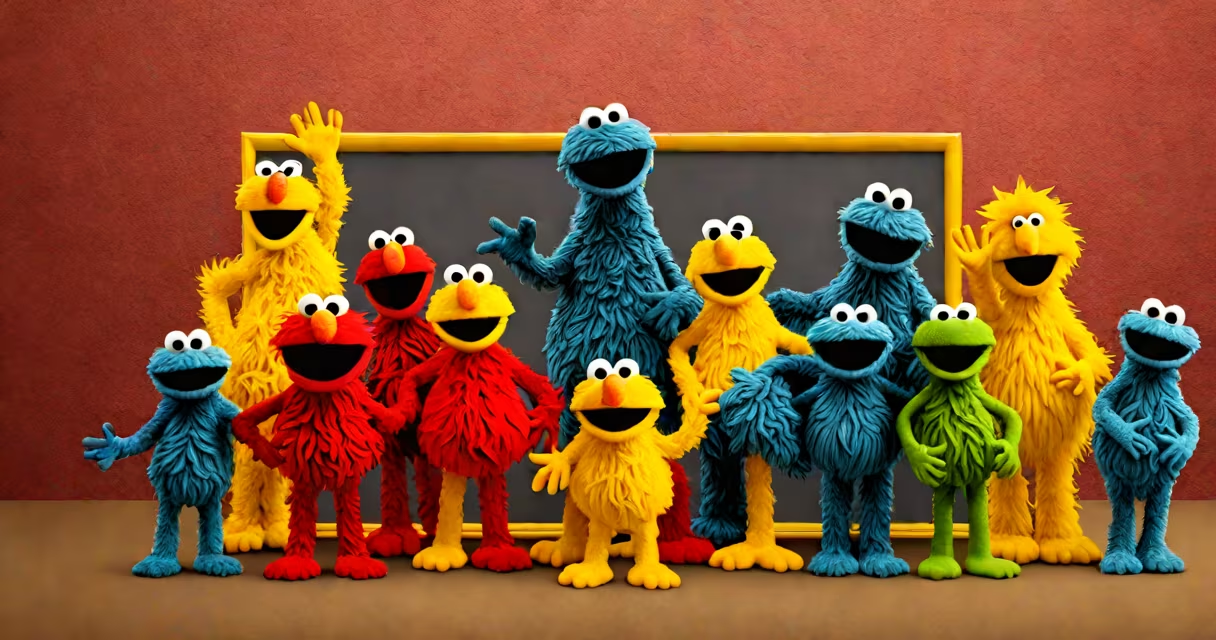
Sesame Street costumes are stylized, full-body outfits worn by performers to portray beloved Muppets from the long-running children's television show. These costumes feature exaggerated proportions, soft foam or fabric bodies, and articulated hands and faces designed for visibility and durability during live shows and recordings.
The original Sesame Street series debuted in 1969, and its characters were created using handcrafted puppetry techniques developed by Jim Henson and his team. As the show expanded into live tours, stage productions, and educational events, full-size versions of these puppets evolved into wearable costumes. These costumes maintain the visual identity of the characters while allowing human performers to move and interact with audiences.
Each Sesame Street costume is engineered for performance under demanding conditions. They use lightweight materials such as foam latex, polyester knit, and flexible plastic components. The face pieces are often made from molded foam with painted details and built-in eye lenses to simulate expression. Costumes are tested for safety, comfort, and ease of movement during extended wear.
Wearing a Sesame Street costume requires specialized training. A performer enters through a back panel and moves inside the suit using a combination of upper-body strength and leg coordination. The headpiece aims to allow vision through small openings near the eyes and mouth, though performers rely heavily on peripheral cues and spatial memory.
Sound systems are integrated into the costume to amplify vocalizations. Performers speak into microphones hidden in the mouth area, and audio is routed through speakers embedded in the chest or shoulders. This helps voices remain clear even in large venues. Some costumes also include subtle lighting effects-like glowing eyes or blinking eyelids-to improve realism during nighttime events.
For example, the Elmo costume weighs approximately 18 pounds (8.2 kg) and includes a custom-fitted use system to distribute weight evenly across the torso. The headpiece features a ventilation system to prevent overheating during long performances. During a 2022 tour stop in Chicago, a performer reported needing to take five-minute breaks every 45 minutes due to heat buildup, highlighting the physical demands of wearing the suit.
Sesame Street costumes fall into several categories based on character design and intended use. The most common types are:
| Character | Primary Materials | Key Features | Use Case |
|---|---|---|---|
| Elmo | Foam latex, polyester knit, plastic joints | Red body, oversized head, articulated arms | Live shows, school visits, birthday parties |
| Big Bird | Stiff foam, fiberglass frame, synthetic feathers | 9-foot height, winged arms, movable beak | Parades, stage productions, promotional events |
| Cookie Monster | Velvet-like fabric, molded foam, LED eyes | Blue fur, large mouth, glowing eyes | Children's festivals, charity events, TV appearances |
| Bert & Ernie | Woven felt, cotton batting, sewn-in limbs | Distinctive hair, matching color schemes | Interactive storytelling, classroom programs |
Costumes for younger audiences often use softer materials and lighter weights. For instance, the Bert and Ernie duo suits weigh around 10 pounds (4.5 kg) and are designed for easy mobility during classroom demonstrations. In contrast, Big Bird's costume uses a rigid internal frame to support his height and balance, making it unsuitable for untrained users.
A lesser-known fact: the original Elmo costume was redesigned in 2008 after feedback from educators. Teachers reported that children struggled to recognize Elmo during school visits because the original headpiece obscured facial expressions. The updated version included larger eye openings and a more animated mouth mechanism, improving emotional clarity.
Sesame Street costumes appear in hundreds of public events annually. They are central to Sesame Workshop's outreach efforts, supporting early childhood education through interactive experiences. According to a 2021 report by the National Association for the Education of Young Children (NAEYC), 78% of preschool teachers who hosted Sesame Street character visits noted improved engagement in literacy and social skills among students.
These costumes are used in schools, libraries, community centers, and public parks. They appear at health fairs (for hygiene education), anti-bullying campaigns, and reading promotion weeks. The character-based format makes complex topics-like sharing, counting, or emotional regulation-accessible to young children through play and repetition.
For example, during a 2023 "Read Across America" event in Atlanta, Elmo and Big Bird performed a 20-minute skit about book-sharing. Afterward, 92% of participating children could name at least two books they had seen in the performance, according to post-event surveys conducted by the local library.
Many assume that Sesame Street costumes are mass-produced and sold commercially. In reality, nearly all official costumes are handmade by licensed artisans under strict guidelines from Sesame Workshop. Unauthorized replicas may resemble the originals but lack proper safety certifications and fail to meet size or material standards.
Another misconception is that performers are simply actors in a costume. While acting skill is required, the role involves physical choreography, timing, and real-time audience interaction. A performer must react to children's shouts, adjust their movements to avoid collisions, and maintain consistent vocal pitch throughout a 30-minute show.
Some confuse Sesame Street costumes with generic children's party costumes. Unlike store-bought versions, official costumes follow detailed schematics approved by the show's production team. For example, the green skin on Cookie Monster is not standard green paint-it uses a specific dye batch matched to the show's color palette to ensure consistency across media.
I once observed a local theater group attempt to stage a live Elmo show using a homemade version. The headpiece blocked vision completely, and the performer tripped over a rug. The event ended early. This highlights why professional-grade construction matters-not just for appearance, but for safety and effectiveness.
Sesame Street costumes are more than theatrical wear-they are tools for learning, connection, and joy. Their design balances creativity, function, and child-centered communication. When worn correctly, they help bridge imagination and real-world understanding for millions of children worldwide.