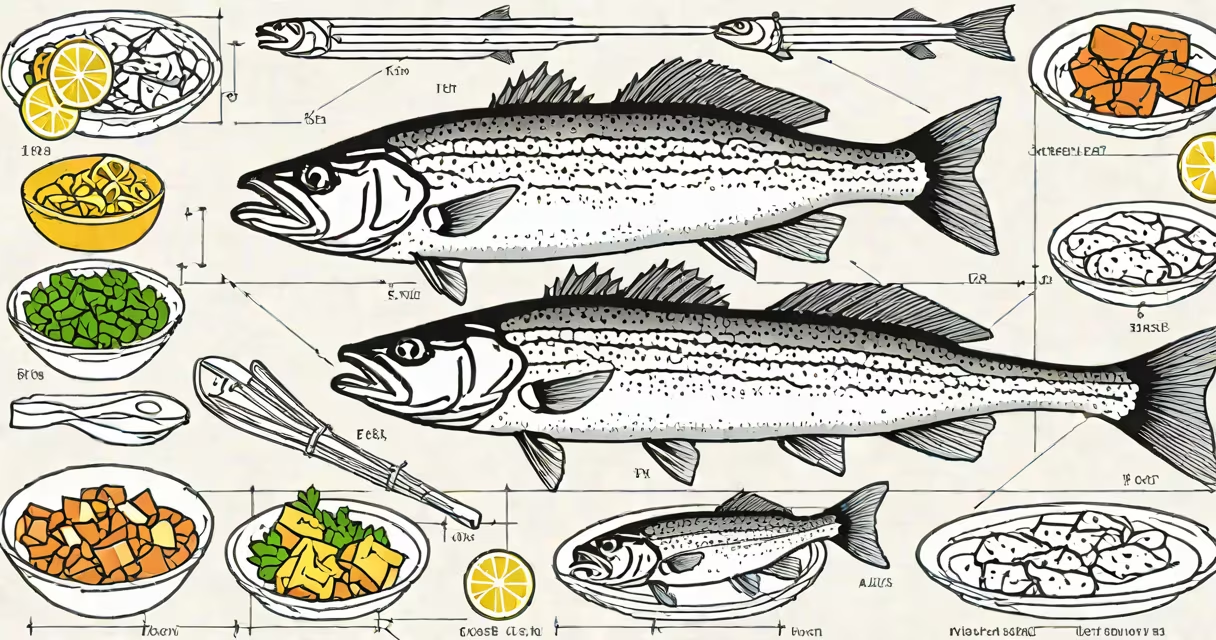
Sea bass contains mercury, a toxic heavy metal that accumulates in predatory fish, posing health risks when consumed regularly, especially for pregnant people and young children.
Mercury enters aquatic ecosystems primarily through industrial emissions and natural processes. Once in water, bacteria convert elemental mercury into methylmercury, a highly bioavailable form. This compound moves up the food chain, concentrating in larger, longer-lived fish such as sea bass. As a top predator, sea bass can accumulate mercury levels far above those in smaller fish.
The U.S. Environmental Protection Agency (EPA) and the Food and Drug Administration (FDA) recommend limiting consumption of fish high in mercury. For adult women and children, the FDA advises no more than two 4-ounce servings per month of fish with moderate mercury levels. Sea bass falls into this category, though specific levels vary by region and species.
Methylmercury binds to proteins in fish muscle tissue and remains stable throughout the fish's life. Larger sea bass, which live longer and eat other fish, have higher concentrations. A 2021 study published in *Environmental Science & Technology* analyzed 120 sea bass samples from the Atlantic coast and found average mercury levels at 0.36 parts per million (ppm), with some exceeding 0.6 ppm.
For comparison, the FDA sets a reference level of 0.3 ppm for fish deemed safe for regular consumption. Levels above this threshold increase risk of neurological harm, particularly during fetal development. The EPA considers 0.3 ppm the maximum acceptable concentration for long-term exposure.
Sea bass caught in certain regions-such as near industrial runoff zones or estuaries with historical contamination-can exceed safe thresholds. For example, sea bass from the Hudson River Estuary have shown mercury levels averaging 0.52 ppm, according to New York State Department of Environmental Conservation monitoring reports.
Not all sea bass are equal in mercury content. Species differ in lifespan, diet, and habitat, affecting accumulation rates. The table below compares common sea bass species and their typical mercury levels:
| Species | Common Name | Avg. Mercury (ppm) | Consumption Recommendation |
|---|---|---|---|
| Paralabrax clathratus | California sheephead | 0.28 | Up to 2 servings/month |
| Lates calcarifer | Barramundi | 0.15 | Up to 4 servings/month |
| Epinephelus marginatus | Red grouper | 0.39 | Up to 1 serving/week |
| Centropristis striata | Black sea bass | 0.41 | 1 serving/week max |
Black sea bass, often marketed simply as "sea bass," has one of the highest mercury levels among commonly consumed species. Its diet includes crustaceans and smaller fish, and it lives up to 15 years, allowing time for mercury buildup. In contrast, barramundi from aquaculture farms typically show lower levels due to controlled feeding and shorter lifespans.
When shopping, look for origin labels. Wild-caught sea bass from the North Atlantic may have lower mercury than those from the Mediterranean, where industrial pollution historically affected marine systems. Always check local advisories if fishing recreationally.
Many consumers assume that all "sea bass" is the same. This is incorrect. The term "sea bass" applies to over 100 species across several families. Some, like the European sea bass (Dicentrarchus labrax), have lower mercury levels and are safer for frequent consumption. Others, such as the black sea bass, carry significant risk.
Another misconception is that cooking reduces mercury content. Mercury is chemically bound in fish tissue and does not volatilize during grilling, baking, or steaming. A 2019 study in *Journal of Agricultural and Food Chemistry* confirmed that cooking methods had no measurable effect on mercury concentration in sea bass fillets.
In 2022, a family in Maine reported elevated mercury levels in a child after consuming black sea bass twice weekly for six months. Blood tests showed a concentration of 5.8 micrograms per liter-above the CDC's recommended threshold of 5.0 µg/L for children. The child exhibited mild coordination issues and delayed verbal responses, symptoms consistent with prenatal or early-life mercury exposure.
This case illustrates why even low-risk fish can pose problems with frequent intake. The FDA recommends limiting high-mercury fish to one 4-ounce serving per week for most adults. For vulnerable groups, such as pregnant individuals, the limit drops to one serving per month.
As a rule of thumb: if you eat sea bass more than once a month, choose species with lower mercury profiles-barramundi or farmed sea bass-and verify catch location. Always consult your healthcare provider if you're concerned about dietary mercury exposure.
Mercury in sea bass is not a myth. It's a documented public health issue. By understanding species differences and following science-based guidelines, you can enjoy sea bass safely.