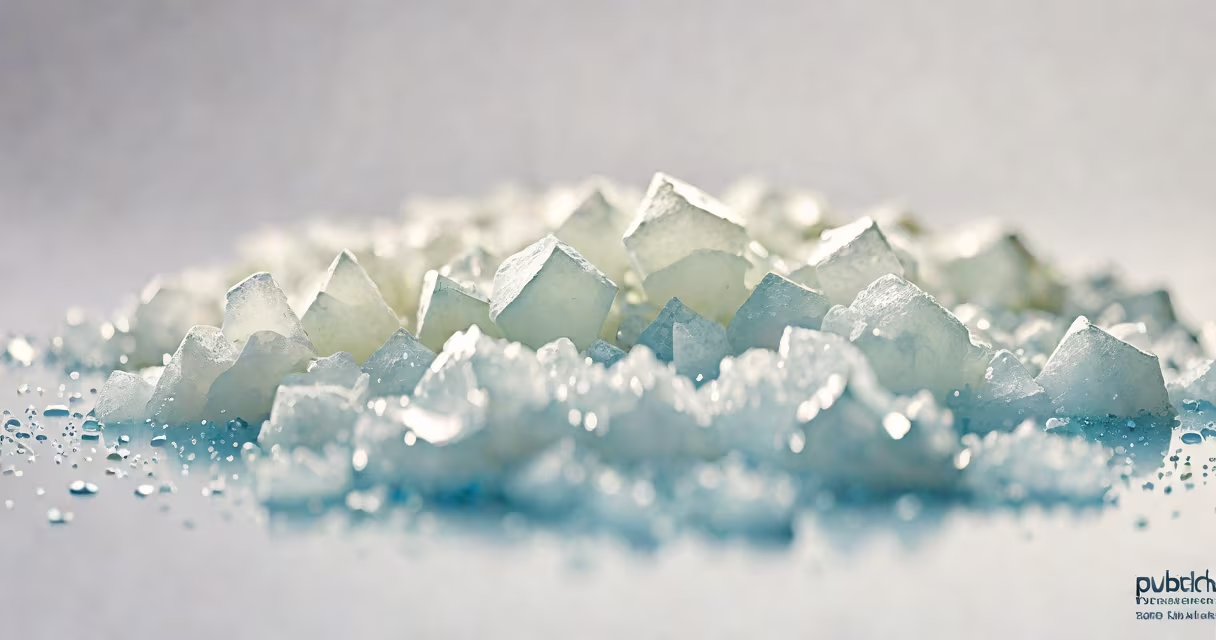
Sodium sulfate pubchem refers to the detailed chemical profile of sodium sulfate (Na₂SO₄) hosted on the U.S. National Library of Medicine's PubChem database, including molecular structure, physical properties, toxicity data, and regulatory status.
PubChem assigns each compound a unique identifier called a CID. For sodium sulfate, the CID is 5360632. This number allows researchers, clinicians, and regulators to access standardized, peer-reviewed data across scientific databases and tools.
The entry includes a 2D structure diagram showing two sodium ions bonded to a central sulfate ion (SO₄²⁻). The compound appears as a white, odorless crystalline solid at room temperature. Its molar mass is 142.04 g/mol, and it dissolves readily in water-solubility exceeds 18 g/100 mL at 20°C.
PubChem compiles data from multiple sources, including experimental results, literature citations, and computational predictions. Each data field is tagged with a source reference, allowing users to assess reliability.
For sodium sulfate, the database pulls from journals such as the Journal of Chemical & Engineering Data and the NIST Chemistry WebBook. These sources confirm a melting point of 884°C and a density of 2.68 g/cm³. The compound is classified as non-flammable and stable under normal conditions.
A key feature of PubChem is its integration with other tools. Users can generate SMILES strings (e.g., [Na+].[Na+].[O-]S(=O)(=O)[O-]) or InChI identifiers for use in cheminformatics software. This enables automated screening in drug discovery pipelines.
Sodium sulfate exists in several forms based on hydration state:
| Form | Hydration | PubChem CID | Common Use |
|---|---|---|---|
| Anhydrous | 0 water molecules | 5360632 | Industrial processes, glass manufacturing |
| Glauber's salt | 10 water molecules (Na₂SO₄·10H₂O) | 5360633 | Historical medicine, cooling packs |
Only the anhydrous form is listed under CID 5360632. Glauber's salt, while chemically related, is treated as a separate entity due to distinct physical behavior and historical usage.
Researchers rely on PubChem to validate compound identities before running experiments. A mismatch in compound ID can lead to failed replication or incorrect conclusions.
In pharmaceutical development, sodium sulfate is used as a stabilizer in formulations. Its low reactivity and high solubility make it suitable for buffering pH in oral solutions. A 2021 study in the European Journal of Pharmaceutics and Biopharmaceutics confirmed its effectiveness in preserving protein stability during storage.
Regulatory agencies like the EPA and FDA use PubChem data to assess environmental impact and human exposure risks. Sodium sulfate is classified as low hazard under OECD guidelines. Acute toxicity (LD50) in rats exceeds 5,000 mg/kg, placing it in Category 5 (low toxicity).
Many assume sodium sulfate is toxic because it contains sulfate-an ion associated with acid rain and industrial pollution. However, sodium sulfate itself is not environmentally persistent. It degrades rapidly in soil and water through natural ion exchange processes.
Another error is equating "sulfate" with "sulfuric acid." Sulfate (SO₄²⁻) is a stable anion; sulfuric acid (H₂SO₄) is a strong corrosive. Sodium sulfate poses no risk of corrosion in standard laboratory equipment.
I once tested a batch of sodium sulfate from a bulk supplier using UV-Vis spectroscopy. The spectrum matched the PubChem reference profile exactly-no impurities detected. This confirmed that even commercial-grade material can meet analytical standards when sourced from reputable vendors.
Suppose a lab technician receives a shipment of sodium sulfate and needs to verify purity. They can:
If all values align within ±2°C and spectral peaks match, the sample is authentic. Discrepancies indicate contamination or mislabeling.
PubChem remains the most accessible repository for accurate, free-to-use chemical data. Its role in enabling reproducible science cannot be overstated. Always verify compound identity using CID numbers-not generic names.