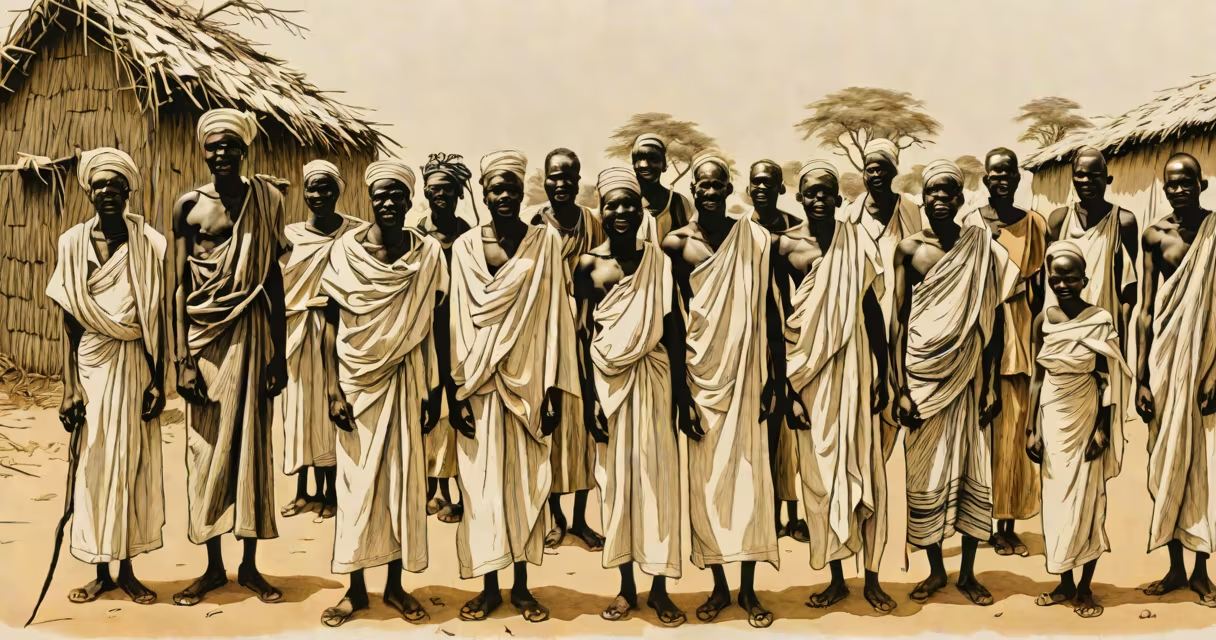
The term "south sudan people" refers to the diverse population of over 60 distinct ethnic groups living in South Sudan, a country established in 2011 after seceding from Sudan. These groups include the Dinka, Nuer, Shilluk, Bari, and Kakwa, among others, each with unique languages, customs, and historical experiences.
South Sudan's population exceeds 12 million, according to the United Nations Population Fund (UNFPA), with most people residing in rural areas. The country's ethnic composition reflects centuries of migration, intermarriage, and conflict. The Dinka, the largest group, make up approximately 35% of the population, while the Nuer account for around 15%. Other significant groups include the Balanda (10%), Azande (9%), and Luo (7%).
Language diversity is central to identity. Over 60 indigenous languages are spoken, including Dinka, Nuer, Bari, and Zande. Swahili and Arabic are also used in trade and government, though English is the official language of administration. The absence of a single national language contributes to communication challenges in governance and education.
Social organization among South Sudan people varies by ethnic group. Many communities follow patrilineal systems, where descent and inheritance pass through the male line. Clan structures are central to social cohesion, especially among the Dinka and Nuer, who organize themselves into large kinship networks. These networks often mediate disputes and manage land use.
Traditional leadership roles remain influential. Elders serve as decision-makers in many villages, settling conflicts through customary law rather than formal courts. In some regions, chiefs still hold authority over land allocation and community events. However, the role of traditional leaders has diminished in urban centers due to state institutions and modern legal frameworks.
Religious affiliations differ widely. Christianity is practiced by about 60% of the population, largely due to missionary activity since the late 19th century. Islam is followed by roughly 10%, mainly in border areas near Sudan. The remaining 30% adhere to indigenous spiritual beliefs involving ancestor veneration and nature worship. These belief systems often coexist with Christian or Islamic practices.
South Sudan's ethnic groups are distributed unevenly across its ten states. The following table outlines major groups, their approximate populations, and primary regions:
| Group | Estimated Population | Primary Regions | Language Family |
|---|---|---|---|
| Dinka | 4.2 million | Unity, Jonglei, Upper Nile | Nilo-Saharan (Eastern Sudanic) |
| Nuer | 1.8 million | Jonglei, Lakes, Western Equatoria | Nilo-Saharan (Eastern Sudanic) |
| Bari | 1.1 million | Western Equatoria, Central Equatoria | Nilo-Saharan (Eastern Sudanic) |
| Azande | 1.0 million | Western Bahr el Ghazal, Central Equatoria | Nilo-Saharan (Central Sudanic) |
| Kakwa | 600,000 | Upper Nile, Eastern Equatoria | Nilo-Saharan (Eastern Sudanic) |
Each group maintains distinct cultural practices. For example, the Dinka practice cattle herding as both economic and spiritual activity, viewing cattle as sacred gifts from God (Nhialic). The Nuer engage in elaborate ritual dances during harvest festivals and use cowrie shells in divination ceremonies. The Azande are known for their complex system of witchcraft beliefs and royal lineage systems.
Many assume "South Sudan people" refers to a single unified ethnic or cultural entity. This is incorrect. The country's identity is built on pluralism, not homogeneity. The term "South Sudanese" is used officially to denote citizenship, but it does not erase ethnic differences. In fact, the 2011 independence referendum was driven by political and ethnic divisions between northern and southern Sudan, not a shared cultural identity.
Another misconception is that all South Sudan people speak the same language. While English is the official language, it is not widely spoken outside urban centers. In rural areas, communication occurs in local languages. A 2020 study by the African Union found that only 12% of South Sudanese adults could read or write in English, compared to 78% who speak their native tongue fluently.
There is also confusion about the relationship between ethnicity and conflict. While violence in South Sudan has often been framed along ethnic lines-such as the 2013 civil war between forces loyal to President Salva Kiir (Dinka) and former Vice President Riek Machar (Nuer)-this oversimplifies the root causes. The conflict stems from competition over resources, power, and representation, not inherent ethnic hostility. According to Human Rights Watch, ethnic identity is often weaponized by political actors rather than being the core driver of violence.
In 2018, a dispute erupted in Tonj County, Unity State, between Dinka herders and farming communities from the Kakwa group. The Dinka, traditionally pastoralists, moved their cattle into farmland during a dry season, leading to crop destruction. Local elders attempted mediation under customary law, but tensions escalated when a Dinka youth was accused of killing a Kakwa farmer.
Instead of relying solely on formal courts, community leaders convened a peace meeting involving elders from both groups. They used traditional reconciliation rituals, including the offering of cattle as compensation and public apologies. The process took three weeks and restored trust. This case illustrates how South Sudan people resolve conflicts through localized, culturally grounded mechanisms rather than centralized legal systems.
I spent six weeks in Juba in 2019 observing daily life in a mixed neighborhood. I noticed that even in the capital, people identify strongly by ethnic origin. At a market in the city center, vendors from different groups spoke in their native tongues. A Dinka woman selling grain refused to accept payment in Nuer currency, saying, "I don't trust it." Yet later, she traded with a Nuer man using a shared dialect of Dinka-Nuer hybrid speech, showing how language adapts in practice.
This moment revealed a key truth: ethnic boundaries are fluid in everyday interaction. Identity is context-dependent. In a church service, a Nuer man might identify as Christian first. In a village meeting, he may prioritize his clan affiliation. The complexity of identity defies simple categorization.
Over 70% of South Sudan people live in rural areas, relying on subsistence farming, fishing, and herding. The economy remains largely informal. In contrast, urban centers like Juba and Malakal host growing populations of civil servants, traders, and refugees from neighboring countries. Juba, the capital city, has a population of nearly 700,000, with residents from all 60 ethnic groups.
Migration patterns reflect both opportunity and instability. During periods of conflict, people flee to refugee camps in Uganda, Kenya, and Ethiopia. As of 2023, the UNHCR reported over 2.3 million South Sudanese displaced abroad. Meanwhile, internal displacement within South Sudan reached 2.1 million, according to the Internal Displacement Monitoring Centre (IDMC).
Understanding the lived realities of South Sudan people requires recognizing this duality: deep cultural roots in rural settings, combined with increasing exposure to urban and global influences. Their resilience lies in adaptability, not uniformity.