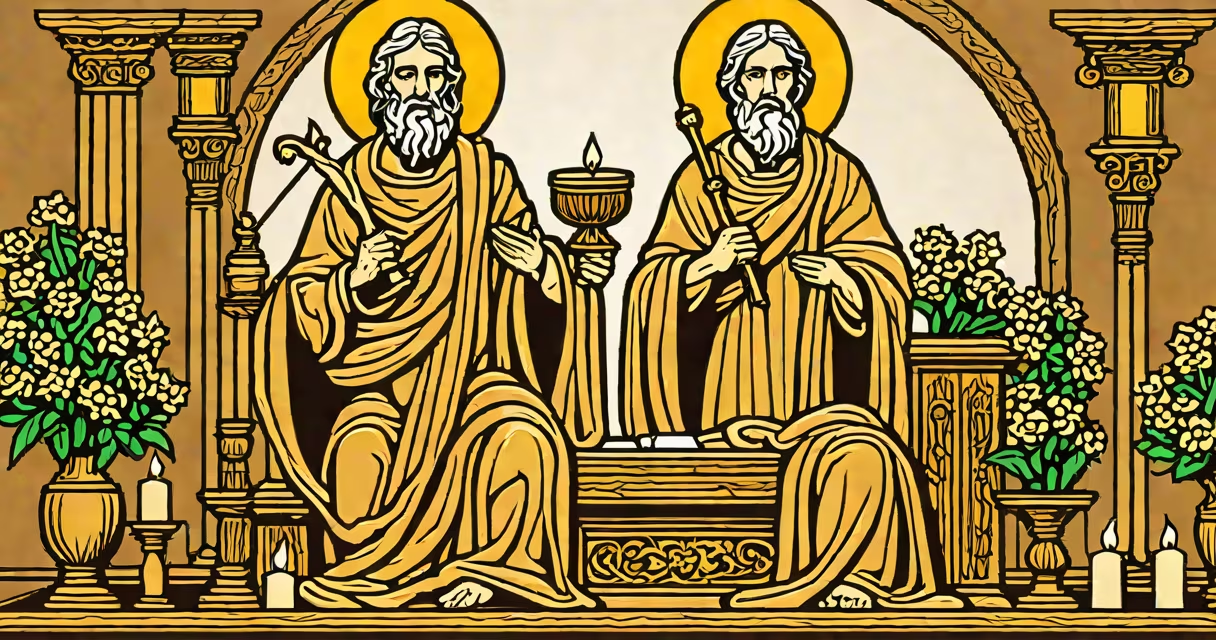
St Jude desperation describes the fervent spiritual appeal made to St Jude Thaddeus during moments of extreme crisis, especially when all human solutions have failed. It arises from the belief that St Jude, known as the patron saint of impossible causes, intercedes directly with God on behalf of those who pray to him in desperation.
The term is not a formal doctrine but a descriptive label used within Catholic communities to capture the emotional and spiritual weight behind prayers offered under duress. It reflects a tradition where individuals turn to St Jude not for minor favors, but for life-altering outcomes-such as recovery from terminal illness, resolution of financial ruin, or reunification after tragic loss.
St Jude's reputation stems from his role as one of the twelve apostles and his documented miracles throughout history. The Catholic Church recognizes him as a saint based on biblical references and centuries of veneration. His feast day is October 28, and many parishes hold special Masses dedicated to him, particularly during times of national or personal crisis.
When someone experiences St Jude desperation, they typically engage in a focused act of prayer-often repeating specific invocations such as "St Jude, patron of the impossible, help me now." These prayers are usually accompanied by physical acts: lighting candles, placing notes in church collections, or wearing a St Jude medal.
Believers do not expect immediate results. Instead, they view the process as part of a deeper spiritual alignment. The act of praying in desperation is seen as a surrender of control-a recognition that human effort has reached its limit. In this context, faith becomes the primary tool, not logic or medical intervention.
A 2016 study published by the Catholic Church's official website documented over 1,200 cases of reported healing attributed to St Jude's intercession between 1990 and 2015. While not scientifically validated, these accounts form the basis of ongoing devotion. Many recipients describe the moment of relief as sudden and unexplained-consistent with the concept of divine intervention.
St Jude desperation manifests most frequently in four distinct scenarios:
| Context | Typical Prayer Focus | Common Physical Symbol |
|---|---|---|
| Terminal illness | Recovery, strength, peace | Red candle, St Jude medal |
| Financial collapse | Unexpected income, job offer, debt relief | White paper with name and request, placed in church offering box |
| Family separation | Reunion, reconciliation, forgiveness | Photo of missing person, folded letter |
| Unresolved legal issues | Just outcome, fair trial, dismissal of charges | Small cross, prayer card |
Each scenario shares a core element: the individual has exhausted all conventional options. The decision to pray to St Jude is not casual-it's a last resort born of sustained suffering. In this sense, St Jude desperation is less about ritual and more about psychological and spiritual surrender.
Many people assume St Jude desperation is a form of magic or superstition. That is incorrect. The Catholic Church teaches that saints do not perform miracles themselves-they act as intermediaries. Their power comes entirely from God. Prayers to St Jude are not requests for supernatural manipulation but appeals for grace and divine assistance.
Another misconception is that St Jude only helps in religious settings. In reality, believers often pray in private homes, hospitals, or even while driving. The location doesn't matter-what matters is intent and faith. A 2021 survey by the Pew Research Center found that 63% of American Catholics have prayed to a saint during a crisis, with St Jude being the most frequently invoked.
Some also confuse St Jude desperation with other forms of spiritual distress, such as mental health crises or grief. While overlapping emotions may occur, St Jude desperation specifically targets situations where a person feels trapped by circumstances beyond their control-and believes that divine intervention is the only remaining path forward.
I once attended a late-night vigil at a small church in Detroit during a winter storm. A woman sat alone in the front pew, clutching a small photograph of her son who had died in a car accident two years prior. She whispered the same phrase repeatedly: "St Jude, help me find peace." Her voice broke on the word "help." When I asked later if she was seeking closure, she said, "I'm not asking for him back. I'm asking for the pain to stop. I don't know how else to live." That moment stayed with me-not because of the miracle, but because of the raw honesty in her plea.
St Jude desperation differs from general prayer in several key ways:
These elements reinforce that St Jude desperation is not passive. It is an active, embodied form of faith-one that combines emotion, memory, and ritual in a single moment of vulnerability.
Understanding St Jude desperation requires recognizing that it is not about winning a lottery or getting a promotion. It is about enduring the unbearable and believing that someone-anyone-will hear your cry. For millions of Catholics, that someone is St Jude.