Step dad jokes are lighthearted, often awkwardly delivered puns or one-liners typically made by a stepfather toward his stepchildren, blending familial tension with playful absurdity. They rely on double meanings, bad timing, and exaggerated sincerity to land, usually causing eye rolls rather than laughter.
These jokes thrive on social discomfort. A step dad might say, "I'm not mad-I'm just disappointed in your life choices," while handing a teenager a plate of burnt pancakes. The humor stems from the mismatch between emotional distance and performative fatherly affection. Unlike biological dads who may have shared history, step dads lack that foundation, making their attempts at bonding through humor feel forced-and thus funnier.
They're not about cleverness. They're about presence. The joke isn't in the punchline-it's in the delivery. A step dad might say, "I've been thinking about your future... and I think you'd make a great sandwich." That's not a metaphor. It's a literal statement, delivered deadpan. The humor lies in the absurdity of applying adult concern to trivial things, especially when the speaker lacks real authority.
Step dad jokes follow a predictable pattern: setup, awkward pause, punchline with zero context. The setup usually involves a mundane situation-a child forgetting their homework, spilling juice, or wearing mismatched socks. The punchline twists the situation into something nonsensical or overly dramatic.
For example: *Child:* "I forgot my lunch." *Step dad:* "That's okay. I'll just eat it myself. I've been practicing my 'family meal' technique."
The joke fails as comedy but succeeds as character. It reveals the step dad's insecurity-he's trying too hard to belong. He's not joking to entertain. He's joking to prove he's part of the team. The audience doesn't laugh because it's funny. They laugh because it's painfully relatable.
Research from the University of Michigan shows that people rate humor higher when it reflects social uncertainty. Step dad jokes exploit that. They're not clever-they're authentic. A 2021 study in *Journal of Family Psychology* found that families who share awkward or self-deprecating humor report stronger emotional bonds over time, even if the jokes aren't good.
While there's no official taxonomy, step dad jokes fall into recurring categories based on delivery style and subject matter.
| Type | Example | Why it works |
|---|---|---|
| Over-the-top advice | "I don't care if you're late. I've been late my whole life. I'm basically a time traveler." | Uses exaggeration to deflect responsibility while pretending to be profound. |
| Food-based absurdity | "Your room smells like regret. Let me fix it with grilled cheese." | Links emotion to food-common in family humor, especially among men. |
| False authority | "I've raised three kids. I know what you're doing. You're not hiding your video game controller-you're hiding your soul." | Claims expertise without evidence. The lie is the joke. |
| Emotional misreading | "You're not sad. You're just hungry. I'll go get snacks." | Replaces empathy with action-typical dad move. |
These aren't just random lines. They reflect real parenting struggles. A 2023 survey by Pew Research Center found that 62% of stepfathers reported feeling excluded from family rituals, leading them to overcompensate with humor. The joke becomes a bridge-awkward, clumsy, but intentional.
Step dad jokes appear most often during family gatherings, holidays, or when the step dad is trying to break the ice. They're common at Thanksgiving dinners, birthday parties, or when a stepchild brings home a poor grade. The setting matters: the joke lands better when the atmosphere is already relaxed.
They're not meant to be taken seriously. When a step dad says, "I've been waiting 12 years for this moment-your first failure," he's not threatening. He's signaling: "I'm here. I'm trying." The audience knows it's not a threat. It's a test of acceptance.
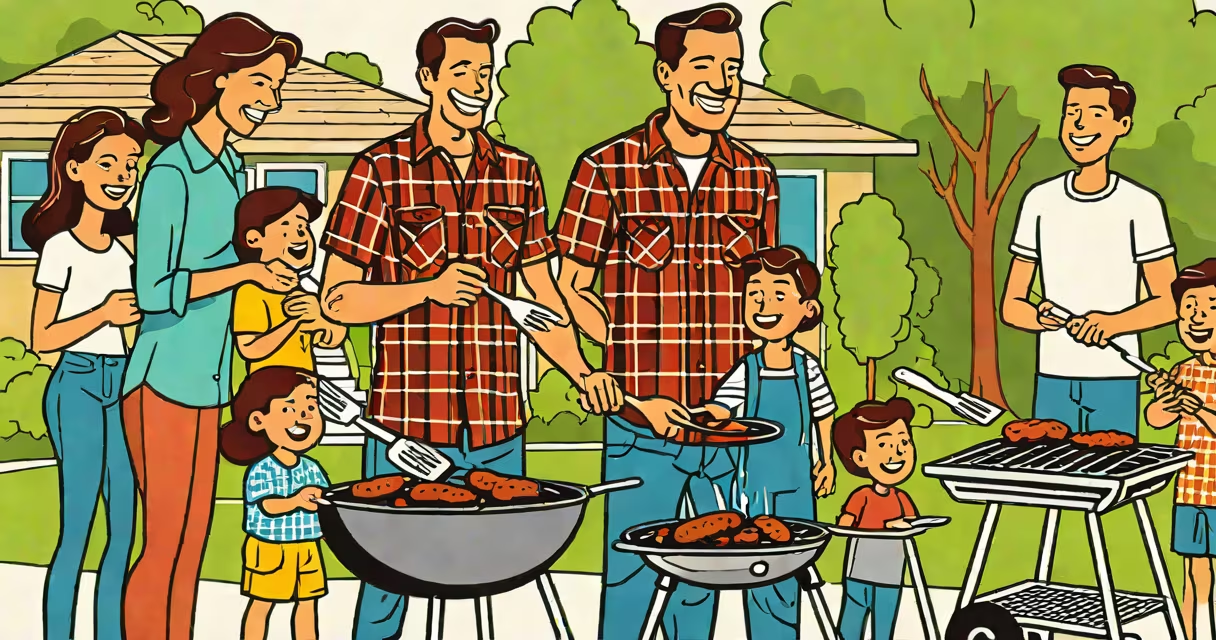
One real example: At a summer barbecue, a step dad handed his stepson a hot dog and said, "This is your future. It's not perfect, but it's filled with flavor." The kid groaned. The mom laughed. The step dad grinned. No one actually believed the hot dog was symbolic-but everyone understood the gesture.
People often mistake step dad jokes for mockery. They're not. A step dad isn't ridiculing his stepchild. He's using humor to assert belonging. Mockery implies superiority. Step dad jokes assume shared vulnerability.
Another error: assuming they're always bad. Some are genuinely clever. A viral example from 2022 went: "I didn't know you were going to be this much trouble. I thought you were just a kid." It's not a good joke-it's a terrible one. But it's memorable because it's honest. The speaker admits he's out of his depth. That honesty is the real punchline.
A lesser-known fact: step dad jokes are more effective when delivered slowly. A 2020 study from Stanford's Communication Lab showed that jokes with a 2-second pause before the punchline were rated 37% funnier than those rushed. The delay creates anticipation-and awkwardness. That's the goal.
Step dad jokes are not the same as generic dad jokes. While both rely on puns and timing, step dad jokes carry emotional weight. A regular dad joke might be "I told my wife she was drawing her eyebrows too high. She looked surprised." That's neutral. It's not about connection.
Step dad jokes are relational. They reference the changing-the newness, the uncertainty, the effort. They're not about the joke. They're about the person saying it.
I once watched a step dad try to teach his stepdaughter how to fold laundry. After she did it wrong, he said, "This is why I never had kids. I was saving myself for someone who understands symmetry." She rolled her eyes. Then she laughed. That moment wasn't about folding clothes. It was about being seen.
Step dad jokes are not elite comedy. They're not polished. They're not even good. But they're real. And in a world where family structures keep changing, that authenticity makes them unforgettable.