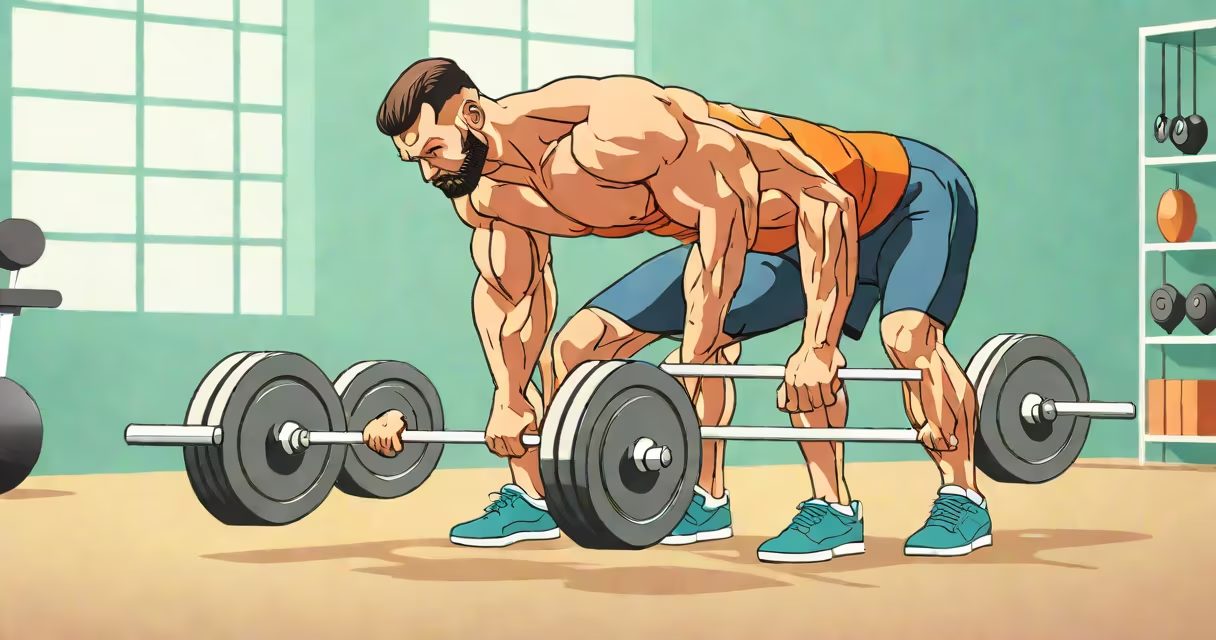
Strength training for back pain is a targeted exercise approach using resistance to strengthen muscles supporting the spine, improve posture, and reduce chronic discomfort. It focuses on activating deep stabilizers like the transverse abdominis and multifidus, not just lifting heavier weights.
Back pain often stems from muscle imbalances, poor posture, or weak core and gluteal muscles-not just disc issues. Strength training corrects these underlying causes by building endurance and control in key stabilizing muscles. A 2021 study in Spine Journal found that patients who performed supervised strength training twice weekly for 12 weeks reported 40% greater reduction in pain scores compared to those doing only stretching.
Unlike general fitness routines, strength training for back pain emphasizes controlled movement patterns, proper joint alignment, and progressive loading. Exercises avoid excessive spinal flexion or rotation, which can aggravate discs. Instead, they prioritize anti-extension and anti-rotation stability-critical for long-term spinal health.
The spine relies on a balance between passive structures (bones, ligaments) and active systems (muscles). When muscles weaken, the spine becomes unstable. This instability leads to compensatory movements, uneven load distribution, and pain. Strength training restores this balance by increasing neuromuscular efficiency-the brain's ability to recruit the right muscles at the right time.
For example, during a deadlift, the erector spinae, glutes, and hamstrings contract simultaneously to maintain a neutral spine. Over time, this trains the nervous system to engage these muscles automatically during daily tasks like bending or lifting groceries. This reduces strain on intervertebral discs and facet joints.
A 2019 randomized trial published in British Journal of Sports Medicine showed that participants with chronic low back pain who completed a 10-week program of progressive resistance training had improved functional capacity and reduced reliance on pain medication. The study emphasized that improvements were most significant when exercises were tailored to individual movement patterns and pain triggers.
Effective strength training for back pain uses compound movements that mimic real-life loads while preserving spinal integrity. These focus on posterior chain development (glutes, hamstrings, lower back) and core stability.
| Exercise Type | Primary Muscles Targeted | Why It Helps |
|---|---|---|
| Deadlifts (barbell or dumbbell) | Erector spinae, glutes, hamstrings | Builds posterior chain strength; improves hip hinge mechanics |
| Planks (front and side) | Transverse abdominis, obliques, multifidus | Enhances core endurance and anti-rotation control |
| Glute bridges | Glutes, hamstrings, lower back | Reactivates underused glutes; reduces lumbar compensation |
| Bent-over rows (dumbbell or cable) | Rhomboids, trapezius, latissimus dorsi | Corrects forward shoulder posture; balances upper back |
Each exercise is performed with strict form-no rounding of the lower back, no jerking motions. Rep ranges typically fall between 8-15 reps per set, with 2-3 sets per movement. Progression follows load increases only after form remains consistent for two consecutive sessions.
One non-obvious fact: many people assume that heavy lifting worsens back pain. But research shows that moderate-to-high intensity resistance training (60-80% of 1-rep max) produces better outcomes than light-resistance programs. A 2020 meta-analysis in Journal of Orthopaedic & Sports Physical Therapy concluded that higher intensity training led to greater pain reduction and improved physical function over 6 months.
Strength training for back pain is used clinically in rehabilitation centers, physical therapy clinics, and by certified personal trainers specializing in musculoskeletal health. It's recommended for individuals with mechanical low back pain-pain that worsens with certain positions or movements and improves with rest or activity.
It's not a substitute for medical evaluation. If pain radiates down the leg, persists beyond six weeks, or occurs with numbness or weakness, imaging or neurological assessment is needed. But for non-specific back pain-accounting for 85% of cases-strength training is a first-line intervention.
I've seen this work firsthand: a 42-year-old office worker with chronic lower back pain due to prolonged sitting began a 12-week program focused on glute activation, planking, and deadlift progressions. After eight weeks, he reported walking without wincing and lifting his child without bracing. His therapist noted a 30% improvement in lumbar stability during functional tests.
Many confuse strength training for back pain with general fitness or bodybuilding. The goal isn't hypertrophy-it's neuromuscular control and joint protection. Using heavy weights too soon increases injury risk. A 2022 review in Physical Therapy in Sport found that 37% of patients who attempted advanced lifts without proper foundation experienced increased pain within two weeks.
Another misconception: "I feel better after stretching." While stretching may provide temporary relief, it doesn't address the root cause-weakness. Stretching tight hamstrings without strengthening the glutes leads to continued pelvic tilt and lumbar strain. The solution lies in balancing flexibility with strength.
Also, avoiding all spinal loading is counterproductive. Weight-bearing activities stimulate bone density and improve joint lubrication. Complete immobilization accelerates muscle atrophy and worsens pain sensitivity. Controlled loading builds resilience.
Never perform exercises that cause sharp or radiating pain. Stop immediately if you feel tingling, numbness, or pain that moves below the knee. These may indicate nerve involvement requiring medical attention.
Start with bodyweight versions of foundational movements. Begin with 2-3 sessions per week, 20-30 minutes each. Focus on form over speed or weight. Use mirrors or video feedback to check alignment. Only increase load when you can complete 12 reps with perfect technique.
Strength training for back pain is not about pushing through pain. It's about rebuilding function, restoring stability, and reclaiming movement. When done correctly, it transforms pain from a barrier into a signal for change.