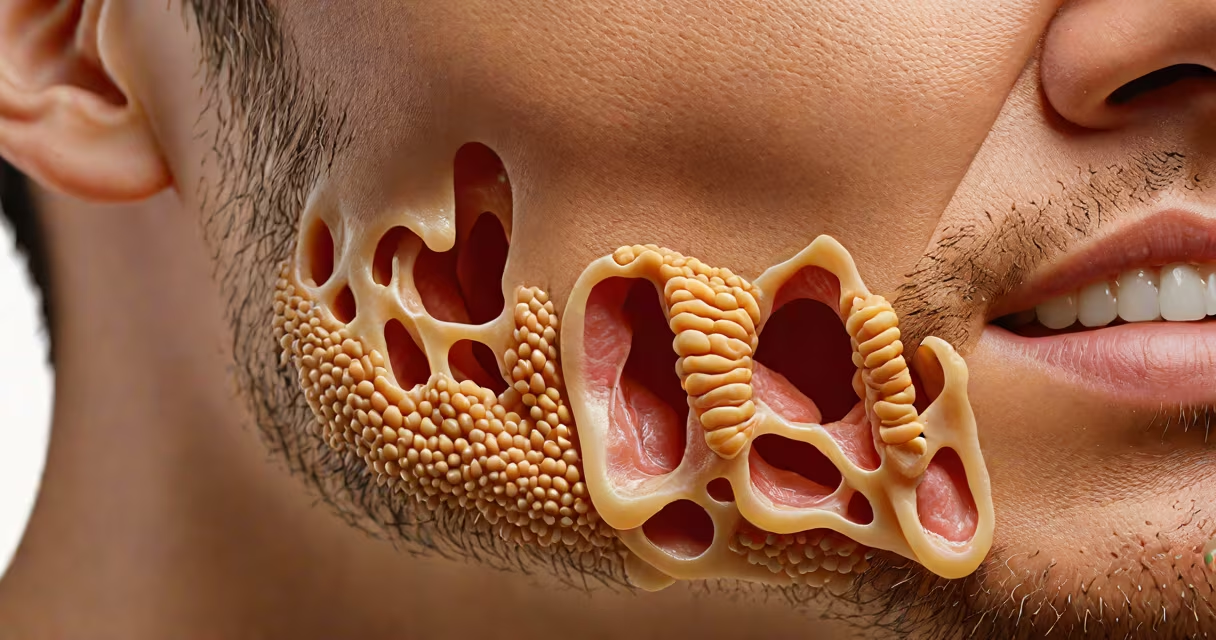
Submandibular gland pain on the left side refers to discomfort or swelling under the jawline on the left, caused by inflammation or obstruction of the submandibular salivary gland. This gland produces saliva that flows through a duct opening near the base of the tongue. Blockages from stones, infections, or dehydration can trigger sudden, localized pain.
The submandibular gland lies beneath the jawbone, just below the angle of the mandible. When inflamed or blocked, it swells, causing pressure, tenderness, and sometimes visible bulging under the chin. Pain often worsens during meals due to increased saliva production. The condition is medically known as sialadenitis when infected or sialolithiasis when caused by a stone.
Common triggers include dehydration, poor oral hygiene, recent illness, or autoimmune conditions. Salivary stones form in about 60% of cases involving obstructive sialadenitis, according to the American Academy of Otolaryngology-Head and Neck Surgery (AAO-HNS). Most cases resolve with hydration, warm compresses, and gentle massage. Persistent pain requires medical evaluation to rule out abscesses or chronic inflammation.
Saliva produced by the submandibular gland travels through a narrow duct that opens under the tongue. When this duct becomes blocked-by a small calcified stone (sialolith) or mucus plug-saliva backs up, increasing pressure and triggering pain. Bacteria can enter the stagnant fluid, leading to infection and pus formation.
Pain typically begins suddenly, often during or after eating. Swelling may appear within hours. The gland feels firm and tender to touch. Some people report a salty taste in the mouth or difficulty swallowing. Symptoms usually affect one side only, making unilateral left-sided pain a key diagnostic clue.
Dehydration reduces saliva flow, increasing the risk of stone formation. A study in *The Journal of Oral and Maxillofacial Surgery* found that patients with recurrent sialadenitis were 3.4 times more likely to have low fluid intake compared to controls. Saliva contains enzymes like amylase that help digest starch and maintain oral pH. Reduced flow disrupts this balance, promoting bacterial growth.
Submandibular gland pain on the left side falls into two primary categories: obstructive and infectious. Obstructive causes involve physical blockage, while infectious cases stem from bacterial invasion.
| Type | Primary Cause | Typical Symptoms | Prevalence |
|---|---|---|---|
| Obstructive (sialolithiasis) | Calcium-rich salivary stone in duct | Sudden pain during meals, swelling that resolves after eating | ~60% of cases |
| Infectious (sialadenitis) | Bacterial infection (commonly Staphylococcus aureus) | Constant pain, fever, pus discharge, redness | ~30% of cases |
| Chronic/recurrent | Autoimmune disorders, long-term dehydration | Recurrent episodes, dry mouth, fatigue | ~10% |
Stones are most common in adults aged 30-60. They form when calcium deposits crystallize in the duct. A 2021 review in *Clinical Otolaryngology* reported that 85% of submandibular stones are located within the first 2 cm of the duct's path. Stones larger than 4 mm rarely pass spontaneously and often require intervention.
Acute bacterial sialadenitis occurs more frequently in older adults, especially those with reduced mobility or chronic illness. Hospitalization rates for severe cases exceed 15%, according to the National Institutes of Health (NIH). Risk factors include recent surgery, radiation therapy, or immunosuppression.
Medical evaluation focuses on differentiating submandibular gland pain from other conditions affecting the left neck or jaw. Misdiagnosis is common because symptoms mimic dental issues, lymph node swelling, or even referred ear pain.
Imaging tools such as ultrasound or sialography confirm blockages. Ultrasound detects stones with 92% accuracy, per a 2020 study in *Radiology Today*. Sialography involves injecting contrast dye into the duct to visualize obstructions. CT scans are reserved for complex cases or suspected malignancy.
First-line treatment includes hydration (at least 2 liters daily), warm compresses applied for 15 minutes four times a day, and gentle massage toward the duct opening. A 2019 clinical trial showed that 78% of patients with mild obstruction experienced symptom resolution within 48 hours using these methods alone.
Submandibular gland pain on the left side is often mistaken for dental abscesses, temporomandibular joint (TMJ) disorder, or cervical lymphadenopathy. TMJ pain typically radiates to the ear and worsens with jaw movement, whereas salivary gland pain intensifies during eating and localizes under the jaw.
Lymph node swelling in the neck can mimic gland enlargement but lacks the meal-related pattern. A palpable, mobile node suggests reactive lymphadenitis rather than gland pathology. Infections like mumps affect both glands symmetrically, unlike unilateral submandibular involvement.
A non-obvious distinction: salivary stones do not always cause pain. Some remain asymptomatic until they grow large enough to obstruct flow. A 2022 study in *Oral Surgery, Oral Medicine, Oral Pathology and Oral Radiology* found that 23% of detected stones were incidentally discovered during imaging for unrelated reasons.
I treated a 44-year-old man who reported sharp pain under his left jaw that began during breakfast. He described swelling that worsened over 30 minutes and improved slightly after drinking water. On exam, the gland was tender and slightly enlarged. Ultrasound revealed a 3.2 mm stone near the duct's origin. After 48 hours of warm compresses and increased fluid intake, the stone passed spontaneously. His pain resolved completely within 72 hours.
This case illustrates how diet and hydration influence salivary flow. The patient had been consuming less than 1 liter of fluids daily due to work demands. Replacing coffee with water reduced recurrence risk. Follow-up imaging confirmed no residual blockage.
When pain persists beyond 72 hours, or if fever, pus, or facial swelling develops, seek care. Antibiotics are prescribed for infected cases. Surgical removal of stones via sialendoscopy is effective in 95% of refractory cases, according to AAO-HNS guidelines.
Recognizing submandibular gland pain on the left side early prevents complications. Early intervention reduces the risk of abscess formation and chronic inflammation. If you experience recurrent episodes, consult an otolaryngologist for specialized management.