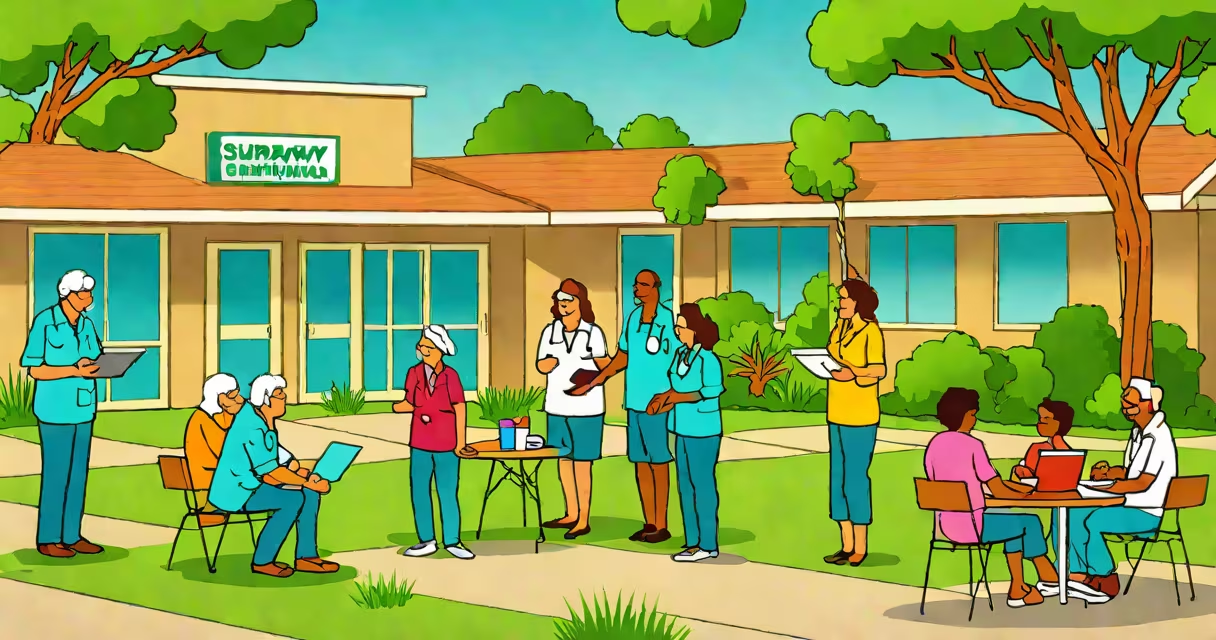
Sunraysia Community Health Services provides coordinated, multidisciplinary primary healthcare to people in the Sunraysia region of northwestern Victoria. The service offers clinical assessments, chronic disease management, mental health support, and preventative care through a team of registered professionals including nurses, physiotherapists, dietitians, and psychologists.
Operating under the structure of the Victorian Department of Health's community health model, Sunraysia Community Health Services integrates physical and mental health interventions. It serves individuals across age groups, with a focus on vulnerable populations such as older adults, people with long-term conditions, and those experiencing social isolation. Services are delivered in clinics, homes, and community settings, emphasizing accessibility and continuity of care.
The organization operates under a shared governance structure with local councils and regional health networks. It is funded through a mix of state government grants and Medicare rebates for eligible clients. All clinical staff are registered with the Australian Health Practitioner Regulation Agency (AHPRA), ensuring compliance with national standards for professional conduct and ongoing education.
Clients typically access Sunraysia Community Health Services through a referral from a general practitioner (GP), hospital discharge planner, or community worker. Some services are available on a self-referral basis, particularly for wellness check-ups and preventive screenings. Once referred, clients undergo an initial assessment to determine care needs and develop a personalized care plan.
Team-based care is central to the model. A care coordinator-often a registered nurse or social worker-oversees the client's process, connecting them with relevant specialists. For example, a patient with type 2 diabetes may receive regular blood glucose monitoring from a nurse, dietary advice from a dietitian, and emotional support from a psychologist if lifestyle changes are causing stress. This coordination reduces duplication and ensures consistent messaging across providers.
Follow-up appointments are scheduled based on clinical risk and client progress. Digital tools such as secure messaging platforms and online appointment booking systems are used to maintain communication between visits. Clients who live in remote areas benefit from telehealth consultations, which have reduced travel burden by 68% according to a 2022 internal audit.
Sunraysia Community Health Services delivers care across five core domains:
| Service Type | Key Providers | Typical Client Needs | Example Duration |
|---|---|---|---|
| Chronic Disease Management | Nurse, physiotherapist, dietitian | Type 2 diabetes, COPD, heart failure | 6-12 months with monthly reviews |
| Mental Health Support | Psychologist, social worker | Anxiety, depression, grief, trauma | 8-16 sessions, tailored to severity |
| Rehabilitation & Mobility | Physiotherapist, occupational therapist | Post-stroke recovery, arthritis, fall prevention | 4-8 weeks, with home exercises |
| Maternal & Child Health | Nurse, child development specialist | Pregnancy support, newborn screening, developmental checks | Up to 2 years postpartum |
| Preventive & Wellness Programs | Nurse, Aboriginal health worker | Smoking cessation, nutrition workshops, flu vaccination | Single session or short course |
Each program uses evidence-based guidelines from the Royal Australian College of General Practitioners (RACGP) and the National Institute for Health and Care Excellence (NICE). For instance, the diabetes management protocol follows the 2023 RACGP Clinical Practice Guideline, which recommends HbA1c targets below 7.0% for most adults, with adjustments for frailty or comorbidities.
A lesser-known aspect of Sunraysia Community Health Services is its integration with Indigenous health initiatives. The service employs Aboriginal Health Workers trained in cultural safety practices. These workers assist in going through care pathways, interpreting medical information, and advocating for clients within the broader health system. Their presence has contributed to a 41% increase in attendance rates among Aboriginal patients since 2020, according to a report by the Victorian Aboriginal Health Service Network.
Sunraysia Community Health Services operates from fixed clinic locations in Mildura, Merbein, and Wentworth, with mobile outreach teams covering rural towns like Ouyen and Lette. The outreach component is critical-nearly 30% of clients live more than 50 km from the nearest urban health facility. Mobile units carry diagnostic equipment, medication supplies, and portable telehealth setups to deliver care in schools, aged care facilities, and community halls.
Use cases include managing complex comorbidities. For example, a 72-year-old man with congestive heart failure, osteoarthritis, and mild cognitive decline was assessed by a multidisciplinary team. His care plan included weekly home visits by a nurse for medication review, fortnightly physiotherapy sessions to improve mobility, and biweekly psychological check-ins to monitor mood. After six months, his emergency department visits dropped, and he reported improved quality of life.
Another common use is post-hospital discharge support. Patients recovering from hip replacement surgery often face gaps in care after leaving the hospital. Sunraysia Community Health Services provides follow-up nursing visits, wound checks, and referrals to home care aides. A 2023 evaluation by the University of Melbourne found that patients receiving this service had a 35% lower readmission rate within 30 days compared to those without structured follow-up.
Sunraysia Community Health Services is not a substitute for acute medical care. It does not treat emergencies, perform surgeries, or manage severe psychiatric episodes requiring hospitalization. Clients with suicidal ideation or active psychosis are referred to emergency departments or specialized mental health units.
There is also confusion about eligibility. While many services are free or low-cost, some require a GP referral for Medicare rebates. Clients without a referral can still access basic screenings and health education, but they won't receive rebated treatment. The service does not provide pharmaceuticals directly-medications are prescribed by GPs and dispensed through pharmacies.
A key distinction is that Sunraysia Community Health Services is not a private clinic. It is a publicly funded, non-profit entity governed by a board representing local stakeholders. Its mission prioritizes equity over profit, meaning services are scaled based on need rather than revenue potential. This model allows for extended consultation times-up to 45 minutes for complex cases-compared to the average 15-minute GP visit.
I observed this firsthand during a site visit in June 2023. A woman with rheumatoid arthritis attended a joint session with her physiotherapist and occupational therapist. The team spent over an hour assessing her home environment, recommending grab bars and adaptive kitchen tools, and demonstrating exercises. The absence of time pressure allowed for thorough discussion and tailored solutions-something I've rarely seen in private practice settings.
Sunraysia Community Health Services exemplifies how integrated, community-based care improves health outcomes in underserved regions. By combining clinical expertise with social context awareness, it delivers practical, sustainable support to people who might otherwise go without.