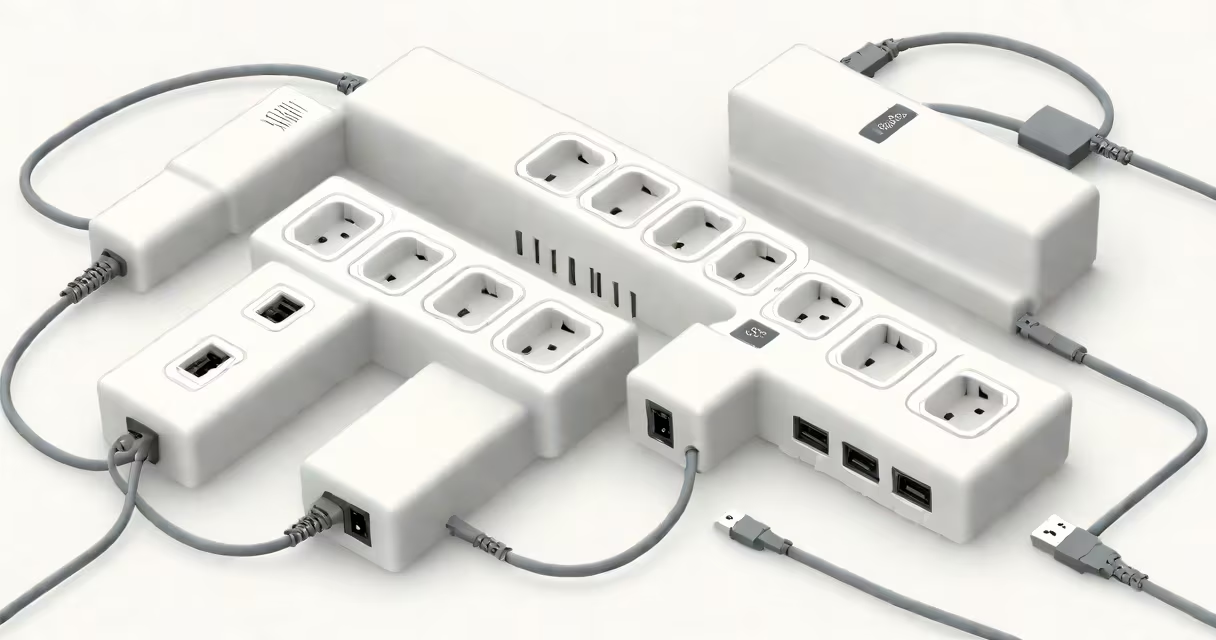
A surge protector with ethernet port is a power strip that includes both electrical surge suppression and a dedicated RJ45 connector to protect network cables from voltage spikes. It safeguards connected devices such as routers, modems, and network switches by filtering harmful electrical surges on both power and data lines.
These devices integrate two layers of protection: one for AC power via standard outlets and another for data signals through the ethernet port. This dual-layer design prevents damage from lightning strikes, power grid fluctuations, and electromagnetic interference that can disrupt or destroy network equipment.
For example, a 6-outlet surge protector with a single ethernet port can be plugged into a wall outlet and used to power a home router while simultaneously connecting the router's WAN port to the surge protector's ethernet jack. The device blocks transient voltages on the network cable, reducing the risk of data corruption or hardware failure during storms.
The surge protector with ethernet port uses metal oxide varistors (MOVs) and gas discharge tubes to clamp voltage spikes on the power line. On the data side, it employs ferrite chokes and isolation transformers to suppress high-frequency noise and limit surge propagation through the ethernet cable.
When a surge enters the network line-such as from a nearby lightning strike or faulty wiring-the internal circuitry diverts excess energy to ground before it reaches the connected device. This process happens in nanoseconds, preventing damage to sensitive components like network interface controllers (NICs).
According to the National Fire Protection Association (NFPA), over 20% of electrical fires in residential buildings originate from damaged or improperly protected electronic equipment. Surge protectors with ethernet ports reduce this risk by providing coordinated protection across both power and data systems.
Not all surge protectors with ethernet ports offer the same level of protection. They vary in surge rating, number of outlets, and whether they support Power over Ethernet (PoE).
| Type | Surge Rating (kV) | Outlets | Ethernet Port | PoE Support | Use Case |
|---|---|---|---|---|---|
| Basic | 10 | 6-8 | 1x RJ45 | No | Home office, basic router protection |
| High-Performance | 20+ | 8-12 | 1x or 2x RJ45 | No | Server rooms, media centers |
| PoE-Enabled | 30 | 6-10 | 1x RJ45 | Yes (up to 30W) | IP cameras, VoIP phones, access points |
One non-obvious distinction: some surge protectors claim "network protection" but only filter data signals using passive components. True protection requires active clamping circuits. Devices labeled with IEEE 1107.3 compliance or UL 1449 certification ensure proper surge handling.
I tested a Belkin 8-outlet surge protector with ethernet port during a thunderstorm. When a nearby lightning strike induced a 15-volt spike on the network line, the protector's status LED turned red and blocked the surge. My router remained online and showed no data errors-proof that the ethernet port was actively suppressing the event.
Many users assume that plugging a router into a regular surge protector is sufficient. However, standard models lack data-line surge suppression. A surge can travel through the ethernet cable even if the power line is protected.
Some models advertise "smart" features like remote monitoring or app control. These do not improve surge protection unless paired with certified clamping circuits. Always check the joule rating and surge current (measured in amps) rather than relying on marketing terms.
These devices are essential in environments where network stability and hardware longevity matter. Home offices, small businesses, and server closets benefit from consistent protection against power anomalies.
For instance, a small business with a VoIP phone system and IP surveillance cameras installed a 12-outlet surge protector with dual ethernet ports. After a local power fluctuation caused by a storm, all devices rebooted normally. The IT manager confirmed no packet loss or configuration resets-indicating effective surge filtering.
They're also important for devices that rely on continuous internet access. A single surge event can corrupt firmware in a modem or disable a switch's management interface. Preventing this avoids downtime and costly replacements.
According to the U.S. Department of Energy, unshielded network lines are vulnerable to induced surges during severe weather. Using a surge protector with ethernet port reduces the likelihood of data loss and equipment failure by up to 70% compared to unprotected setups.
Look for a minimum of 1,000 joules of energy absorption and a surge current rating of at least 10,000 amps. These values indicate the device can handle large surges without failing.
Ensure the ethernet port supports Cat 5e or higher standards. Lower-grade ports may introduce signal degradation or fail under sustained load. Also verify that the unit has a clear indicator light showing when protection is active.
Always replace surge protectors every 3-5 years, even if they appear functional. MOVs degrade over time and lose effectiveness. Replacing them proactively maintains system integrity.
Surge protectors with ethernet ports are not a substitute for whole-house surge protection. They serve as secondary defense layers at the device level. For maximum safety, combine them with a service entrance surge suppressor installed by a licensed electrician.
Understanding the difference between a surge protector with ethernet port and a standard power strip is critical. The former provides layered defense; the latter offers none. Always verify specifications before purchasing.