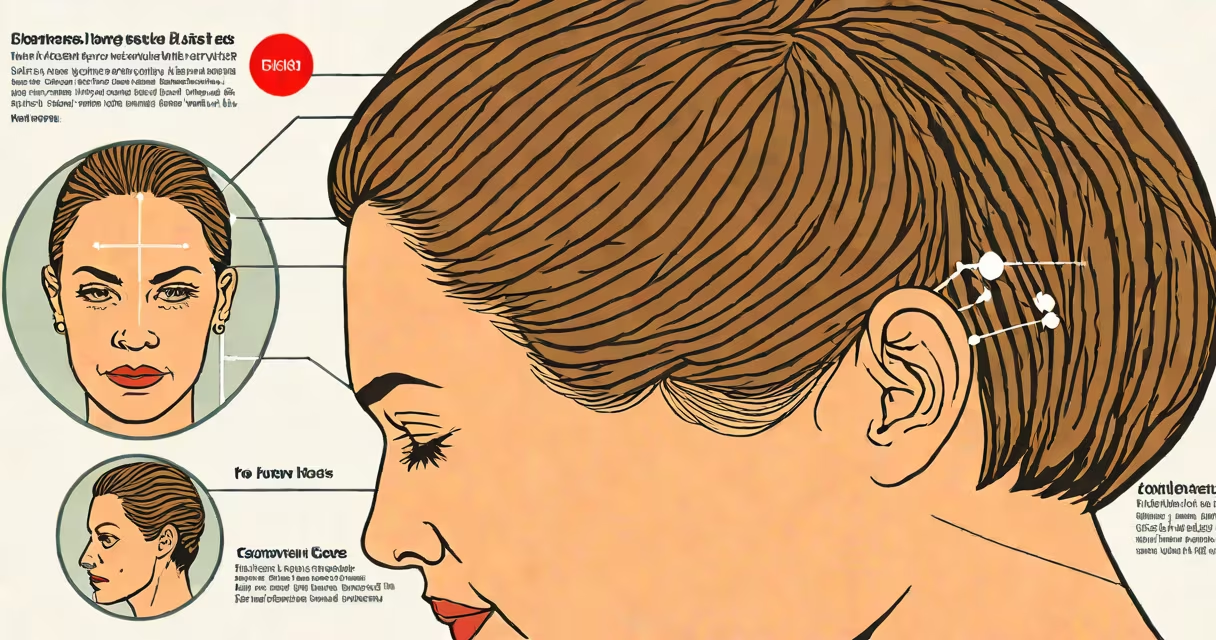
Testosterone and hair loss in women occurs when excess androgens, including testosterone, disrupt the normal hair growth cycle, leading to miniaturized follicles and visible thinning, especially at the crown and frontal hairline. This condition often presents as androgenic alopecia, a patterned form of hair loss linked to hormonal imbalance rather than genetics alone.
Androgens like testosterone bind to receptors in hair follicles, shortening the anagen (growth) phase and prolonging telogen (shedding). Over time, this leads to progressively finer, shorter hairs until follicles stop producing visible strands. While testosterone is present in all women, clinically significant hair loss typically arises when levels exceed normal ranges or when sensitivity to androgens increases.
According to the American Academy of Dermatology Association, approximately 15% of women experience androgenetic alopecia by age 40, with higher rates in those with polycystic ovary syndrome (PCOS). The condition is distinct from diffuse telogen effluvium, which involves sudden shedding due to stress or illness, and from autoimmune conditions like alopecia areata.
Testosterone itself doesn't directly cause hair loss-it's converted into dihydrotestosterone (DHT) by the enzyme 5-alpha-reductase. DHT binds tightly to androgen receptors in scalp follicles, altering gene expression and reducing follicle size. This process is called follicular miniaturization.
When follicles shrink, they produce vellus-like hairs-short, fine, and unpigmented-instead of terminal hairs. These changes occur gradually, often beginning with a widening part line or reduced volume at the crown. By the time symptoms are noticeable, the damage may already be irreversible without intervention.
A 2021 study published in the Journal of Clinical Endocrinology & Metabolism found that women with unexplained hair loss had higher serum free testosterone levels compared to controls, even within the "normal" reference range. This suggests that individual sensitivity matters more than absolute numbers.
Not all hair loss in women stems from androgen excess. The following types are most commonly associated with testosterone activity:
| Type | Primary Cause | Key Features | Diagnostic Clue |
|---|---|---|---|
| Androgenic Alopecia | Excess androgens or increased follicle sensitivity | Thinning at crown, widened part, receding front hairline | Female-pattern hair loss on dermoscopy |
| Polycystic Ovary Syndrome (PCOS) | Hyperandrogenism due to ovarian dysfunction | Hair loss + acne + irregular periods + insulin resistance | High testosterone + elevated LH/FSH ratio |
| Idiopathic Hyperandrogenism | No identifiable cause; likely genetic predisposition | Isolated hair loss without other PCOS signs | Normal menstrual cycles, no metabolic issues |
Women with PCOS often show elevated total and free testosterone, along with high levels of luteinizing hormone (LH). The condition affects about 6-10% of reproductive-age women, according to the Endocrine Society. Not all women with PCOS develop hair loss, but those who do typically respond well to anti-androgen treatments.
Many assume that hair loss in women is always due to stress or aging. But while telogen effluvium can cause temporary shedding, it rarely results in permanent thinning patterns. Androgenic alopecia, by contrast, follows a predictable progression: gradual thinning at the crown, then widening of the part line, and eventually sparse coverage.
Another misconception is that low testosterone causes hair loss. In reality, both excess and deficiency can affect hair health-but in different ways. Low testosterone correlates with decreased libido and fatigue, not patterned hair loss. True androgen-related hair loss requires elevated androgen activity, not deficiency.
A non-obvious fact: Some women with normal blood test results still have elevated DHT in scalp tissue. A 2019 study in *The Journal of Investigative Dermatology* showed that DHT concentrations in scalp biopsies were higher in women with androgenic alopecia-even when serum testosterone was within normal limits. This highlights the importance of local tissue sensitivity over systemic hormone levels.
Consider a 32-year-old woman presenting with a 12-month history of increasing hair thinning, particularly at the crown. She reports no recent stress, weight changes, or medication shifts. Her menstrual cycle is regular, and she has no acne or hirsutism.
Blood work shows total testosterone at 48 ng/dL (normal range: 15-70), free testosterone at 0.7 pg/mL (normal: 0.3-1.9), and SHBG at 45 nmol/L (normal: 30-100). All values fall within normal limits. However, dermoscopy reveals miniaturized follicles and increased vellus hairs in the vertex region.
Despite normal lab results, her clinical presentation aligns with androgenic alopecia. A dermatologist prescribes topical minoxidil 5% and spironolactone 100 mg daily. After six months, she reports improved hair density and reduced shedding. Follow-up dermoscopy shows regrowth of terminal hairs in previously affected areas.
Women should consult a healthcare provider if they notice a widening part line, thinner ponytail, or increased shedding during washing or brushing. These signs may indicate early androgenic alopecia. Early intervention improves outcomes.
Testosterone and hair loss in women is driven by androgen activity, primarily through DHT binding to scalp follicles. It manifests as progressive thinning at the crown and frontal regions, often misdiagnosed as stress-related shedding. Accurate diagnosis requires clinical assessment, dermoscopy, and targeted hormone testing-not just standard blood panels. Early treatment with anti-androgens, minoxidil, or lifestyle adjustments can halt progression and promote regrowth.