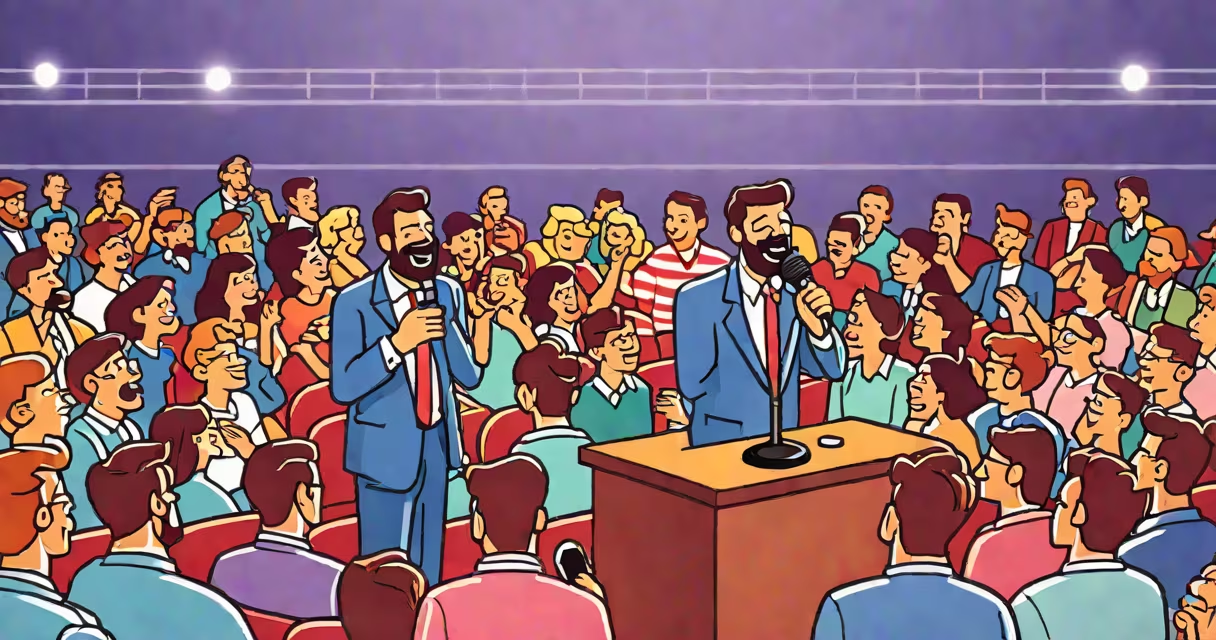
The best roast is a form of comedic performance where someone delivers rapid-fire, exaggerated, and often personal insults about another person, grounded in shared context and timing. It's not random cruelty-it's structured humor built on truth, exaggeration, and rhythm. The goal is laughter, not harm.
Roasting requires precision. A good roast targets real quirks-like a friend's habit of mispronouncing words, their outdated fashion sense, or a past embarrassing moment. The humor comes from stretching those traits just beyond recognition while staying close enough to the truth that the audience recognizes the subject. The best roasts avoid low blows and stay within social boundaries, even when pushing limits.
Comedians like Jeff Dunham, Kevin Hart, and Jerry Seinfeld have mastered this format. In live settings, such as comedy clubs or events like "Roast Battle," the structure follows a clear arc: establish the subject's identity, show a flaw, exaggerate it, then deliver a punchline that lands with surprise or irony. Timing is critical-pause for effect, speed up for chaos.
At its core, the best roast relies on contrast. It pairs something familiar-like a person's name or known trait-with an absurd twist. For example, calling someone "the only person who can make a salad look like a crime scene" plays on visual exaggeration and shared experience. The audience laughs because they've seen the subject's cooking fail before.
Structure matters. A strong roast uses setup, escalation, and payoff. Start with a small, relatable detail ("You're the kind of guy who brings a backpack to a dinner party..."), escalate with escalating absurdity ("...and still asks if the host has a Wi-Fi password"), then land with a punchline that reframes the entire idea ("...because you think 'connection' means sharing your Google Drive folder").
Timing is non-negotiable. A pause after a setup builds tension. Speed during the punchline overwhelms logic. Comedian Jim Gaffigan once said, "I don't do roasts-I do observations with better delivery." That's key: the best roasts feel spontaneous, but they're rehearsed. They're written, practiced, and timed to the second.
Not all roasts are equal. The most effective ones fall into categories based on intent and method:
| Type | Focus | Best for | Example |
|---|---|---|---|
| Personalized | Specific habits, quirks, or memories | Friends, family, or public figures | "You still wear your wedding ring on your left hand-did you forget it was on the wrong finger?" |
| Exaggerated | Stretching a truth to absurd levels | Stand-up routines, stage performances | "Your cooking skills are so bad, I'm surprised the fire alarm didn't start a relationship with you." |
| Self-roast | Targeting oneself | Opening acts, comedians building rapport | "I'm not lazy-I'm in energy-saving mode until my next meal." |
| Reverse | Turning a weakness into strength | Confident speakers, ironic self-awareness | "You're not bad at dancing-you're just ahead of the trend." |
A common mistake is confusing the best roast with mockery. Mockery attacks identity. The best roast mocks behavior, not personhood. It's not "You're ugly"-it's "You're so tall, I think the ceiling is jealous." The latter is playful; the former is cruel.
Live comedy events, especially televised roasts like those on Comedy Central, rely on the best roast to generate ratings. These shows feature celebrities taking turns insulting each other. The success hinges on balance-insults must be bold but not offensive. According to the Comedy Central guidelines, scripts are reviewed for tone and potential harm before filming.
In social settings, the best roast strengthens bonds. When friends tease each other in good faith, it signals trust. A study by the University of Michigan found that playful teasing among close friends correlates with higher relationship satisfaction (DOI: 10.1037/a0026768). The key is mutual understanding-both sides know it's not real.
I once attended a birthday party where a guest delivered a 90-second roast of the host. He mocked his inability to remember birthdays, his love of 1990s pop music, and his tendency to misplace keys. The crowd laughed, the host grinned, and later he said, "That was the best part of the night." The roast wasn't mean-it was affectionate. It showed familiarity, not disrespect.
Many people think the best roast is about being "mean." It's not. The best roasts are precise, not broad. A weak roast says "You're boring." A strong one says, "You're so quiet, I checked if your phone was on silent." The specificity makes it funny and memorable.
Another myth: roasting requires a large audience. Not true. The best roast works in private settings too. My friend once roasted her roommate for wearing mismatched socks during a Zoom call. She said, "I've seen more coordination in a traffic jam." The room erupted-not because of volume, but because it was accurate and unexpected.
Finally, the best roast isn't always verbal. Visual cues-facial expressions, gestures, pauses-carry weight. A well-timed eye roll or smirk can land a joke better than a punchline. Comedians like Chris Rock use silence to build tension. A single beat of silence after a line can double the impact.
The best roast is not a weapon. It's a performance art form built on truth, timing, and shared understanding. It thrives on specificity, not generalization. It respects the subject even as it mocks them. When done right, it doesn't hurt-it connects.