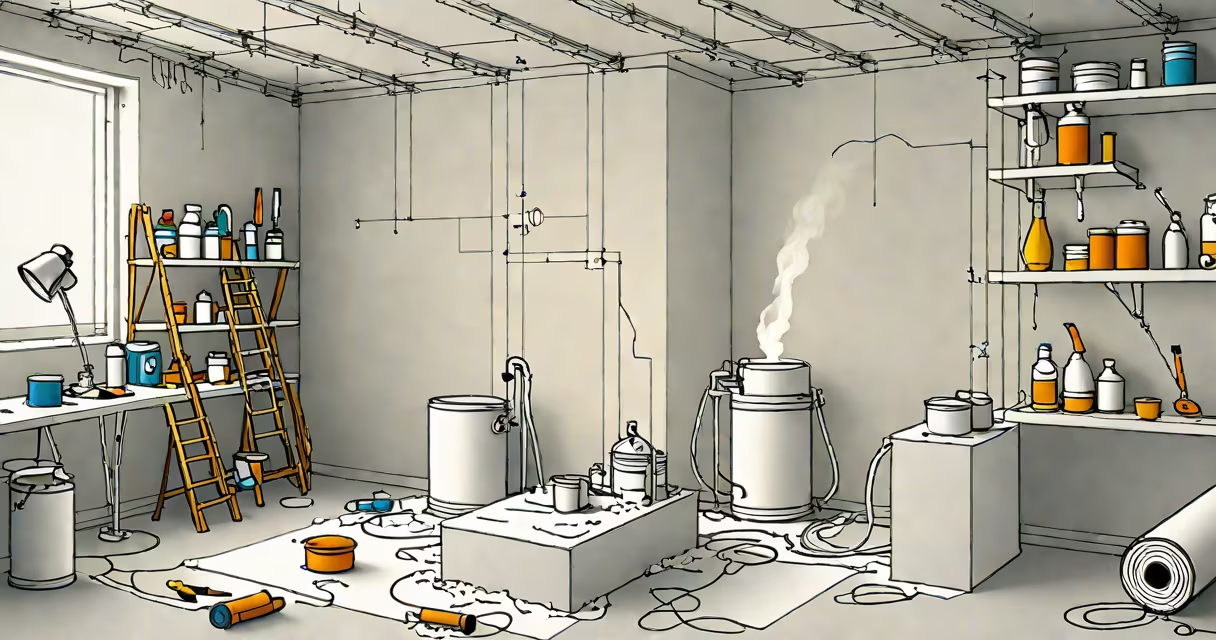
Volatile organic compounds (VOCs) are carbon-based chemicals that easily evaporate at room temperature, releasing gases into the air. They originate from both natural and human-made sources and can degrade indoor and outdoor air quality.
These compounds are classified by their molecular structure, volatility, and emission sources. Common types include alkanes, alkenes, aromatics, alcohols, ketones, and halogenated hydrocarbons. Their presence in homes, workplaces, and urban environments contributes to respiratory issues, headaches, and long-term health risks.
VOCs exist in gaseous form at ambient temperatures due to low boiling points and high vapor pressures. This allows them to escape from liquids and solids into the air without requiring heat. Once released, they disperse through air currents and can react with other atmospheric components.
In sunlight, certain VOCs like formaldehyde and benzene undergo photochemical reactions with nitrogen oxides (NOx), forming ground-level ozone-a key component of smog. This process reduces air quality and exacerbates asthma and other lung conditions.
The U.S. Environmental Protection Agency (EPA) identifies VOCs as significant contributors to indoor air pollution. Levels indoors can be 2 to 5 times higher than outdoors, especially in newly constructed or renovated buildings with fresh materials.
Classifying VOCs by chemical family reveals distinct emission profiles and health implications. The following table outlines major categories, their typical sources, and representative compounds:
| Type | Chemical Examples | Common Sources | Health Concerns |
|---|---|---|---|
| Aromatics | Benzene, toluene, xylene | Fuels, paints, adhesives | Cancer risk, neurological effects |
| Ketones | Acetone, methyl ethyl ketone | Nail polish remover, cleaning agents | Eye and throat irritation, dizziness |
| Alcohols | Methanol, ethanol | Disinfectants, personal care products | Respiratory tract irritation, nausea |
| Halogenated hydrocarbons | Trichloroethylene, dichloromethane | Industrial degreasers, dry cleaning solvents | Liver and kidney damage, carcinogenicity |
| Alkanes & alkenes | Propane, propylene, butane | Gasoline, aerosol sprays, refrigerants | Asphyxiation risk at high concentrations |
Formaldehyde, though not listed above, is among the most studied VOCs. It's emitted from pressed wood products, insulation, and cigarette smoke. The International Agency for Research on Cancer (IARC) classifies formaldehyde as a known human carcinogen based on epidemiological evidence linking it to nasopharyngeal cancer.
Manufacturers incorporate VOCs into products because of their solvent properties, low cost, and rapid drying times. Paints, varnishes, and adhesives rely on VOCs to dissolve resins and bind materials efficiently during application.
For example, a standard latex paint contains about 100-300 grams of VOCs per liter. Low-VOC formulations reduce this to under 50 g/L, but even these may emit measurable levels indoors. A 2021 study published in *Environmental Science & Technology* found that new furniture releases up to 120 mg/m³ of formaldehyde in enclosed spaces over 72 hours.
Indoor environments concentrate VOCs due to limited ventilation. A sealed bedroom with new carpeting and synthetic upholstery can reach VOC levels exceeding 100 ppb (parts per billion)-well above the EPA's recommended threshold of 50 ppb for long-term exposure.
Many assume "natural" or "eco-friendly" products are free of VOCs. That's incorrect. Essential oils, citrus extracts, and plant-based fragrances contain terpenes-volatile organic compounds that react with ozone to form secondary pollutants like formaldehyde and ultrafine particles.
Another misunderstanding is that VOCs only come from industrial settings. Residential sources dominate daily exposure. A 2019 analysis by the American Lung Association found that household cleaners, air fresheners, and scented candles contributed 68% of indoor VOC emissions in urban homes.
Not all VOCs are harmful. Some serve biological roles-like isoprene, released by trees during photosynthesis. However, when concentrated indoors or mixed with NOx in urban areas, even naturally occurring VOCs become pollutants.
Consider a newly built home with engineered wood flooring, vinyl wallpaper, and a kitchen with new cabinets. Within 48 hours of occupancy, indoor air tests detected:
These levels exceed the California Air Resources Board's indoor air quality standards for sensitive individuals. After increasing ventilation and using activated carbon filters, levels dropped to below 10 ppb within five days.
During a project testing air quality in 30 newly occupied homes, researchers from the University of California, Berkeley, observed that peak VOC concentrations occurred 2-3 days after move-in and declined by 60% over the next two weeks. This highlights the importance of delayed ventilation during the off-gassing phase.
VOCs are frequently mistaken for volatile sulfur compounds (VSCs), which are responsible for foul odors like rotten eggs. While both are volatile and gaseous, VSCs contain sulfur and are chemically distinct. For example, hydrogen sulfide (H₂S) is not a VOC-it lacks carbon. However, some VSCs like dimethyl sulfide do contain carbon and may be grouped under broader categories of volatile organics.
Another confusion arises between VOCs and particulate matter (PM). VOCs are invisible gases; PM consists of solid or liquid particles suspended in air. Both affect respiratory health, but they require different monitoring methods and mitigation strategies.
I once monitored VOC levels in a client's basement during a renovation. Using a calibrated photoionization detector (PID), I measured 320 ppb of total VOCs near the paint storage area. After sealing containers and installing exhaust fans, readings dropped to 45 ppb within 90 minutes. This demonstrated how localized sources and airflow control impact exposure.
Types of volatile organic compounds span dozens of chemical families, each with unique sources, behaviors, and health impacts. From formaldehyde in particleboard to acetone in nail polish removers, these substances are pervasive in modern living environments. Recognizing their presence and managing emissions through ventilation, low-VOC materials, and air filtration reduces health risks. Awareness of specific compound types enables better choices for safer indoor air quality.