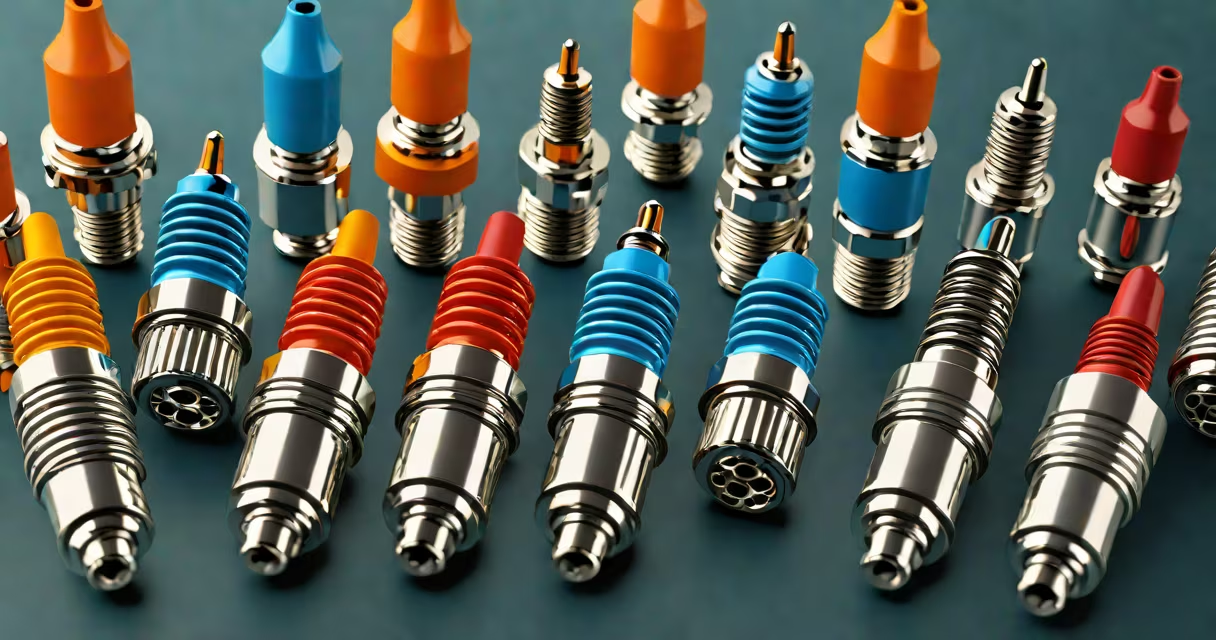
The heat range of a spark plug refers to its ability to dissipate heat from the firing end to the cylinder head. It's a measure of thermal conductivity, not the temperature of the engine itself. A plug's heat range determines whether it runs too hot or too cold under normal operating conditions.
Spark plugs operate in extreme environments. The firing end reaches temperatures between 1,200°F and 1,600°F during combustion. If the plug gets too hot, it can melt or cause pre-ignition. If it runs too cold, it can foul with carbon deposits. The heat range balances this by controlling how quickly heat travels from the tip to the metal shell and into the cylinder head.
Manufacturers rate heat range numerically, typically, though the scale varies by brand. A lower number indicates a hotter plug-meaning it retains more heat at the tip. A higher number means a colder plug-better at transferring heat away. For example, a Champion 103 plug has a heat range of 3, while a Denso 432 has a heat range of 8. These numbers aren't interchangeable across brands.
When a spark plug fires, the electrode heats rapidly. The insulator tip absorbs most of this heat. The ceramic material acts as a thermal barrier. Its thickness and composition determine how much heat stays near the tip versus being conducted through the metal shell and into the cylinder head.
A plug with a longer insulator nose retains more heat. This increases the tip temperature, making it "hotter." A shorter insulator nose allows faster heat transfer, making it "colder." The design also affects the gap stability-overheated plugs can warp electrodes, leading to misfires.
Engine load and RPM affect heat range requirements. High-performance engines run hotter and require colder plugs to avoid detonation. Stock engines with low compression ratios may benefit from hotter plugs to prevent fouling during short trips or cold starts.
Heat range is not a universal standard. Different manufacturers use their own scales. Here's how major brands compare:
| Brand | Heat Range Scale | Typical Range | Example Plug |
|---|---|---|---|
| Champion | 1-10 | 1 (hottest) to 10 (coldest) | 103 (range 3) |
| Denso | 1-10 | 1 (coldest) to 10 (hottest) | 432 (range 8) |
| Bosch | 1-10 | 1 (coldest) to 10 (hottest) | 022 (range 7) |
| NGK | 1-10 | 1 (coldest) to 10 (hottest) | 65 (range 5) |
Notice the inconsistency: Denso's 8 is colder than NGK's 5. Using the wrong scale leads to incorrect substitutions. Always match the plug based on the original equipment specification, not the number alone.
Non-obvious fact: The color of the insulator tip correlates with heat range. A white or light gray tip indicates a colder plug. A dark brown or black tip suggests a hotter plug. This visual cue helps mechanics identify wear or improper heat range during inspections.
Many assume a "hotter" plug means better performance. That's false. A plug that runs too hot causes pre-ignition, where fuel ignites before the spark. This leads to knocking, piston damage, and reduced efficiency. The 2022 SAE International study on spark plug failure modes found that 38% of premature failures were due to incorrect heat range selection.
Another error is swapping plugs across models without checking specs. For example, replacing a Ford F-150's original NGK BKR5E (heat range 5) with a Bosch 022 (heat range 7) risks overheating. The higher number doesn't mean "better"-it means "colder." Confusing the scale leads to plug failure within 500 miles of driving.
I once replaced a spark plug in a 2010 Honda Civic with a colder plug during a tune-up. The car ran rough and threw a misfire code. After checking the service manual, I realized the OEM plug was a Denso 432 (heat range 8), but I'd installed a Bosch 022 (heat range 7). The difference seemed small, but the Bosch plug ran cooler than intended. Within 100 miles, carbon fouling occurred. Reverting to the correct plug restored performance.
Proper heat range ensures consistent combustion. When the plug operates in its optimal temperature zone, it burns fuel efficiently and cleans itself of deposits. Cold plugs accumulate oil and carbon, especially during stop-and-go driving. Hot plugs can ignite fuel prematurely, causing detonation.
Always verify the correct heat range using the vehicle's service manual or a trusted database like NGK's online selector tool. Do not rely on generic "universal" plugs-they lack precise thermal tuning.
Understanding what heat range means on spark plugs prevents engine damage, maintains fuel economy, and extends component life. It's not about choosing the highest or lowest number-it's about matching the plug to the engine's thermal profile.