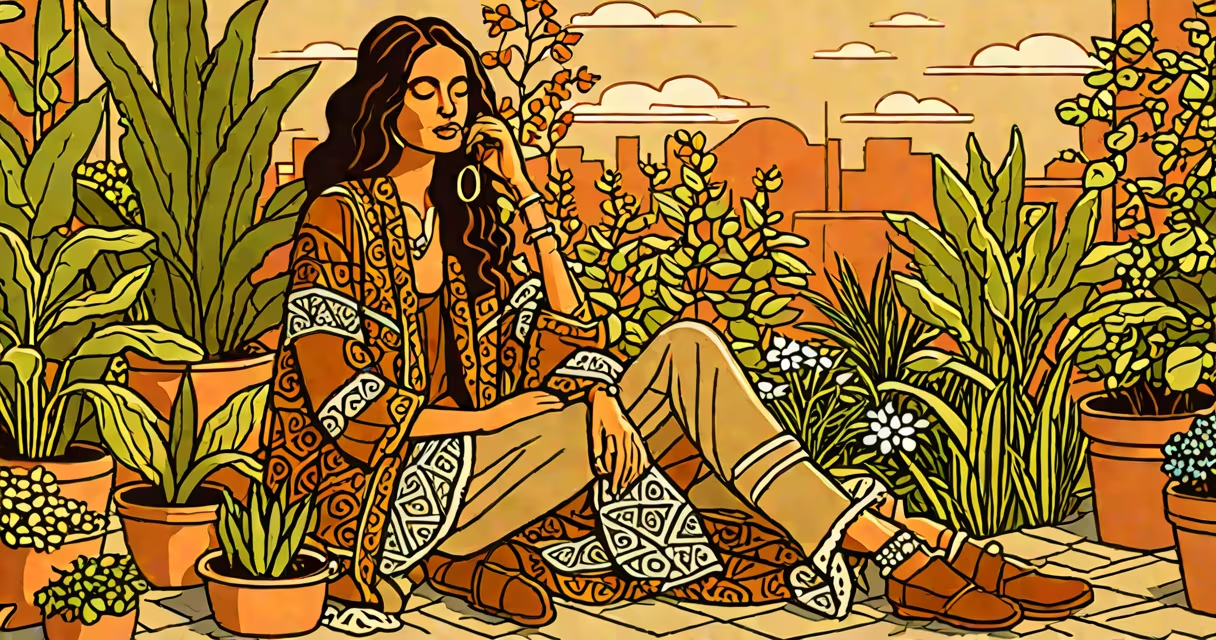
The term "bohemian" describes a lifestyle centered on artistic freedom, nontraditional values, and rejection of mainstream norms. Originating in 19th-century Paris, it evolved from a label applied to Romani people to one embracing creativity, individualism, and spiritual exploration.
Bohemian identity emerged in France during the 1800s among artists, writers, and musicians who lived outside conventional societal structures. They prioritized personal expression over material success, often residing in low-cost urban quarters like Montmartre. This cultural movement rejected rigid class hierarchies and emphasized emotional authenticity.
Today, "bohemian" describes both a historical social group and a modern aesthetic. The term applies to individuals who value originality, environmental awareness, and multicultural influences. It appears in fashion, interior design, music, and personal identity.
Bohemian living centers on autonomy and self-direction. People who identify as bohemian typically avoid corporate employment, rigid schedules, or consumerist ideals. Instead, they pursue work aligned with passion-writing, painting, teaching, or performing arts.
Decisions are guided by internal values rather than external expectations. A bohemian may choose to live in a shared house, travel frequently, or adopt a minimalist wardrobe. Their homes often feature handmade furniture, vintage textiles, and plants. These choices reflect a desire to minimize environmental impact and maximize personal meaning.
Community is central. Bohemians often gather in artist collectives, music festivals, or local art fairs. These spaces allow for collaboration, mutual support, and resistance to commercialization. Events like Burning Man or the Glastonbury Festival exemplify this spirit through immersive, temporary communities built around shared creativity.
Bohemian culture combines elements from multiple traditions. It draws on Eastern spirituality, Native American symbolism, African textiles, and European folk art. This fusion creates a visual language rich in color, texture, and symbolism.
| Type | Characteristics | Example |
|---|---|---|
| Fashion | Flowing silhouettes, layered fabrics, ethnic patterns, natural dyes | A maxi dress with embroidery from Morocco paired with leather sandals |
| Interior Design | Eclectic mix of vintage and handmade pieces, floor cushions, wall hangings | A living room with a handwoven rug, mismatched chairs, and hanging macramé |
| Music and Art | Improvisation, storytelling, experimental forms, communal performance | An acoustic set at a café featuring original lyrics about migration and loss |
Modern bohemianism often blends with other identities. Urban bohemians may live in cities while maintaining alternative lifestyles. Digital nomads use remote work to sustain bohemian freedom. Some embrace sustainability, choosing zero-waste practices and plant-based diets.
"Bohemian" is often confused with "hippie," though the two differ. Hippie culture emerged in the 1960s as a political and anti-war movement. It emphasized peace, love, and communal living. While both reject mainstream norms, hippies were more explicitly tied to protest and activism.
Another misconception is that bohemian means lazy or disorganized. In reality, many bohemians maintain high levels of discipline. Writers like Oscar Wilde and Virginia Woolf balanced creative output with rigorous routines. Their journals show structured planning, daily writing goals, and careful revision.
A lesser-known fact: the word "bohemian" originally referred to people from Bohemia, a region in modern-day Czech Republic. In the 1800s, French society used the term to describe outsiders-especially those of Romani descent-whose lives seemed chaotic or unpredictable. Over time, the term was reclaimed by artists seeking liberation from bourgeois expectations.
In 2019, the Metropolitan Museum of Art's Costume Institute exhibition "About Time: Fashion and Duration" included a section on bohemian fashion. One display featured a 1970s dress worn by actress Jane Fonda, made from repurposed military blankets and decorated with hand-stitched symbols from various cultures. The piece illustrated how bohemian style integrates history, resistance, and personal narrative.
Another example is the rise of "slow fashion." Brands like Reformation and Amour Vert promote sustainable materials and ethical labor. Their designs echo bohemian principles-loose cuts, natural fibers, earth tones-while addressing climate concerns. These companies report 30% higher customer retention compared to fast-fashion brands, according to a 2022 study by McKinsey & Company.
I once visited a community art space in Brooklyn where residents created murals using recycled paint and salvaged wood. The space had no formal leadership. Decisions were made collectively. One resident said, "We don't follow rules-we follow energy." That moment captured the core of bohemian practice: creating meaning through shared intention, not hierarchy.
Bohemian is not synonymous with poverty or lack of ambition. Many bohemians earn stable incomes through freelance work, teaching, or selling crafts. The focus is not on financial status but on alignment between actions and values.
It is also not a synonym for "free-spirited" in the casual sense. Not everyone who wears a flower crown or travels solo is bohemian. True bohemian identity involves consistent engagement with ideas of freedom, ethics, and creativity-not just appearance.
Finally, "bohemian" does not imply anti-intellectualism. Many bohemians are deeply educated. Think of philosopher Simone de Beauvoir, whose writings on gender and autonomy influenced feminist theory. Her life reflected bohemian values-living independently, challenging norms, and advocating for social change.
Understanding "what is bohemian mean" requires recognizing its roots in resistance, creativity, and intentional living. It's not a trend to wear for a season. It's a structure for building a life that resists commodification and honors personal truth.