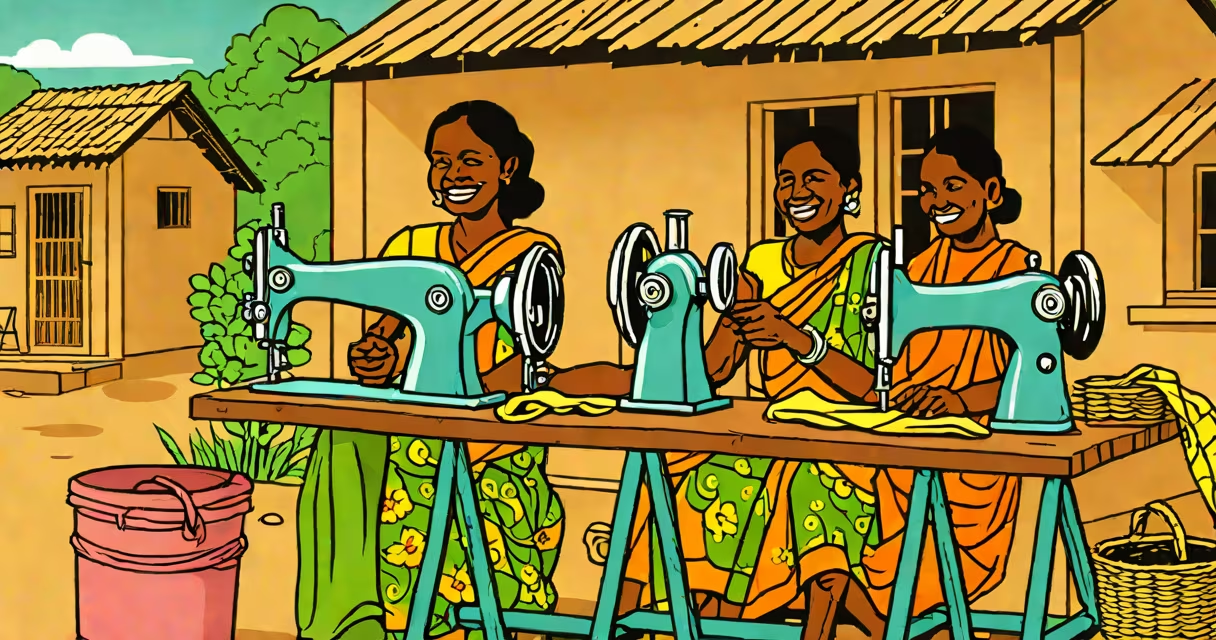
Micro finance is a system of small loans, savings accounts, insurance, and other financial services designed for low-income individuals and entrepreneurs who lack access to traditional banking. It operates on principles of financial inclusion, empowering people in underserved communities to start or grow small businesses, manage risks, and improve household income.
Unlike conventional bank loans, micro finance institutions (MFIs) often require no collateral and base approval on social capital, peer group guarantees, and consistent repayment history. This model emerged in the 1970s and gained global traction through pioneers like Muhammad Yunus and Grameen Bank in Bangladesh.
According to the World Bank, over 1.7 billion adults worldwide remain unbanked. Micro finance bridges that gap by delivering tailored financial tools to those excluded from formal systems. It is not charity-it is a sustainable financial mechanism that combines credit access with financial education and community-based oversight.
At its core, micro finance relies on group lending. Borrowers form small groups-typically five members-where each member is jointly liable for the others' loans. If one defaults, the entire group faces consequences, which encourages accountability and peer pressure to repay on time.
Repayment schedules are structured around borrowers' cash flow cycles. For example, a market vendor in Nairobi might receive a $200 loan to buy fresh produce, repayable in weekly installments over six months. The MFI may meet weekly at a local shop to collect payments and offer basic financial literacy training.
A 2021 study by the Consultative Group to Assist the Poor (CGAP) found that 76% of micro finance clients reported improved household food security within 12 months of receiving a loan. The impact is measurable: increased income, better school attendance for children, and reduced reliance on predatory lenders.
Micro finance encompasses more than just loans. The most common services include:
| Service Type | Description | Example Use Case |
|---|---|---|
| Small Loans | Unsecured credit under $1,000 for business startup or expansion. | A single mother in rural India uses a $300 loan to buy a sewing machine and begin tailoring. |
| Savings Groups | Collective savings led by members, with internal rules and rotation of funds. | Women in a village in Kenya pool $5 each week to fund emergency needs or investments. |
| Micro Insurance | Premiums based on risk profiles; covers health, crop failure, or death. | A farmer in Honduras pays $1/month to insure his harvest against drought. |
| Payment Systems | Digital platforms enabling money transfers via mobile phones. | A fisherman in the Philippines sends earnings home using a mobile wallet app. |
Some MFIs integrate digital tools. M-Pesa in Kenya, launched in 2007, allows users to send money, pay bills, and save via mobile phone. By 2023, over 70 million Kenyans used M-Pesa, with 40% of users reporting improved financial resilience.
Micro finance thrives in regions with weak formal banking infrastructure. Sub-Saharan Africa, South Asia, and parts of Latin America see high adoption due to large informal economies and limited access to credit.
In rural India, the Self-Employed Women's Association (SEWA) runs a micro finance program serving over 1.5 million women. Members contribute monthly to a collective fund and borrow from it at low interest. Since 2000, SEWA's clients have seen average income increases of 34%, according to a 2022 evaluation by the Indian Institute of Management Ahmedabad.
One key reason micro finance succeeds is its focus on trust and community. A 2019 World Bank report emphasized that social cohesion reduces default rates. In Bolivia, a micro finance network called Fondo de Solidaridad achieved a 98% repayment rate over ten years-far above the global average of 85% for similar programs.
Many assume micro finance is synonymous with charity or handouts. That's incorrect. Clients repay loans, and MFIs operate as self-sustaining entities. Grameen Bank, founded in 1983, reported a 98% repayment rate in 2022 and generated profits reinvested into new programs.
Another myth is that micro finance lifts people out of poverty overnight. The reality is slower. A 2020 randomized controlled trial in Uganda found that while micro loans increased business activity by 15%, they did not raise household income over two years. The study concluded that success depends on complementary factors like skills training and market access.
There's also confusion between micro finance and microcredit. Microcredit refers specifically to small loans. Micro finance includes all financial services-loans, savings, insurance, payment systems. Using the terms interchangeably distorts the scope of the field.
In 2018, Fatima, a 32-year-old mother in Dhaka, Bangladesh, received a $150 micro loan from BRAC, one of the world's largest micro finance institutions. She used it to buy a second-hand sewing machine and materials to make children's clothes.
She repaid the loan in 12 weekly installments of $12.50. Within six months, her monthly income rose from $60 to $180. She hired two neighbors to help her sew. By year three, she had saved enough to buy a new machine and open a small storefront.
"I didn't think I could do this," she told a BRAC field officer. "But my group met every Friday. We shared problems. We encouraged each other."
Fatima's story reflects a pattern: micro finance doesn't just provide capital-it builds confidence, networks, and financial habits. Her success wasn't just about the loan. It was about the support structure behind it.
I visited a micro finance meeting in a village near Chiang Mai, Thailand, in 2020. Twelve women sat on bamboo mats, passing around a notebook to record payments. Each spoke briefly about their business progress. One had expanded her vegetable stand; another had enrolled her daughter in school.
The facilitator, a local NGO worker, asked, "Who's behind on payments?" Silence. No one raised their hand. When I asked later why no one defaulted, she said, "They're not afraid of the bank-they're afraid of letting the group down."
This moment underscored a key insight: micro finance works because it's social, not just financial. The group is both the safety net and the motivator.
What is micro finance? It is a structured, inclusive financial system that delivers small-scale credit and related services to people excluded from mainstream banking. It drives economic growth at the grassroots level by supporting entrepreneurship, reducing vulnerability, and fostering long-term financial stability.