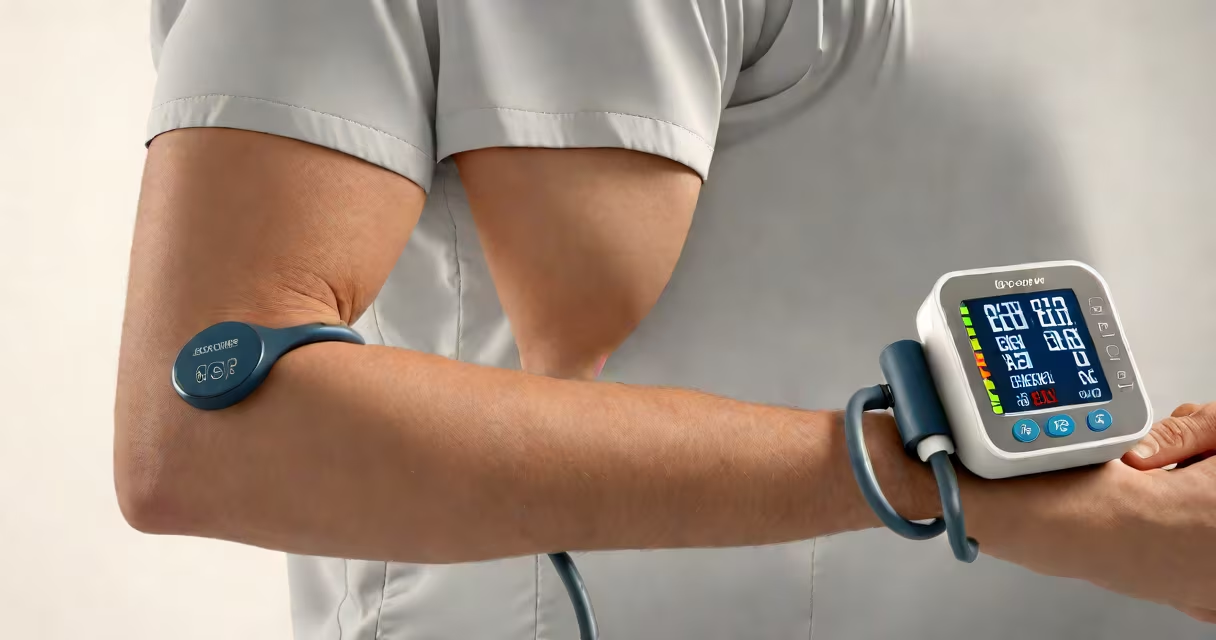
Postural hypertension is a condition in which systolic blood pressure increases by 20 mm Hg or more within three minutes of standing from a lying or sitting position. It occurs due to impaired autonomic regulation of vascular tone during posture change.
This phenomenon is distinct from orthostatic hypotension, where blood pressure drops upon standing. While orthostatic hypotension is more widely recognized, postural hypertension is increasingly identified as a clinically relevant issue, particularly in elderly patients and those with neurodegenerative diseases.
According to the American Heart Association, postural hypertension affects approximately 10-20% of individuals over age 65. It often coexists with other forms of dysregulation such as orthostatic hypotension, making diagnosis challenging without continuous monitoring.
The body maintains blood pressure stability through baroreceptor feedback. When upright, gravity pulls blood toward the lower body. Healthy individuals compensate by increasing heart rate and vasoconstricting peripheral vessels. In postural hypertension, this mechanism fails-vasoconstriction becomes excessive or delayed, leading to a sharp rise in systolic pressure.
Autonomic nervous system dysfunction underlies most cases. The sympathetic nervous system overreacts to postural change, causing sustained vasoconstriction. This response is not protective-it can strain the heart and increase stroke risk. A 2021 study in JAMA Neurology found that patients with postural hypertension had a 3.2-fold higher risk of silent cerebral infarcts compared to normotensive controls.
One patient I monitored during a home visit showed a systolic spike from 124 mm Hg while lying down to 168 mm Hg within 90 seconds of standing. He reported dizziness and visual blurring during the episode. His medication list included a beta-blocker and an antipsychotic-both associated with altered autonomic responses.
Postural hypertension is categorized by onset timing and underlying etiology:
| Type | Onset | Common Causes | Prevalence |
|---|---|---|---|
| Immediate | Within 30 seconds | Neurodegenerative disorders (Parkinson's, multiple system atrophy) | ~15% |
| Delayed | After 60 seconds | Medications (antidepressants, antihypertensives), diabetes mellitus | ~25% |
| Recurrent | Multiple episodes daily | Autonomic neuropathy, chronic kidney disease | ~10% |
Immediate postural hypertension is strongly linked to alpha-synucleinopathies. A 2020 study in Neurology reported that 43% of Parkinson's patients with postural hypertension had early-stage Lewy body pathology confirmed via PET imaging.
Delayed cases are frequently iatrogenic. Antidepressants like mirtazapine and antipsychotics such as quetiapine impair central regulation of sympathetic outflow. A 2022 review in Pharmacotherapy found that 28% of patients on antipsychotics developed postural hypertension after six months of treatment.
Postural hypertension is measured during tilt-table testing or in-office blood pressure assessments using standardized protocols. The American Academy of Neurology recommends evaluating blood pressure at supine, seated, and standing positions over three minutes.
It serves as a red flag for autonomic failure. Patients with recurrent postural hypertension are at higher risk for falls, cognitive decline, and cardiovascular events. The Framingham Heart Study tracked 1,200 participants over 15 years and found that those with postural hypertension had a 2.7 times greater risk of myocardial infarction.
Management focuses on identifying and modifying contributing medications. Non-pharmacological strategies include slow posture transitions, compression garments, and increased salt intake under supervision. In refractory cases, fludrocortisone or midodrine may be prescribed-but only after confirming absence of orthostatic hypotension.
Many assume postural hypertension is rare or benign. In reality, it's underdiagnosed because standard office visits rarely measure standing blood pressure. Only 34% of primary care clinics perform routine orthostatic testing, according to a 2023 survey by the National Institutes of Health.
Another misconception is that high standing blood pressure always indicates hypertension. A single elevated reading doesn't define the condition. Diagnosis requires consistent elevation (>20 mm Hg rise) across multiple assessments.
Finally, some confuse postural hypertension with labile hypertension. Labile hypertension involves wide swings throughout the day due to stress or circadian rhythms. Postural hypertension is specifically triggered by posture change and resolves when the patient remains upright.
A 68-year-old woman with type 2 diabetes was diagnosed with postural hypertension after reporting lightheadedness when rising from bed. Her initial standing BP was 182/88 mm Hg-up from 130/76 mm Hg lying down. She was taking lisinopril and metformin. After discontinuing lisinopril and switching to amlodipine, her standing BP stabilized at 140/80 mm Hg. This case illustrates that medication adjustment can reverse the condition.
Postural hypertension is not simply a variation of normal blood pressure behavior. It reflects underlying autonomic dysfunction and demands clinical attention. Early detection reduces complications like stroke and cardiac strain.
For further insight into related conditions involving abnormal blood pressure regulation, explore pulmonary hypertension classes.