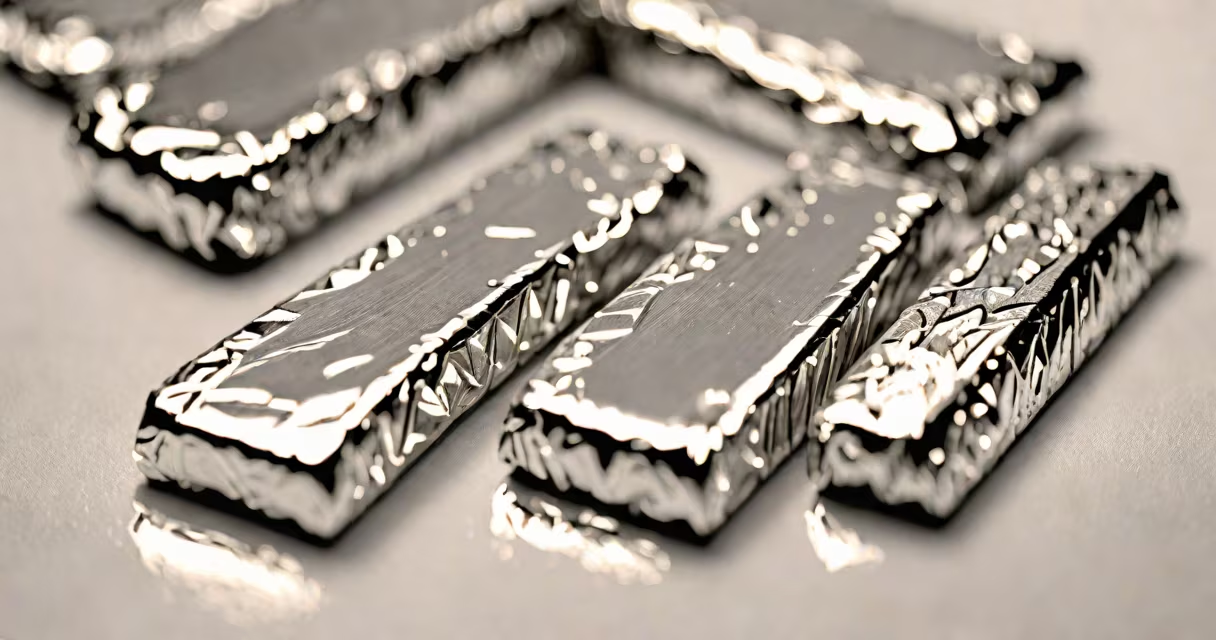
The 13th element on the periodic table is aluminum, a silvery-white metal with atomic number 13 and the chemical symbol Al. It is the most abundant metallic element in Earth's crust and plays a key role in modern industry.
Aluminum is a member of Group 13, the boron group, which includes elements with three valence electrons. This electron configuration gives aluminum a tendency to form +3 ions in compounds. Its position in the periodic table reflects its physical and chemical behavior-moderately reactive, corrosion-resistant due to a protective oxide layer, and highly conductive of both heat and electricity.
Aluminum was first isolated in 1825 by Danish chemist Hans Christian Ørsted, though it remained rare and expensive until the development of the Hall-Héroult process in 1886. That electrolytic method reduced production costs dramatically, making aluminum widely available for industrial use.
Natural aluminum exists only in compounds, never as a free element. The most common ore is bauxite, which contains hydrated aluminum oxides. Bauxite is mined primarily in Guinea, Australia, and Jamaica. After extraction, bauxite undergoes the Bayer process to produce alumina (aluminum oxide), which is then smelted using the Hall-Héroult process to yield pure aluminum metal.
Once refined, aluminum is shaped through casting, rolling, extrusion, or forging. Its low density-2.7 g/cm³-means it weighs about one-third as much as steel, yet it maintains sufficient strength for structural applications. This property makes it ideal for aircraft frames, vehicle bodies, and high-efficiency power lines.
Aluminum's resistance to corrosion stems from a thin, self-repairing oxide film that forms instantly upon exposure to air. This passive layer prevents further oxidation and allows aluminum to remain stable in outdoor environments. For example, aluminum roofing panels in coastal regions maintain integrity for decades despite saltwater exposure.
Aluminum is used in many alloy forms, each tailored for specific performance needs. The primary classification is based on the alloy series:
| Series | Key Alloying Elements | Common Uses |
|---|---|---|
| 1xxx | Pure aluminum (≥99%) | Electrical wiring, reflective surfaces |
| 3xxx | Manganese | Food and beverage cans, cookware |
| 5xxx | Magnesium | Marine structures, shipbuilding |
| 6xxx | Magnesium and silicon | Window frames, architectural components |
| 7xxx | Zinc | Aircraft parts, high-strength tools |
Each series offers different mechanical properties. For example, 6061-T6 aluminum (a 6xxx series alloy) has a tensile strength of 310 MPa and is widely used in bicycle frames and drone casings due to its balance of strength and machinability.
Some people assume aluminum is a rare or exotic material because of its modern applications. In reality, it is the third most abundant element in Earth's crust-after oxygen and silicon-and ranks as the most common metal in the planet's outer layers.
Another misconception is that aluminum causes Alzheimer's disease. This idea originated in the 1960s from studies showing aluminum accumulation in brain tissue of patients. However, large-scale reviews by the National Institutes of Health and the World Health Organization have found no credible evidence linking aluminum exposure from food, water, or antiperspirants to neurodegenerative diseases.
Aluminum is often confused with aluminium-the British spelling. Both refer to the same element. The International Union of Pure and Applied Chemistry (IUPAC) recognizes "aluminum" as the standard U.S. spelling, while "aluminium" is used in most other countries.
In 2023, Boeing reported that the fuselage of the 737 MAX uses approximately 75% aluminum by weight. The material's lightness reduces fuel consumption by up to 15% compared to steel-based designs. A single 737 MAX aircraft contains around 30,000 kg of aluminum alloys, including 2024-T3 (a 2xxx series alloy) in wing spars and 7075-T6 in landing gear components.
During a test flight in 2022, a prototype aircraft experienced minor stress fractures in a 7075-T6 spar. Engineers traced the issue to microstructural defects introduced during forging. They corrected the process by adjusting cooling rates and pressure application, demonstrating how precise control over aluminum's manufacturing conditions ensures safety and longevity.
When I worked on a student-led aerospace project at MIT, we used 6061-T6 aluminum for a drone frame. We machined it using CNC tools and applied anodization to improve wear resistance. The frame survived 400 hours of flight testing with no deformation, proving aluminum's reliability in changing load scenarios.
Aluminum's role in sustainable technology continues to grow. Recycling aluminum saves 95% of the energy required to produce new metal from bauxite. In 2022, global aluminum recycling reached 38 million tons-about 35% of total consumption-according to the International Aluminium Institute.
Its use in solar panel frames, electric vehicle batteries, and wind turbine towers underscores its importance in clean energy infrastructure. For instance, Tesla's Model 3 uses aluminum in 40% of its body structure, reducing vehicle mass and increasing battery efficiency.
Understanding the 13th element is not just academic-it's practical. From the soda can you drink from to the airplane you fly in, aluminum is everywhere. Its unique combination of lightness, durability, and recyclability makes it indispensable in modern engineering.