Polio, short for poliomyelitis, is a viral infection caused by the poliovirus that attacks the nervous system and can lead to paralysis. The history of polio spans centuries of illness, devastating epidemics in the 20th century, and the eventual development of effective vaccines that reduced cases by over 99% globally.
The earliest evidence of polio dates to ancient Egypt, where depictions of people with deformed limbs suggest neurological disease consistent with polio. However, the condition was not recognized as a distinct medical entity until the late 18th century. In 1789, British physician Michael Underwood described a "weakness of the legs" in children, later identified as polio. The term "poliomyelitis" emerged in the 19th century, derived from Greek roots meaning "gray matter inflammation."
By the early 1900s, polio had evolved from a rare childhood illness into a recurring epidemic. The first major outbreak occurred in the United States in 1894, affecting 132 people in Vermont. By 1916, New York City reported over 9,000 cases and nearly 2,400 deaths. The virus spread rapidly through contaminated water and poor sanitation, thriving in urban centers with dense populations and inadequate hygiene infrastructure.
Poliovirus spreads primarily through fecal-oral transmission, often via contaminated food or water. Once ingested, the virus multiplies in the intestines and can invade the central nervous system, targeting motor neurons in the spinal cord. This leads to muscle weakness, paralysis, and in severe cases, respiratory failure.
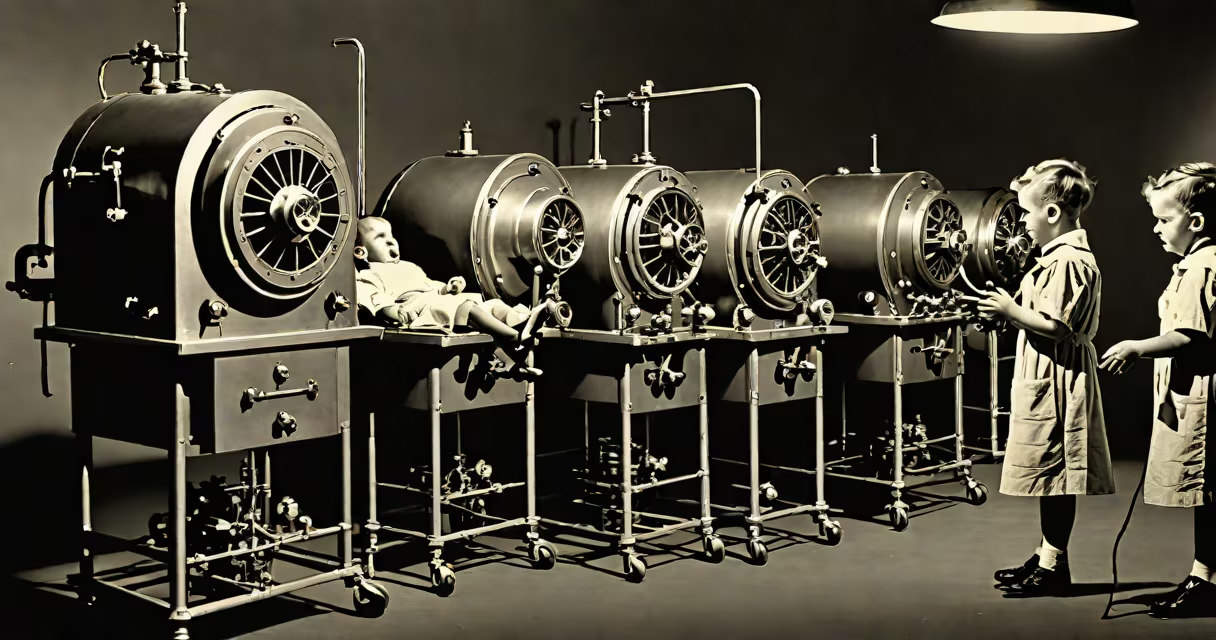
Children aged 3 to 10 were most vulnerable. During peak outbreaks, schools closed, swimming pools were shuttered, and families avoided public gatherings. Fear became widespread. In 1952, the U.S. saw 58,000 cases and 3,145 deaths-the worst year on record. Hospitals filled with patients in iron lungs, mechanical ventilators that kept paralyzed individuals breathing.
Iron lungs were critical during the 1950s. These large metal cylinders enclosed the patient's torso and used negative pressure to simulate breathing. A single machine could sustain multiple patients. The sight of rows of iron lungs in hospitals became a symbol of the crisis. The demand for these devices led to mass production, with over 10,000 units deployed in the U.S. alone by 1955.
Two scientists led the charge in ending the polio threat. Jonas Salk developed the first effective polio vaccine in 1955. His inactivated poliovirus vaccine (IPV) used killed virus particles to stimulate immunity without risk of causing disease. After rigorous testing involving over 1.8 million children in the U.S., Canada, and Finland, the vaccine proved safe and effective.
Salk's vaccine was administered via injection. In 1955, the U.S. government approved its use nationwide. By 1961, annual U.S. polio cases dropped from over 50,000 to fewer than 1,000. The success prompted global adoption. The World Health Organization (WHO) began supporting vaccination campaigns in high-risk regions in the 1960s.
Albert Sabin introduced an oral polio vaccine (OPV) in 1961. Unlike Salk's injectable version, OPV used live attenuated virus. It was cheaper, easier to administer, and induced stronger intestinal immunity, preventing person-to-person transmission. OPV became the preferred tool in mass vaccination drives, especially in low-resource settings.
| Vaccine Type | Developer | Administration | Key Advantage | Key Risk |
|---|---|---|---|---|
| Inactivated Poliovirus Vaccine (IPV) | Jonas Salk | Injection | Safe; cannot cause polio | Less effective at blocking transmission |
| Oral Poliovirus Vaccine (OPV) | Albert Sabin | Oral drops | Easy to deliver; blocks spread | Rarely causes vaccine-derived poliovirus |
Between 1988 and 2023, global polio cases fell from 350,000 annually to just 6 reported cases worldwide. The WHO attributes this decline to coordinated immunization efforts, including the Global Polio Eradication Initiative launched in 1988. Countries like India, which once reported thousands of cases yearly, declared themselves polio-free in 2014.
Despite progress, misconceptions persist. Some believe the polio vaccine causes polio. This is false for IPV. While OPV contains weakened live virus, the chance of it reverting to a virulent form is extremely low-about 1 in 2.4 million doses. The risk is outweighed by the benefit of interrupting transmission.
A common error is equating polio with other paralytic diseases. Polio specifically targets motor neurons in the spinal cord. Other conditions like Guillain-Barré syndrome or transverse myelitis may mimic polio symptoms but have different causes and treatments. Accurate diagnosis requires laboratory testing of cerebrospinal fluid and stool samples.
I recall watching a documentary in 2017 showing footage of a 1950s hospital ward filled with children in iron lungs. The sound of the machines cycling-steady, rhythmic-was haunting. One child, barely ten, spoke about missing school and wanting to walk again. That moment underscored how deeply fear shaped public life. It wasn't just a medical crisis-it was a social trauma.
As of 2024, wild poliovirus remains endemic in only two countries: Afghanistan and Pakistan. The virus persists due to conflict zones, weak healthcare systems, and vaccine hesitancy. In 2022, a case of circulating vaccine-derived poliovirus (cVDPV) was detected in Malawi, highlighting the ongoing need for surveillance.
Global eradication efforts now focus on switching in routine immunization programs. This reduces the risk of new vaccine-derived strains. The Global Polio Eradication Initiative recommends using IPV in all national schedules, even in countries still using OPV for outbreak response.
According to the Centers for Disease Control and Prevention (CDC), routine polio vaccination in the U.S. includes four doses of IPV at ages 2 months, 4 months, 6-18 months, and 4-6 years. The vaccine is over 99% effective at preventing paralytic polio. The WHO estimates that continued funding and political will are needed to maintain momentum through 2030.
Understanding the history of polio reveals how science, public policy, and community trust combine to defeat infectious diseases. The story of polio is not just about viruses and vaccines-it's about human resilience, international cooperation, and the power of preventive medicine. The history of polio shows that even the most feared diseases can be controlled when science and society act together.