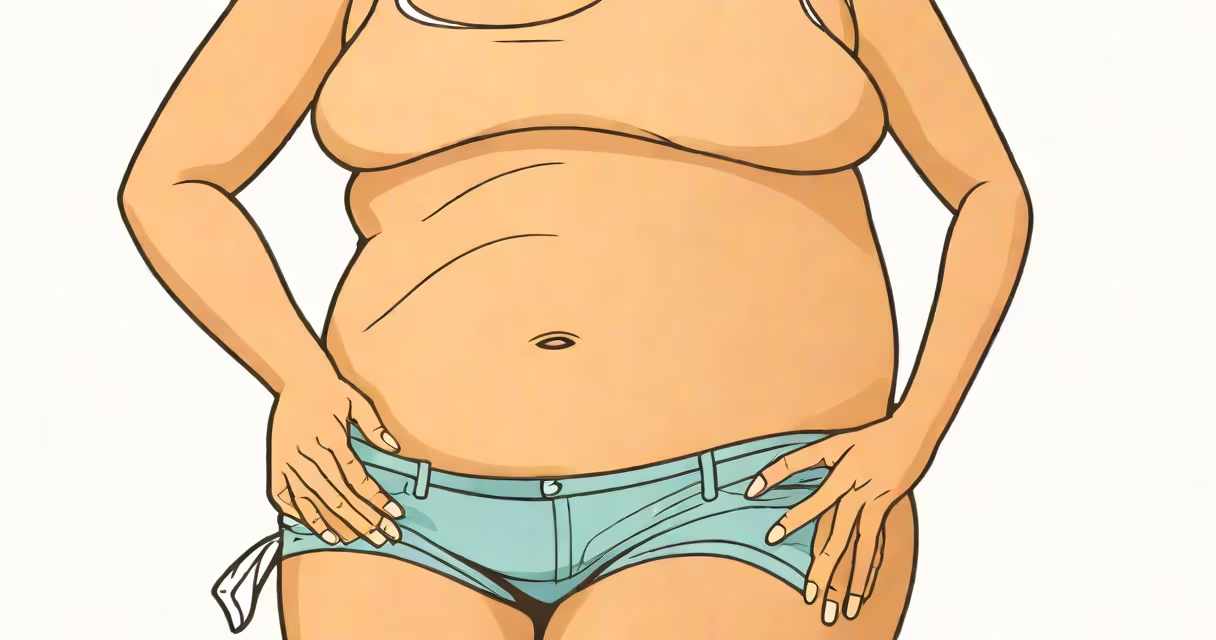
A flat stomach results from low visceral fat, minimal bloating, and visible abdominal muscle tone. It's not about hiding belly fat-it's about reducing internal fat stores and minimizing gas and fluid retention in the abdomen.
Abdominal fat accumulates around organs and contributes to a protruding appearance. When this fat decreases, the stomach flattens. Bloating from gas, poor digestion, or water retention can create temporary fullness even with low body fat. A truly flat stomach combines both reduced fat and improved gut function.
According to the American Council on Exercise (ACE), visceral fat reduction requires consistent calorie deficit and resistance training. The National Institutes of Health (NIH) notes that bloating often stems from carbohydrate malabsorption, such as fructose or lactose intolerance, which causes gas buildup in the intestines.
Stomach flattening occurs through three primary mechanisms: fat loss, reduced bloating, and muscle development. Fat loss lowers the layer of adipose tissue beneath the skin and around organs. This process happens systemically-not locally-and cannot be targeted to one area.
Bloating arises from intestinal gas, excess fluid, or delayed gastric emptying. Foods high in FODMAPs (fermentable oligosaccharides, disaccharides, monosaccharides, and polyols) trigger gas production in sensitive individuals. For example, beans, onions, and apples contain fructans that feed gut bacteria, leading to bloating.
Visible abs require muscle hypertrophy. The rectus abdominis, transverse abdominis, and obliques develop strength and definition when trained consistently. However, muscle becomes visible only when body fat percentage drops below 10-12% for women and 6-8% for men.
Reducing abdominal size involves adjusting diet, movement, and digestive habits. No single food or exercise creates a flat stomach alone. Success comes from combining multiple strategies.
Diet plays the largest role. A 2021 study published in Obesity found that participants who consumed a high-protein, low-glycemic index diet lost 3.5 times more visceral fat than those on a standard diet over 12 weeks. Protein increases satiety and supports lean mass retention during weight loss.
Exercise targets fat and muscle. Resistance training boosts metabolic rate and preserves muscle while burning fat. High-intensity interval training (HIIT) has been shown to reduce visceral fat more effectively than steady-state cardio. A 2019 meta-analysis in Journal of Obesity reported a 15% greater reduction in abdominal fat among HIIT participants compared to moderate-intensity continuous training.
| Factor | Impact on Stomach Flatness | Example |
|---|---|---|
| High-fiber vegetables | Reduces bloating, improves transit time | Broccoli, spinach, zucchini |
| Processed sugars | Increases visceral fat storage | Soda, pastries, candy |
| Strength training | Builds underlying muscle tone | Planks, dead bugs, weighted crunches |
| Lactose-containing dairy | Can cause bloating in intolerant individuals | Milk, yogurt (if lactose-sensitive) |
Many people believe spot reduction-targeting fat loss in one area-is possible. This is false. Fat loss occurs throughout the body in response to energy deficit. You cannot burn belly fat faster than other areas.
Another myth is that drinking lemon water or eating celery alone flattens the stomach. While these foods support hydration and digestion, they do not alter body composition. Celery contains 10 calories per stalk and offers negligible impact on fat loss.
Some assume that a flat stomach equals health. That's incorrect. A person can have a flat stomach with high visceral fat and poor metabolic markers. Conversely, someone with mild abdominal fullness may have excellent metabolic health. Waist circumference and blood tests provide better health indicators than visual appearance.
In 2022, a 38-year-old woman with a waist measurement of 36 inches began a 16-week program focused on nutrition and movement. She eliminated added sugars and processed grains, replaced them with whole foods, and ate 1.6 grams of protein per kilogram of body weight daily.
She performed four weekly sessions of strength training (focusing on compound lifts) and two HIIT sessions using 30-second sprints and 90 seconds of walking. She also tracked her intake of high-FODMAP foods and eliminated them when bloating increased.
After 16 weeks, her waist measured 31 inches. Body fat dropped from 32% to 25%. She reported less bloating and improved digestion. Her abdominal muscles became visible at rest, confirming a flatter appearance due to reduced fat and enhanced muscle tone.
This outcome aligns with research from the University of California, San Francisco, which found that combining protein-rich diets with resistance training led to a 22% average reduction in visceral fat over 12 weeks.
Over-reliance on laxatives or diuretics leads to short-term water loss, not fat reduction. These methods disrupt electrolyte balance and can cause dehydration. They do not improve long-term body composition.
Excessive cardio without strength training risks losing muscle mass. Muscle burns more calories at rest than fat. Losing muscle reduces resting metabolic rate, making future fat loss harder.
Skipping meals or restricting calories too severely slows metabolism. The body adapts by lowering energy expenditure. A 2020 study in Metabolism showed that subjects on very-low-calorie diets (<1,200 kcal/day) experienced a 15% drop in resting metabolic rate within six weeks.
Start with a balanced diet rich in vegetables, lean proteins, healthy fats, and fiber. Focus on whole foods and avoid highly processed items. Track your intake for one week to identify patterns in bloating or energy crashes.
Include strength training twice weekly and HIIT twice weekly. Perform planks, bird-dogs, and cable woodchoppers to engage deep core muscles. Progressively increase load and volume over time.
Monitor symptoms related to digestion. If bloating persists after removing common triggers like beans, cabbage, or carbonated drinks, consider consulting a gastroenterologist. Conditions like small intestinal bacterial overgrowth (SIBO) or irritable bowel syndrome (IBS) can mimic bloating from fat gain.
True flatness comes from sustainable habits, not quick fixes. Consistent effort over months yields lasting results. The goal isn't just appearance-it's metabolic health, energy, and long-term well-being.