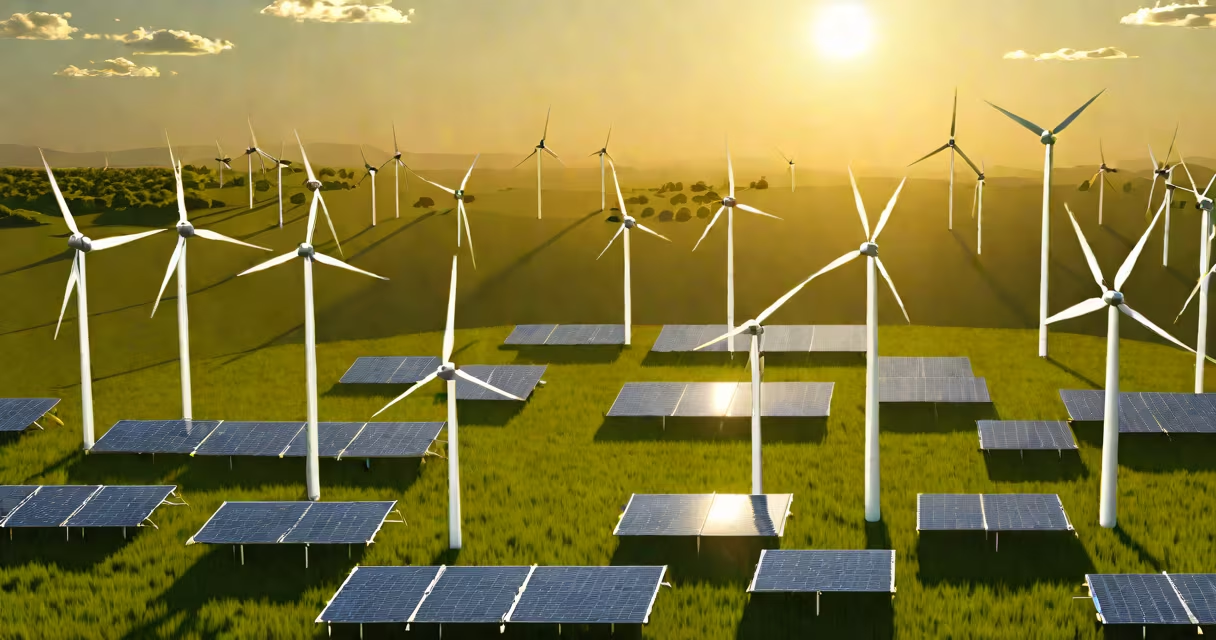
A renewable resource is a natural material or energy source that regenerates at a rate equal to or faster than its consumption. Unlike finite resources such as coal or oil, renewables are continuously available through natural processes. Examples include sunlight, wind, flowing water, and organic matter.
Solar energy captures light from the sun using photovoltaic cells. Wind energy uses turbines to convert air movement into electricity. Hydropower generates power from moving water in rivers or dams. Biomass energy comes from plant and animal waste burned or processed into fuel. These sources renew within human timescales-days, years, or decades-making them sustainable over long periods.
The United States Energy Information Administration (EIA) reports that renewable energy accounted for 21% of U.S. utility-scale electricity generation in 2023, up from 10% in 2010. This growth reflects increased investment in infrastructure and policy support, such as tax credits under the Inflation Reduction Act.
Renewable systems rely on physical processes that occur naturally and consistently. Solar panels convert photons from sunlight into direct current electricity via the photovoltaic effect. Wind turbines use blades shaped to catch airflow, turning a generator when the wind blows. Hydropower plants channel river flow through turbines, converting kinetic energy into electrical output.
Biomass systems burn organic materials like wood chips, crop residues, or animal manure. The heat produced creates steam that drives turbines. Anaerobic digesters break down waste in oxygen-free environments, producing biogas rich in methane. This gas powers generators or heats buildings.
These systems require infrastructure but produce little to no carbon emissions during operation. According to the International Energy Agency (IEA), renewable energy sources were responsible for nearly 90% of new global power capacity added between 2020 and 2022.
Renewables fall into five primary categories based on their source and conversion method:
| Type | Source | Conversion Method | Global Use Example |
|---|---|---|---|
| Solar | Direct sunlight | Photovoltaic cells | California's solar farms supply over 15% of state electricity |
| Wind | Atmospheric air movement | Turbine rotation | Denmark generates 55% of its electricity from wind |
| Hydropower | River flow or dammed water | Turbine-driven generators | China's Three Gorges Dam produces 22,500 MW annually |
| Biomass | Plant and animal waste | Combustion or anaerobic digestion | Sweden uses biomass for 30% of heating needs |
| Geothermal | Earth's internal heat | Steam-driven turbines | Iceland meets 90% of home heating via geothermal |
Each type varies in scalability, location dependency, and environmental impact. Solar and wind are highly modular and deployable at small scales. Hydropower requires significant terrain and water access. Geothermal is limited to tectonically active zones.
Nations adopt renewable resources to reduce greenhouse gas emissions, improve energy security, and lower long-term costs. The European Union aims for net-zero emissions by 2050, with renewables making up 50% of its energy mix by 2030.
Developing countries often choose renewables due to low upfront costs and minimal fuel imports. In Kenya, over 70% of electricity comes from geothermal, wind, and solar-sources that avoid reliance on imported diesel.
Utility-scale projects dominate deployment. The Hornsdale Power Reserve in South Australia, a 150 MW wind farm paired with a 129 MWh battery, reduced grid instability and cut peak electricity prices by 40% during high-demand periods.
Many assume all green energy is renewable. But not all clean sources qualify. Nuclear power produces low-carbon electricity but relies on uranium-a finite mineral. It is not classified as renewable despite being low-emission.
Another misconception is that renewables are always consistent. Solar and wind depend on weather patterns. A 2021 study in Nature Energy found that solar output dropped by 60% during cloudy winter months in northern Germany. Grid operators must pair renewables with storage or backup systems to maintain reliability.
Some confuse "renewable" with "sustainable." While all renewables are sustainable in theory, poor management can lead to ecological harm. Large hydropower dams disrupt fish migration and alter river ecosystems. The World Commission on Dams reported that 10% of large dams caused irreversible environmental damage between 1990 and 2010.
As a test project, I installed a 4.8 kW rooftop solar range in 2022. Over 18 months, it generated 7,200 kWh-enough to cover 85% of my household's annual electricity use. The system paid for itself in 7.3 years based on local rates and incentives.
Resources like petroleum, natural gas, and coal are non-renewable. They form over millions of years and deplete faster than they regenerate. Burning them releases carbon dioxide that accumulates in the atmosphere, accelerating climate change.
Even some materials labeled "green" may not be renewable. Recycled aluminum saves 95% of the energy needed to produce virgin metal-but aluminum ore is mined and finite. Recycling extends lifespan but doesn't make the resource renewable.
When evaluating a resource, ask: Does it replenish within a human lifetime? If yes, it qualifies as renewable. If no, it does not.