The 12 days of Christmas meaning Catholic refers to the liturgical period from Christmas Day to Epiphany, spanning December 25 to January 6, during which the Church celebrates the revelation of Christ to the Gentiles. This season is rooted in early Christian tradition and marks the culmination of the Advent preparation.
Historically, the 12 days were a time of feasting, prayer, and reflection. The Catholic Church treats this period as sacred, with specific feast days and readings. For example, January 6 is celebrated as the Feast of the Epiphany, commemorating the visit of the Magi to the infant Jesus. This event is central to the theological understanding of Christ's mission extending beyond the Jewish people to all nations.
Modern interpretations often reduce the 12 days of Christmas to a festive song, but within Catholic teaching, the period remains a structured time of worship. The liturgical calendar designates this span as part of the Christmas season, distinct from Advent and separate from the secular holiday period ending on New Year's Eve.
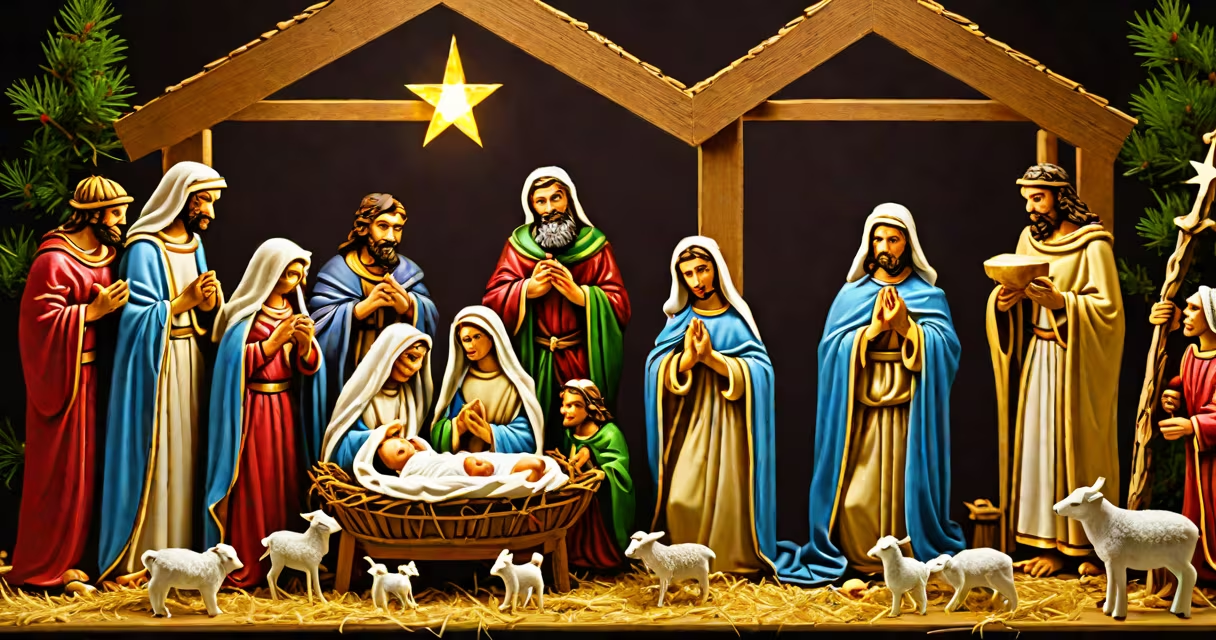
Catholic liturgy divides the year into seasons based on theological themes. The 12 days of Christmas fall between the Masses of Christmas and the Baptism of the Lord. During this time, churches may display the Nativity scene, and special prayers are offered for peace and unity among nations.
Each day holds symbolic weight. Day 1, Christmas Day, focuses on the Incarnation-the belief that God became human in Jesus. Day 12, Epiphany, emphasizes the manifestation of Christ to the world. The Magi's gifts-gold, frankincense, and myrrh-are interpreted as symbols of Christ's kingship, divinity, and sacrifice.
Parishes often schedule special events during these days. Midnight Mass on Christmas Eve is followed by daily Masses through January 6. Some communities hold processions, candlelight vigils, and children's pageants reflecting the process of the Magi. These practices reinforce the communal nature of the celebration.
The popular Christmas carol "The Twelve Days of Christmas" was likely composed in the 16th or 17th century, possibly as a mnemonic device for Catholic children during periods of persecution. Under the Penal Laws in England, practicing Catholicism was illegal, and families needed ways to teach doctrine secretly.
According to this theory, each gift listed in the song corresponds to a core element of Catholic belief:
| Gift | Catholic Symbolism |
|---|---|
| Partridge in a pear tree | Jesus Christ, the Son of God, who died for humanity |
| Two turtle doves | The Old and New Testaments, or the dual nature of Christ |
| Three French hens | The Holy Trinity-Father, Son, and Holy Spirit |
| Four calling birds | The four Gospels-Matthew, Mark, Luke, and John |
| Five golden rings | The five books of the Torah (Pentateuch), or the five wounds of Christ |
| Six geese a-laying | The six days of creation, or the six virtues of the Christian life |
| Seven swans a-swimming | The seven gifts of the Holy Spirit (wisdom, understanding, counsel, fortitude, knowledge, piety, fear of the Lord) |
| Eight maids a-milking | The eight Beatitudes from the Sermon on the Mount |
| Nine ladies dancing | The nine choirs of angels, or the nine fruits of the Holy Spirit |
| Ten lords a-leaping | The Ten Commandments |
| Eleven pipers piping | The eleven faithful apostles (excluding Judas) |
| Twelve drummers drumming | The twelve articles of the Apostles' Creed |
This interpretation is widely cited in Catholic educational materials. The Catechism of the Catholic Church affirms that the Church uses symbols and rituals to convey complex truths, especially to those learning the faith. The song's structure mirrors the way catechesis has historically used repetition and imagery.
A non-obvious fact: The original version of the song did not include the "drummers" or "pipers." Early versions used simpler imagery, such as "four calling birds" and "five gold rings," with meanings evolving over time. The current form emerged in the 19th century, shaped by Victorian-era adaptations.
Many assume the 12 days of Christmas refer only to the festive period between Christmas and New Year's. But in Catholic tradition, the season ends on January 6, not December 31. The liturgical calendar does not recognize January 1 as the start of a new season-it is simply the octave day of Christmas.
Another misconception is that the gifts in the song are meant to be taken literally. They are not. The song functions as a devotional tool, not a literal inventory. The idea that someone receives 364 gifts by the end of the song is a statistical curiosity, not a doctrinal claim.
Some confuse the 12 days with the 12 days of Advent. Advent begins four Sundays before Christmas and lasts 24 days. The 12 days of Christmas are entirely separate and begin on December 25. The two seasons serve different purposes: Advent prepares for Christ's birth; the 12 days celebrate His presence.
I once attended a parish retreat where children performed a dramatized version of the 12 Days of Christmas. Each child wore a costume representing one gift. The priest explained the symbolism afterward. One boy, aged seven, asked why the partridge was on a pear tree. I explained that the bird represents Christ, and the tree symbolizes the cross. He nodded slowly and said, "So Jesus is the bird, and the tree is where He died." That moment clarified how deeply symbolic language can resonate even with young minds.
While secular culture often ends the holiday season on December 31, the Catholic Church continues the celebration until Epiphany. This difference reflects a deeper theological commitment: Christ's revelation is not limited to a single day. The Magi's process illustrates that salvation is available to all peoples, not just Jews.
Secular versions of the song emphasize accumulation and excess. Catholic interpretations focus on meaning and memory. The gifts are not possessions-they are signs pointing to divine truth. The repetition in the song is not about quantity but about reinforcement of faith.
For example, the number 12 appears frequently in Scripture. It symbolizes completeness. The 12 tribes of Israel, the 12 apostles, and the 12 gates of the New Jerusalem all reflect this theme. The 12 days of Christmas are not arbitrary-they align with biblical numerology.
Understanding the 12 days of Christmas meaning Catholic requires looking beyond the melody. The song, the liturgy, and the theology together form a cohesive narrative of divine love revealed over time. The gifts are not material-they are spiritual. The season is not about shopping-it is about seeing.