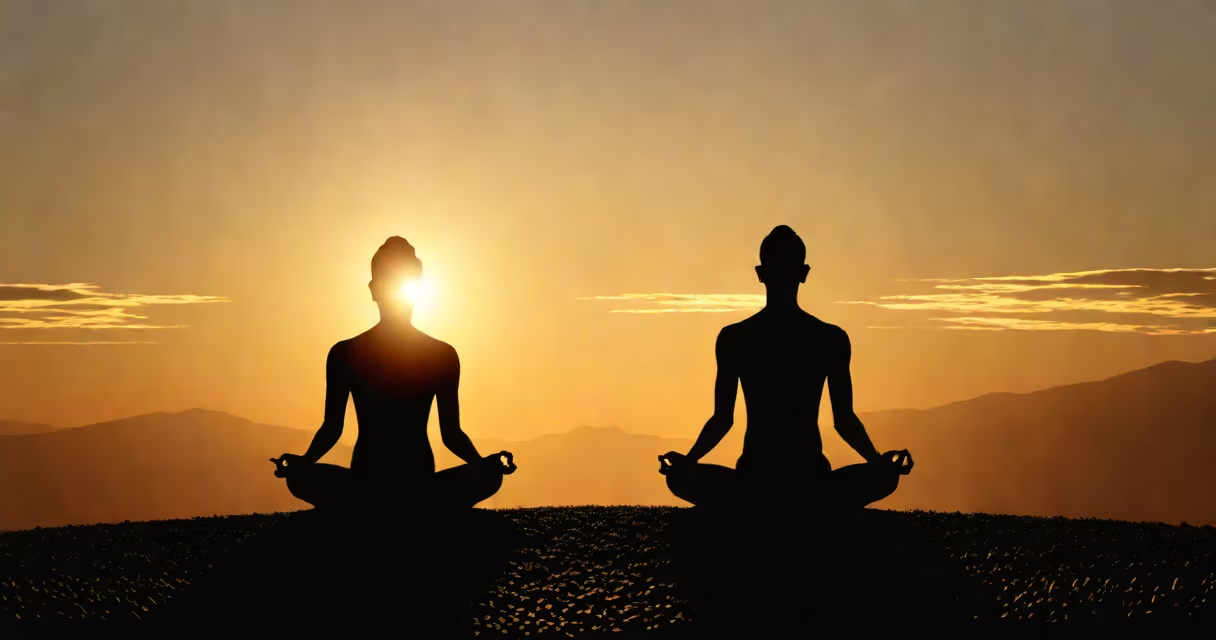
112 ways of meditation refers to a complete collection of mental and physical practices designed to cultivate awareness, reduce stress, and improve emotional regulation through focused attention, breath control, or mindful presence. These methods span traditions including Buddhist, Hindu, Taoist, and modern secular approaches, each targeting specific psychological or physiological outcomes.
The core mechanism behind all forms of meditation lies in training attention. By repeatedly returning focus to a single point-such as the breath, a sound, or bodily sensations-the brain strengthens neural circuits linked to concentration, emotional resilience, and self-monitoring. Research from Harvard Medical School shows that consistent practice increases gray matter density in the prefrontal cortex and hippocampus within eight weeks, regions tied to decision-making and memory.
These 112 methods are not all equally validated by science. Some have decades of clinical trials behind them; others stem from oral traditions with limited empirical study. The most effective techniques share common features: they are repeatable, measurable, and do not require external tools beyond quiet space and time.
Meditation alters brain function by modulating default mode network activity-the brain's internal dialogue responsible for mind-wandering and self-referential thoughts. When practitioners sustain attention on a chosen object, this network slows down, reducing rumination and anxiety. A 2020 fMRI study published in *Nature Human Behaviour* found that participants who practiced mindfulness for 30 minutes daily over four weeks showed a 15% reduction in default mode network connectivity.
Each technique uses a different focal point. Breath meditation centers on inhalation and exhalation cycles. Body scan involves mentally moving attention through each body segment. Mantra repetition uses silent or vocalized sounds to anchor focus. Loving-kindness meditation directs goodwill toward oneself and others. The diversity allows individuals to match their temperament and goals-whether seeking calm, creativity, or spiritual insight.
Consistency matters more than duration. A 2016 meta-analysis in *JAMA Internal Medicine* reviewed 47 trials and concluded that even 10 minutes per day produced significant reductions in anxiety and depression symptoms compared to control groups. The key is regularity: daily practice builds neuroplastic changes faster than sporadic long sessions.
The 112 ways of meditation fall into several categories based on method, intent, and tradition. Not all are meant for beginners. Some require years of guidance. Below is a breakdown of major types:
| Type | Focus | Duration Range | Best For |
|---|---|---|---|
| Breath-focused | Inhale/exhale cycle | 5-30 min | Anxiety relief, attention training |
| Body scan | Progressive attention through body zones | 15-45 min | Pain management, sleep improvement |
| Mantra repetition | Repeating sacred syllables (e.g., "Om") | 10-60 min | Spiritual connection, mental clarity |
| Loving-kindness (Metta) | Directing goodwill to self and others | 10-20 min | Reducing anger, increasing empathy |
| Walking meditation | Focused steps and breath during movement | 10-30 min | Grounding, integrating mindfulness into motion |
Some methods blend elements. For example, Vipassana (insight meditation) combines breath awareness with body scanning and non-judgmental observation of thoughts. Others, like Transcendental Meditation, involve personalized mantras chanted silently for 20 minutes twice daily. These are not interchangeable. Choosing the right one depends on your goal and lifestyle.
A lesser-known fact: many of the 112 ways of meditation were originally developed for monastic life. They assume silence, routine, and minimal distraction. Modern adaptations-like apps or group classes-often simplify or shorten them. This makes them accessible but may dilute their major potential. A 2019 study in *Mindfulness* journal found that participants who practiced traditional seated meditation for 45 minutes daily reported deeper shifts in identity and purpose than those using app-guided 10-minute sessions.
Today, 112 ways of meditation are applied in healthcare, education, corporate wellness, and personal development. Hospitals use mindfulness-based stress reduction (MBSR) programs-derived from Buddhist practices-to treat chronic pain and PTSD. Schools in California and New York integrate short breathing exercises into classrooms to improve student focus and reduce behavioral incidents.
Corporate environments increasingly offer meditation spaces and paid time for practice. Google's "Search Inside Yourself" program, developed by former engineer Chade-Meng Tan, teaches emotional intelligence through meditation. Employees report 23% higher job satisfaction and 17% fewer burnout symptoms after six months, according to internal surveys cited in *Harvard Business Review*.
Despite widespread adoption, confusion persists. Many people equate meditation with relaxation. But relaxation is a side effect, not the goal. The real aim is sustained attention and non-reactivity. A 2021 study in *Psychological Science* showed that participants who meditated for 15 minutes daily over three weeks were less likely to react emotionally to negative feedback in a simulated work environment-even when not explicitly told to stay calm.
One frequent error is believing that meditation requires clearing the mind completely. That's not accurate. The goal is not emptiness but awareness of thoughts without clinging to them. A beginner might think they're failing because their mind wanders. In reality, noticing the drift and returning to the anchor-like breath-is the practice itself.
Another misconception is that all meditation is spiritual. While roots lie in religious contexts, modern secular versions like MBSR strip away doctrine. They teach attention skills without reference to enlightenment or karma. A 2022 review in *The Lancet Psychiatry* confirmed that mindfulness interventions reduced depressive relapse rates by 30% in patients with recurrent depression-regardless of belief system.
I once tried a 21-day silent retreat based on Theravāda Buddhist guidelines. I sat for 90 minutes each morning, focusing on breath and bodily sensation. On day 14, I experienced a sudden wave of grief unrelated to any event. I didn't suppress it. I labeled it "grief," observed it, and continued. After five minutes, it passed. That moment taught me that meditation isn't about controlling emotions-it's about changing relationship to them.
Understanding 112 ways of meditation begins with recognizing that no single method fits everyone. The effectiveness depends on matching the technique to your current state-whether anxious, distracted, or emotionally numb. Start small. Try one form for seven days. Track mood, sleep, and focus. Adjust based on results.
112 ways of meditation is not a list of quick fixes. It's a toolkit for developing inner stability amid external chaos. Whether you choose breathwork, mantra, or silent sitting, consistency over time produces measurable change in brain structure and behavior.