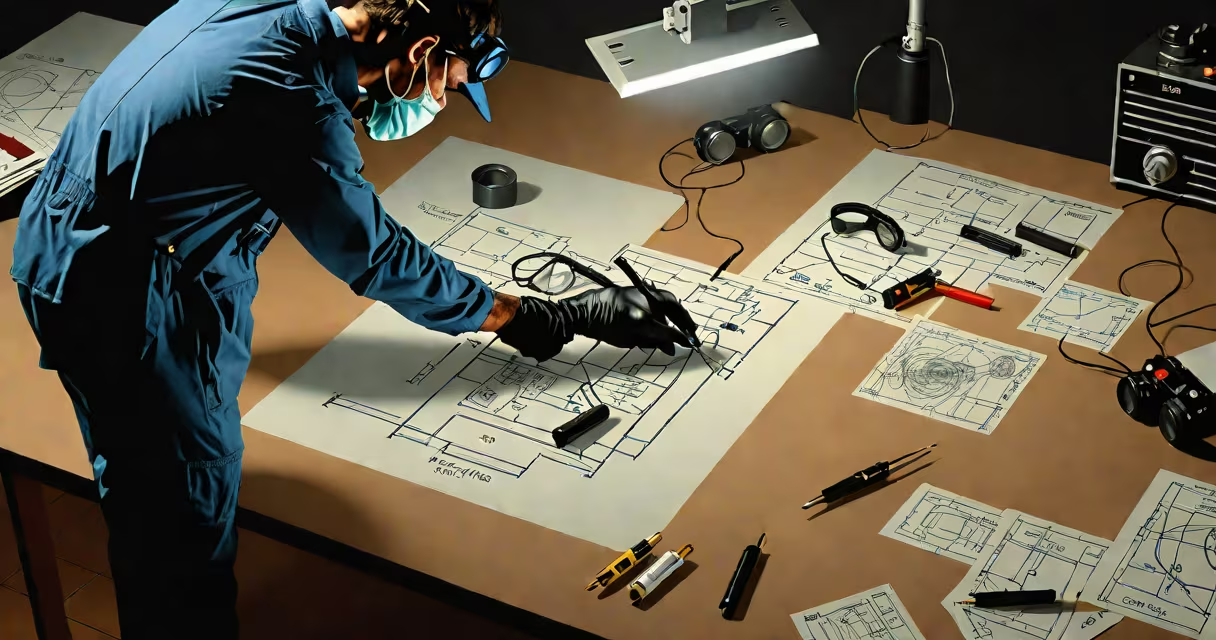
A crime scene investigator (CSI) is a trained professional who processes crime scenes to collect, preserve, and analyze physical evidence linked to criminal activity. They document the scene through photography, sketches, and notes, then gather trace materials such as fingerprints, bloodstains, fibers, and weapons. Their findings help law enforcement identify suspects, reconstruct events, and support prosecutions in court.
CSIs operate under strict protocols to prevent contamination of evidence. They wear protective gear including gloves, masks, and shoe covers to avoid introducing foreign particles. Each piece of evidence is logged with chain-of-custody documentation to ensure legal admissibility. The role requires attention to detail, scientific reasoning, and familiarity with forensic disciplines such as DNA analysis, ballistics, and toxicology.
The work begins before investigators arrive. A first responder secures the scene and prevents unauthorized access. Once cleared, the CSI enters with a checklist: photograph the scene from multiple angles, sketch the layout, and begin systematic search patterns. Evidence is collected using swabs, tape lifts, powder brushes, and specialized tools like alternate light sources. All actions are recorded in a field notebook and later entered into digital databases.
Every step a CSI takes follows a standardized method. The process starts with a walk-through to assess the scene's integrity and identify potential evidence zones. A grid pattern or spiral search ensures no area is missed. Photographs are taken before any movement occurs-this preserves the original state. Overhead shots, close-ups, and wide-angle images capture context and detail.
Once visual documentation is complete, the CSI uses tools like luminol to detect traces of blood invisible to the naked eye. Latent fingerprint powders reveal prints on surfaces. Swabs collect biological samples for DNA testing. Items such as shell casings or broken glass are bagged separately to avoid cross-contamination. Each item receives a unique identifier and is stored in sealed containers labeled with date, location, and collector name.
After the scene is processed, evidence is sent to a forensic laboratory. There, specialists perform chemical tests, microscopic analysis, and database comparisons. Results are compiled into reports that may be used in court. CSIs often testify about their methods and findings, explaining how evidence was collected and why it matters.
Crime scene investigators handle diverse categories of evidence. Biological material includes blood, saliva, semen, and hair. Trace evidence consists of fibers, soil, paint chips, and gunshot residue. Digital evidence such as cell phones, hard drives, and surveillance footage is also part of the investigation. Each type requires specific handling procedures.
| Evidence Type | Collection Method | Common Lab Test |
|---|---|---|
| Bloodstains | Luminol spray, swabbing | DNA profiling |
| Fingerprints | Powder dusting, cyanoacrylate fuming | AFIS database match |
| Fibers | Tape lift, vacuum sampling | Microscopic comparison |
| Gunshot residue | Swabbing near wounds or surfaces | Scanning electron microscopy |
Tools range -tech. Flashlights with UV filters reveal bodily fluids. 3D laser scanners create precise models of scenes. Digital cameras with metadata tagging ensure authenticity. Some agencies use drones to capture aerial views of large outdoor scenes. These technologies improve accuracy and reduce human error.
Crime scene investigators serve local police departments, state bureaus, federal agencies like the FBI, and private forensic firms. They respond to homicides, assaults, burglaries, sexual offenses, and traffic fatalities. In cases involving missing persons or mass disasters, CSIs help determine cause and time of death.
One notable example is the 2001 anthrax attacks in the U.S., where CSIs collected spore samples from mailrooms and traced them to a single lab. The investigation relied heavily on trace evidence and environmental sampling. This case highlighted how meticulous scene processing can lead to breakthroughs in terrorism and biocrime investigations.
Another example occurred in 2018 during the investigation of a double homicide in Detroit. A CSI discovered a partial footprint in mud near a vehicle. The print matched a pair of boots owned by the suspect, which had been previously overlooked. This single piece of evidence led to an arrest and conviction.
Many people confuse a crime scene investigator with a forensic scientist. While both work with evidence, CSIs focus on scene processing and preservation. Forensic scientists analyze evidence in labs. A CSI may collect a blood sample, but a forensic biologist determines its origin and genetic profile.
Another misconception is that CSIs appear on TV shows like *CSI: Miami* or *Bones*. In reality, most cases take weeks to resolve. The average turnaround for lab results is 60-90 days. High-profile cases may involve hundreds of hours of work and dozens of personnel. The media portrayal exaggerates speed and certainty.
A lesser-known fact: many CSIs are not sworn officers. They are civilian employees hired for their technical skills. In some states, only sworn police officers can enter restricted areas. Civilian CSIs must work under supervision and follow departmental policies strictly. This distinction affects jurisdiction, authority, and chain-of-custody responsibilities.
I once observed a CSI team process a residential burglary in suburban Chicago. The scene had been disturbed by family members before arrival. The CSI used a handheld UV light to find a faint smear of blood on a kitchen counter-initially missed because it was dried and blended with grease. The sample later matched the suspect's DNA in a national database. That single discovery closed the case within six weeks.
Becoming a crime scene investigator typically requires a bachelor's degree in forensic science, criminal justice, biology, or chemistry. Coursework includes anatomy, pathology, evidence law, and ethics. Field training includes mock crime scenes, simulation drills, and certification exams.
Key qualifications include attention to detail, emotional resilience, and the ability to work under pressure. CSIs often face disturbing scenes and must maintain professionalism. They must also stay current with evolving techniques-such as the use of artificial intelligence in fingerprint recognition-and comply with legal standards like the Daubert standard for expert testimony.