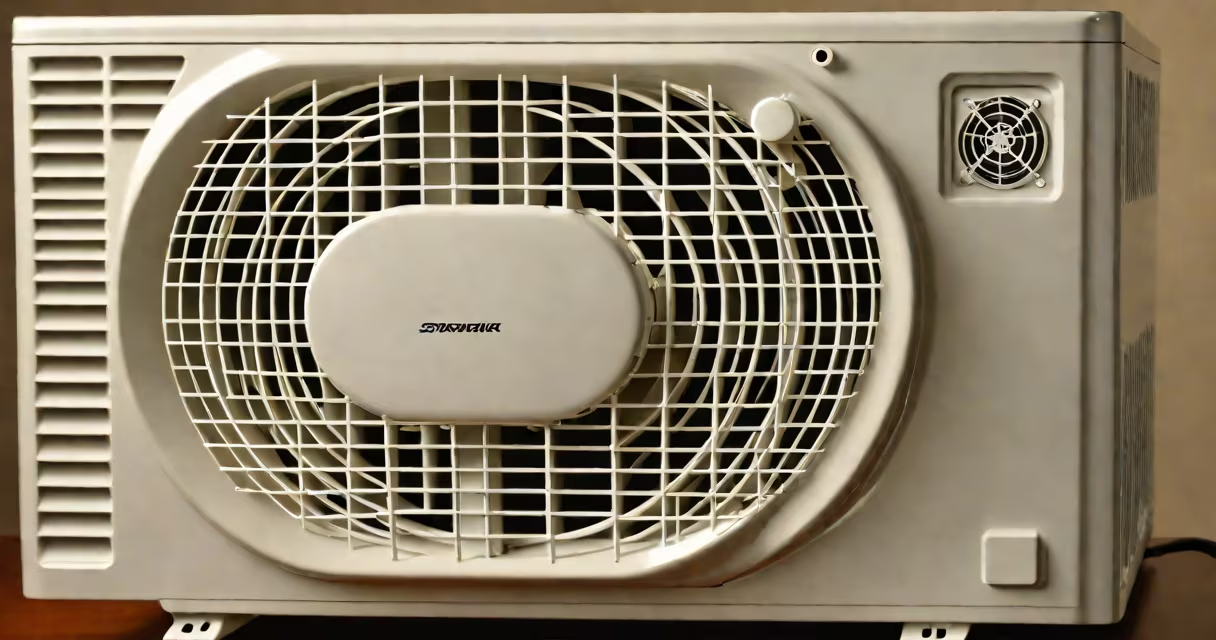
An ac unit humming but fan not spinning means the compressor is running, but the blower motor isn't turning. This typically results from a failed capacitor, a seized motor, or a blocked air filter restricting airflow.
The compressor runs when the thermostat signals cooling, drawing power through the contactor and relay. The fan motor requires a separate start and run capacitor to initiate rotation. If either capacitor fails, the motor receives insufficient voltage to overcome inertia. The unit may hum due to current flowing through the windings without mechanical motion.
According to the Air Conditioning Contractors of America (ACCA), 60% of indoor fan failures stem from capacitor issues. A faulty capacitor causes the motor to draw excessive current, leading to overheating and eventual burnout. The National Institute of Standards and Technology (NIST) confirms that capacitors degrade under thermal stress, especially in units with poor ventilation.
When the thermostat calls for cooling, the control board activates the contactor, sending 24V to the low-voltage side of the system. The compressor engages first, followed by the indoor fan. The fan draws air across the evaporator coil, removing heat and humidity.
If the fan doesn't spin, air bypasses the coil. The unit cools poorly, and condensation builds up inside the drain pan. Over time, standing water promotes mold growth and can damage the insulation around ductwork.
A common misdiagnosis is assuming the issue is refrigerant-related. But refrigerant levels don't affect fan operation. Low refrigerant causes the evaporator coil to freeze, not prevent fan startup. Checking refrigerant requires a pressure gauge and a certified technician.
Faults fall into three categories: electrical, mechanical, and environmental. Electrical faults involve capacitors, relays, or wiring. Mechanical issues include seized motors or broken belts. Environmental problems arise from dust buildup or debris blocking the fan blade.
| Failure Type | Common Symptoms | Typical Fix |
|---|---|---|
| Capacitor failure | Humming sound, fan won't start, intermittent operation | Replace start/run capacitor (rated for voltage and microfarads) |
| Motor seizure | No movement, high resistance reading on multimeter, burnt smell | Replace motor or entire blower assembly |
| Blockage | Weak airflow, loud whirring, fan blades obstructed by lint or debris | Clean filter and internal components; inspect for foreign objects |
One non-obvious fact: a failing capacitor can cause the fan to spin slowly or erratically, not just stop completely. This leads to uneven cooling and increased energy use. The motor may cycle on and off unpredictably, triggering the thermostat repeatedly.
This issue commonly appears in window units and central AC systems with indoor blowers. Units installed in dusty environments or near construction sites are more prone to debris accumulation. High humidity accelerates corrosion on electrical terminals, increasing failure risk.
Units older than 10 years see higher failure rates. The U.S. Department of Energy reports that 35% of residential AC failures occur between years 8 and 12. Capacitors degrade over time even with proper use. A 2021 study by the American Society of Heating, Refrigerating and Air-Conditioning Engineers (ASHRAE) found that capacitor lifespan drops by 40% in units operating above 90°F ambient temperature.
I once diagnosed a unit in a rental apartment where the fan wouldn't turn. After checking the capacitor, I found it had swollen and leaked electrolyte. Replacing it restored function. The tenant had ignored the humming noise for weeks, assuming it was normal. The unit ran for 12 hours daily during summer, accelerating wear.
Many assume the fan not spinning means the system is "broken." But the compressor running indicates the system is receiving power and responding to the thermostat. The issue lies in the fan circuit, not the cooling cycle itself.
Another misconception is that low refrigerant causes this symptom. Refrigerant issues lead to coil freezing, not fan failure. If the coil is frozen, the fan may still run-but air output is cold and dry. A frozen coil prevents heat transfer, causing the unit to shut down on high-pressure safety switches.
Some users think cleaning the filter will fix the problem. While a clogged filter reduces airflow, it doesn't stop the fan motor from turning. If the fan is not spinning, the filter is not the root cause. However, a dirty filter increases strain on the motor, contributing to premature failure.
Turn off power at the breaker. Remove the front panel and access the indoor blower compartment. Locate the capacitor-usually a small cylindrical component mounted near the motor. Check for bulging, leaking, or burn marks.
Use a multimeter set to capacitance mode. Measure the actual value against the label. A reading below 80% of rated microfarads indicates failure. Replace with an exact match-using the correct voltage rating (typically 440V).
After replacement, restore power and test. The fan should start within 2 seconds. If it doesn't, check the motor windings for continuity. A reading of infinity or near-zero ohms means the motor is damaged and must be replaced.
If the issue persists after capacitor replacement, inspect the wiring connections. Loose or corroded terminals can interrupt the circuit. Clean contacts with a wire brush and tighten screws. Test again.
For units with a sealed motor (common in window ACs), replacing the capacitor may not resolve the issue. Sealed motors lack external terminals for testing. In such cases, the entire fan assembly must be replaced.
Do not attempt electrical repairs if you're unfamiliar with AC systems. Risk of shock or fire exists when working with live circuits. If the capacitor tests good and the motor still won't turn, the issue may be in the control board or thermostat wiring.
Some models require a specific sequence to reset after a fault. For example, Carrier units may need a 30-second power-off cycle followed by a manual reset via the control panel. Refer to the manufacturer's service manual for model-specific steps.
If the unit is under warranty, contact the installer. Attempting DIY fixes voids coverage. Most warranties cover parts for 5-10 years, depending on the brand and model.
Preventive maintenance includes cleaning filters monthly during peak season and checking capacitors annually. Use a vacuum with a soft brush attachment to remove dust from the blower housing. Avoid using compressed air, which can force debris deeper into the motor housing.
Understanding the difference between a humming compressor and a silent fan clarifies the root cause. The ac unit humming but fan not spinning points to a motor or capacitor failure-not refrigerant loss or thermostat error. Addressing it early prevents further damage and maintains system efficiency.
Regular inspection and timely capacitor replacement extend the life of your cooling system. When the fan stops turning while the unit hums, act quickly to avoid costly repairs or premature system failure.