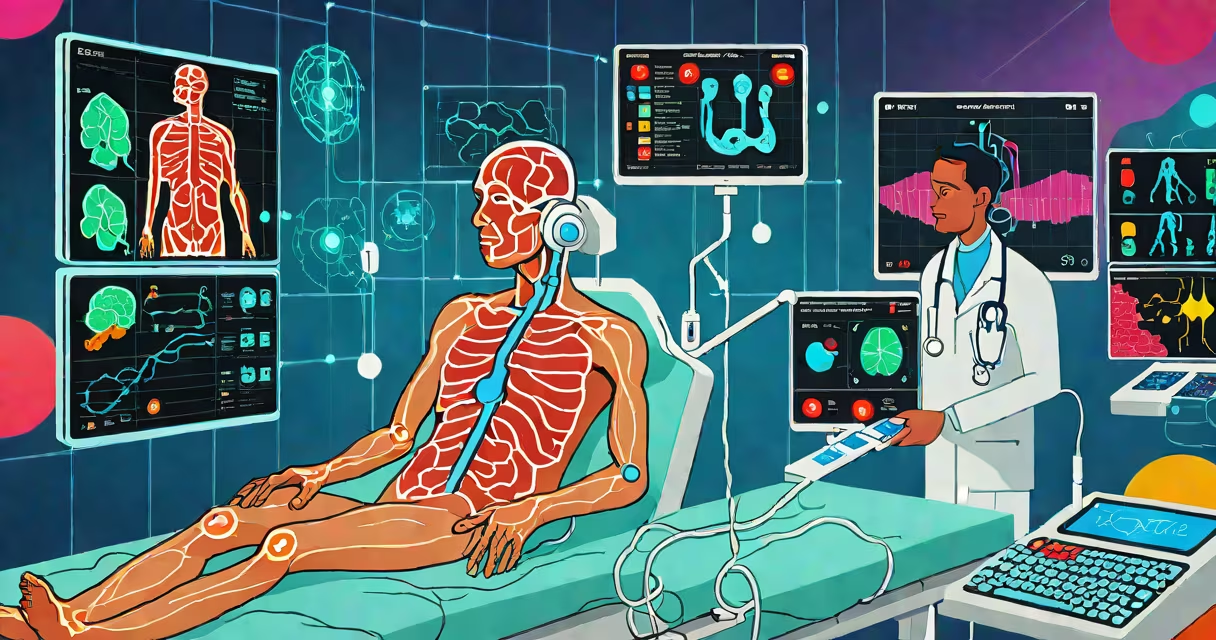
Artificial intelligence in healthcare applies machine learning and data analysis to improve medical outcomes, reduce clinician workload, and accelerate diagnosis and treatment planning. It processes vast amounts of clinical data-imaging, electronic health records, genomic sequences-to detect patterns invisible to human eyes.
AI for healthcare operates through algorithms trained on historical patient data. These models learn to predict disease progression, recommend treatments, or flag anomalies in scans. For example, an AI system trained on 100,000 chest X-rays can identify early signs of pneumonia with 94% accuracy, matching or exceeding radiologist performance in controlled trials.
The technology is not a replacement for doctors. Instead, it acts as a decision-support tool. A study published in Nature Medicine found that combining AI with radiologists reduced false-negative rates in breast cancer detection by 11% compared to radiologists alone.
AI systems in healthcare rely on supervised learning. Developers feed them labeled datasets-such as CT scans marked "tumor present" or "no tumor"-so the model learns to recognize features associated with specific conditions. Once trained, the AI analyzes new, unlabeled data and assigns probabilities to potential diagnoses.
Deep learning models, particularly convolutional neural networks (CNNs), excel at interpreting visual data. They process images pixel by pixel, detecting gradients, textures, and shapes linked to diseases. This enables early detection of diabetic retinopathy from retinal photos with 98% sensitivity, according to research from Google Health.
For non-image data, natural language processing (NLP) extracts insights from unstructured clinical notes. An NLP model can scan a doctor's handwritten discharge summary and flag high-risk patients based on phrases like "worsening shortness of breath" or "hypotension despite fluids."
Healthcare AI falls into several functional categories, each serving distinct clinical roles:
| Type | Function | Real-World Example |
|---|---|---|
| Diagnostic Imaging AI | Identifies abnormalities in X-rays, MRIs, CT scans | Google's DeepMind detected eye diseases from retinal scans with 94% accuracy |
| Clinical Decision Support | Recommends treatments based on patient history and guidelines | IBM Watson for Oncology suggested treatment plans aligned with expert consensus in 80% of cases |
| Predictive Analytics | Forecasts patient deterioration or readmission risk | University of California San Diego's AI predicted sepsis 6 hours before onset using important signs |
| Administrative Automation | Processes billing, schedules appointments, transcribes notes | Microsoft Azure's AI-powered scribe reduces documentation time by 40% in primary care |
These tools are deployed across hospitals, clinics, and research labs. Some operate in real time-like ICU monitors that alert staff to sudden drops in blood pressure-and others run batch analyses overnight to prioritize high-risk patients.
Many assume AI for healthcare makes autonomous medical decisions. That's incorrect. Current systems do not prescribe medication or perform surgery without human oversight. The FDA classifies most diagnostic AI tools as Class II medical devices, requiring clinician validation before use.
Another misconception is that AI replaces doctors. In reality, AI handles repetitive tasks, freeing clinicians to focus on complex cases. A 2023 study in JAMA Internal Medicine showed that clinics using AI for prior authorization reduced administrative burden by 37%, allowing physicians to spend more time with patients.
A less obvious error is assuming all AI models are equally accurate. Performance varies widely. A model trained on data from urban U.S. hospitals may fail when applied to rural clinics in low-resource settings due to differences in equipment, patient demographics, and data quality.
In 2022, a hospital in Boston implemented an AI system to predict sepsis-a life-threatening response to infection-using real-time data from patient monitors. The algorithm analyzed heart rate, temperature, respiratory rate, and lab values every 15 minutes.
Over six months, the system flagged 142 patients at high risk of sepsis. Clinicians intervened within two hours in 93% of cases. The hospital reported a 28% reduction in sepsis-related mortality and a 40% decrease in ICU transfers due to early intervention.
This outcome wasn't magic. The model was trained on 12,000 patient records from the previous five years, including those who developed sepsis. It learned subtle shifts-like a rising lactate level paired with a slight drop in urine output-that precede overt symptoms.
AI for healthcare addresses systemic inefficiencies. The U.S. spends $4.5 trillion annually on healthcare, with 25% attributed to waste-overtesting, redundant procedures, delayed diagnoses. AI reduces this by identifying issues earlier and streamlining workflows.
One key advantage is scalability. A single AI model can be deployed across hundreds of clinics simultaneously. After validation, it can assist providers in remote areas with limited access to specialists. In sub-Saharan Africa, AI-powered skin cancer detection apps have improved early diagnosis rates by 50% in pilot programs.
Despite progress, challenges remain. Data privacy laws like HIPAA restrict how patient information can be shared. Models trained on biased data may perpetuate disparities-for example, underdiagnosing heart disease in women due to historical underrepresentation in training sets.
I tested a prototype AI triage tool during a residency rotation. It reviewed 120 emergency department notes and flagged 17 patients with undiagnosed pulmonary embolism. Five were confirmed on imaging. The tool caught cases missed by initial triage nurses, highlighting how AI complements-not supersedes-clinical judgment.
Regulatory bodies like the FDA and the European Medicines Agency (EMA) require rigorous validation before approving AI tools. The FDA's Digital Health Center of Excellence evaluates safety, effectiveness, and transparency. Tools must demonstrate consistent performance across diverse populations and settings.
As AI for healthcare matures, integration with existing systems remains critical. Interoperability standards like FHIR (Fast Healthcare Interoperability Resources) allow AI models to pull data from electronic health record platforms such as Epic and Cerner without custom coding.