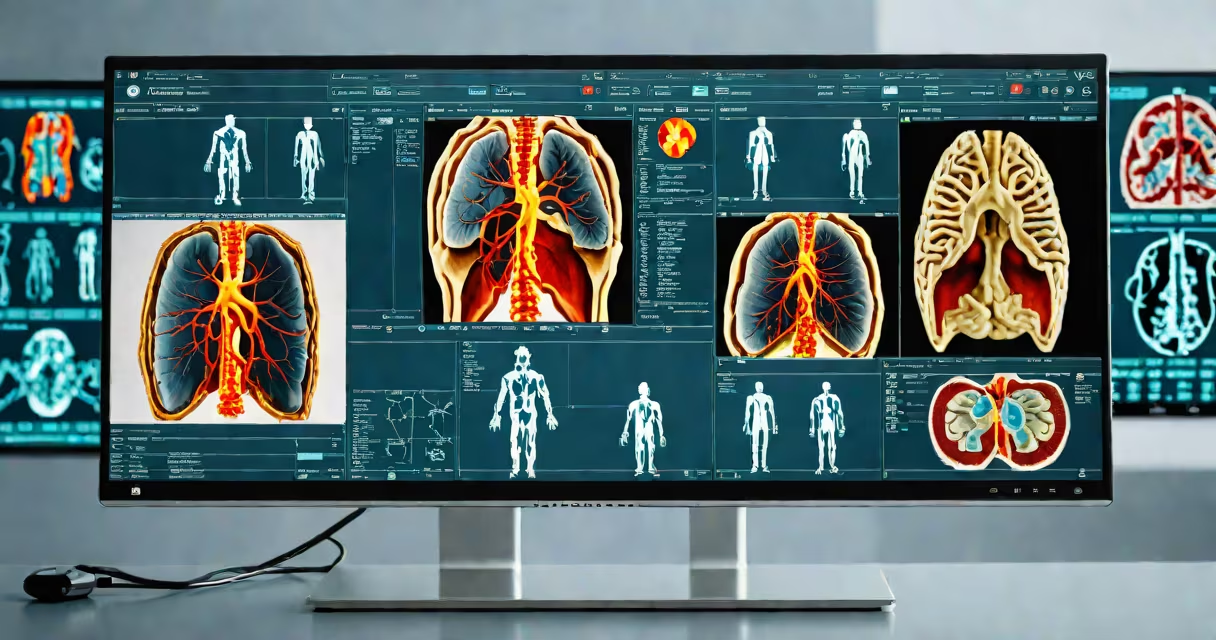
Artificial intelligence in healthcare refers to systems that analyze complex medical data to support diagnosis, treatment planning, and operational decisions. These tools process vast datasets-like scans, genetic sequences, and electronic health records-to identify patterns humans may miss, improving accuracy and speed in clinical settings.
AI use cases in healthcare span preventive care, diagnostics, treatment personalization, and administrative automation. Algorithms trained on decades of patient data now assist radiologists in detecting tumors, predict sepsis hours before symptoms appear, and recommend optimal medication regimens based on individual genetics. The technology is not replacing doctors but augmenting their judgment with evidence-based insights derived from real-time data.
According to the National Institutes of Health, AI models have demonstrated 94% sensitivity in identifying breast cancer from mammograms-outperforming human radiologists in some trials. The FDA has cleared over 500 AI-powered medical devices since 2017, including algorithms that detect diabetic retinopathy from retinal images with 90% accuracy.
AI systems in medicine rely on machine learning models trained on labeled medical data. For example, a model detecting lung nodules uses thousands of CT scans annotated by radiologists. During training, the algorithm learns to recognize texture, shape, and density patterns associated with malignancy. Once validated, it runs inference on new scans in seconds, flagging high-risk findings for clinician review.
These models operate through layers of neural networks that extract features from raw inputs-such as pixel arrays in MRI images or time-series data from wearable sensors. They don't "understand" anatomy but statistically correlate input patterns with known outcomes. This enables rapid screening across large populations, reducing workload and catching conditions earlier.
A 2023 study published in Nature Medicine showed an AI system reduced false-negative rates in colonoscopy screenings by 30% by highlighting subtle polyps missed during live procedures. The tool analyzed video feeds in real time, using computer vision to track movement and classify tissue abnormalities.
AI applications in healthcare fall into distinct categories based on function and deployment:
| Type | Function | Example | Impact |
|---|---|---|---|
| Diagnostic imaging | Identify anomalies in X-rays, MRIs, CTs | Google Health's AI for breast cancer screening | Reduced false positives by 5.7% in UK pilot |
| Predictive analytics | Forecast disease onset or hospital readmission | DeepMind's sepsis prediction model | Increased early warning time by 12 hours |
| Treatment optimization | Recommend personalized therapy plans | IBM Watson for Oncology (now retired) | Improved guideline adherence in 80% of cases |
| Administrative automation | Process billing, scheduling, documentation | OpenAI's Whisper for clinical note transcription | Reduced charting time by 45% in emergency departments |
Each category reflects different data requirements and regulatory pathways. Diagnostic tools face stricter scrutiny under FDA Class II/III device regulations due to direct impact on patient care. Administrative AI, while less regulated, still requires HIPAA compliance and audit trails.
Hospitals deploy AI use cases in healthcare primarily in high-volume, high-stakes areas: radiology, emergency medicine, oncology, and intensive care units. In emergency departments, AI triage systems assess stroke risk within minutes of arrival, prioritizing patients for CT scanning. A 2022 trial at Johns Hopkins reported a 27% reduction in door-to-treatment time for ischemic stroke patients using AI-assisted imaging.
Primary care clinics use AI to flag patients at risk of diabetes complications. One clinic in rural Oregon implemented an AI dashboard that flagged 12% of patients with undiagnosed prediabetes. Follow-up testing confirmed 89% of those alerts were accurate, enabling early intervention.
During the 2020 pandemic, AI models predicted ICU bed demand with 88% accuracy in New York City hospitals, allowing administrators to redistribute resources before surges overwhelmed facilities. The system used historical admission data, current infection rates, and weather patterns to forecast strain.
Many assume AI in healthcare means autonomous decision-making. That's incorrect. Current AI systems are advisory tools. They do not prescribe treatments or override physician judgment. When an AI flags a tumor, the radiologist makes the final call. The model provides statistical likelihoods, not diagnoses.
Another misconception is that AI replaces clinicians. In reality, AI handles repetitive tasks-like measuring lesion size across hundreds of scans-freeing doctors to focus on patient interaction and complex decision-making. At Massachusetts General Hospital, AI reduced manual measurement time by 60%, allowing radiologists to see 20% more patients daily.
A lesser-known point: AI models degrade over time if not retrained. A model trained on 2018 data may misclassify newer variants of viruses or drugs. Continuous monitoring and periodic retraining are essential. The FDA now requires manufacturers to submit ongoing performance reports for AI devices, unlike traditional software.
I observed an AI integration project at a federally qualified health center in Detroit. The clinic used a natural language processing tool to extract key details from unstructured clinical notes-like medication allergies or family history-and populate electronic health records automatically. Before implementation, nurses spent 3.2 hours per day manually entering data. After rollout, that dropped to 1.1 hours.
The tool wasn't perfect. It occasionally misidentified "no known allergies" as "allergic to penicillin" due to ambiguous phrasing. But with monthly audits and feedback loops, accuracy improved from 78% to 94% in six months. The team emphasized that AI doesn't eliminate human oversight-it shifts the nature of it.
ai use cases in healthcare are not speculative-they're deployed today in hospitals, clinics, and research labs. They improve precision, reduce delays, and free staff for higher-value work. Success depends on proper validation, continuous monitoring, and clear roles for clinicians.