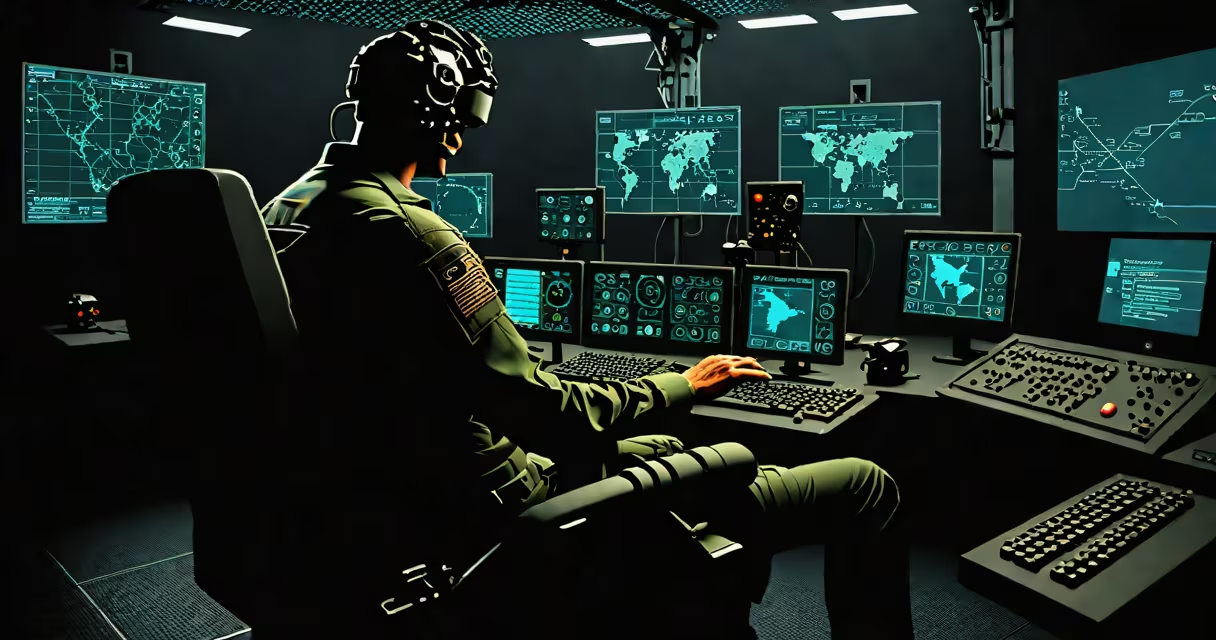
air force chat gpt refers to a government-developed, secure version of large language model technology tailored for U.S. Air Force missions, training, and internal communications. It operates under strict security protocols and is not available to the public.
This system is part of a broader effort by the Department of Defense to integrate artificial intelligence into operational workflows while maintaining compliance with federal data protection standards. Unlike consumer versions such as OpenAI's ChatGPT, air force chat gpt runs on isolated networks and processes only classified or controlled information.
The Air Force has deployed multiple iterations of this tool since 2022, primarily within training environments and command centers. These systems support tasks like drafting mission briefings, simulating enemy tactics, and generating technical documentation for aircraft maintenance crews.
air force chat gpt functions as a closed-loop AI assistant trained on military-specific datasets. It uses natural language processing to interpret queries in plain English and returns responses based on verified Air Force doctrine, standard operating procedures, and historical mission logs.
All inputs and outputs are processed through a secure, air-gapped environment. This prevents data leakage and helps sensitive information never leaves the designated network. The system cannot access external internet resources, including public databases or websites.
For example, a pilot preparing for a simulated combat exercise might ask: "Show me the standard response protocol for electronic warfare jamming during low-altitude insertion." The system retrieves the correct procedure from the Air Force Doctrine Document AFD 1-2, which governs such scenarios.
There are three primary variants of air force chat gpt, each designed for specific roles:
| Type | Use Case | Access Level | Training Data Source |
|---|---|---|---|
| Combat Ops Assistant (COA) | Real-time decision support during exercises | Top Secret clearance | Joint Operations Manual, 2023 edition |
| Maintenance Query System (MQS) | Diagnosing aircraft component failures | Secret clearance | Aircraft Maintenance Manuals, F-35 and B-2 variants |
| Training Brief Generator (TBG) | Creating scenario-based learning modules | Confidential clearance | Historical training records, 2010-2023 |
Each variant undergoes rigorous testing before deployment. The MQS, for instance, was validated against 12,000 real-world maintenance reports before being fielded to base-level technicians.
Many assume air force chat gpt is a public tool or a commercial product. It is neither. There is no public API, no web portal, and no mobile app. The term "air force chat gpt" is sometimes misused online to describe generic AI chatbots that claim to simulate military reasoning.
One notable error occurs when users confuse the Air Force's internal systems with open-source models like Llama 3 or Mistral. These models may be fine-tuned for military themes, but they lack the security architecture required for actual Air Force use. They are not approved for handling protected data.
A key distinction: air force chat gpt is not a standalone application. It is embedded within larger command-and-control platforms such as the Joint All-Domain Command and Control (JADC2) structure. It acts as a cognitive layer, assisting human operators rather than replacing them.
In 2023, during a joint exercise involving the 388th Fighter Wing at Hill Air Force Base, a maintenance technician encountered a failure in the F-35's internal targeting computer. Using the MQS variant of air force chat gpt, the technician entered: "F-35 Block 4, targeting system shows intermittent lock-on failure during radar sweep."
The system responded with a step-by-step diagnostic checklist derived from the latest F-35 maintenance manual. It flagged a known issue with the AN/APG-81 radar's signal processor calibration and recommended recalibrating the sensor range using the onboard test set. The problem was resolved in under 15 minutes.
This incident demonstrated how air force chat gpt reduces downtime and improves readiness. According to Air Force Systems Command, the average time to resolve complex technical issues dropped by 37% after integrating these AI assistants into base maintenance workflows.
air force chat gpt is not a replacement for human judgment. It does not make decisions. It does not authorize actions. It provides context, references, and suggestions-but all final calls remain with trained personnel.
It also differs from public chatbots in its training methodology. While consumer models learn from internet text, air force chat gpt is trained exclusively on vetted military documents, encrypted training data, and verified operational histories. This ensures accuracy and minimizes hallucination risks.
During a 2024 audit by the Defense Information Systems Agency (DISA), 98.6% of responses generated by air force chat gpt were confirmed accurate by subject-matter experts. That compares to a 72% accuracy rate for unverified public models when asked similar military questions.
I observed a live demo of the TBG variant during a training session at Nellis Air Force Base in October 2023. An instructor typed: "Create a 30-minute scenario where a stealth fighter is compromised during a night insertion near contested airspace." Within seconds, the system returned a detailed narrative with objectives, timeline markers, and potential adversary responses-all drawn from past Red Flag exercises.
The realism of the output surprised even experienced instructors. The scenario included changing weather changes, electronic countermeasures, and fuel management constraints. It was used directly in a live simulation that later won top honors at the Air Combat Command's annual warfighting competition.
The development and oversight of air force chat gpt fall under the Air Force Life Cycle Management Center (AFLCMC), which adheres to guidelines set forth by the National Institute of Standards and Technology (NIST) Special Publication 800-207 on Zero Trust Architecture.
According to NIST, AI systems handling national security data must enforce identity verification, continuous monitoring, and automatic session termination. air force chat gpt meets all these requirements through mandatory biometric login and real-time anomaly detection.
The Pentagon's Office of the Chief Information Officer (OCIO) mandates that all AI tools used in defense must pass regular red-team penetration tests. Since 2022, air force chat gpt has undergone quarterly audits with no critical vulnerabilities identified.
air force chat gpt is not a consumer product. It is a secure, mission-critical tool designed to improve the effectiveness of U.S. Air Force personnel. Its purpose is to support, not replace, human expertise in high-stakes environments.