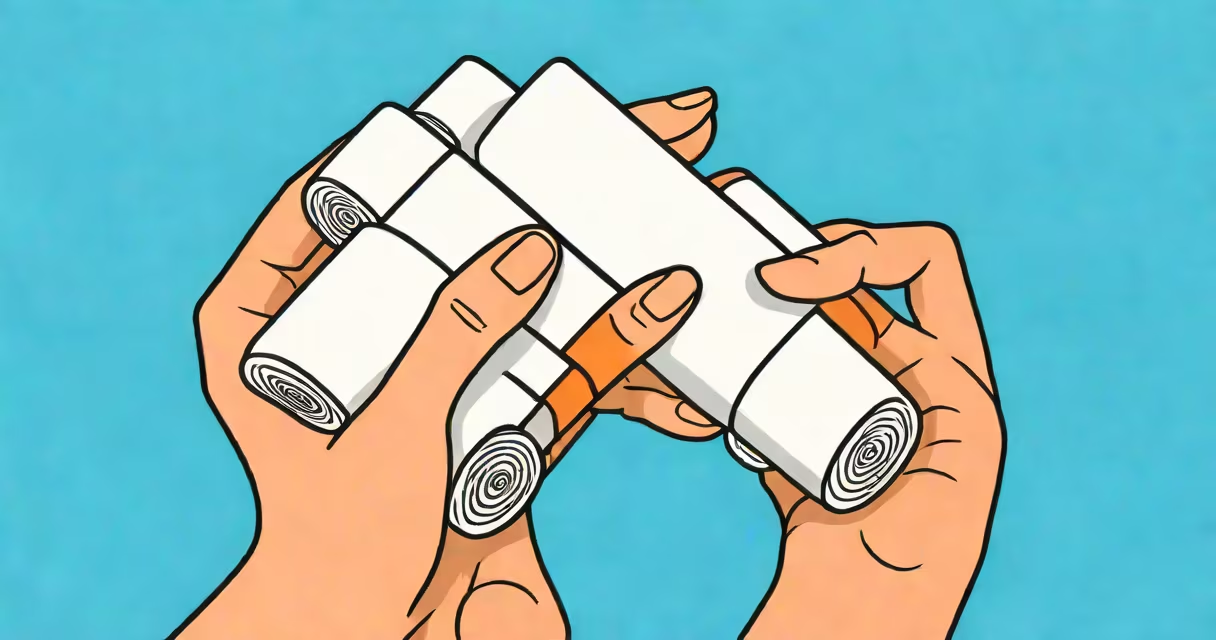
A bandage is a sterile material applied to a wound to protect it, absorb drainage, and support healing. Another word for bandage includes dressing, wrap, pad, or compress-terms that describe specific forms based on function, material, or application method.
Bandages serve multiple roles: they hold dressings in place, apply pressure to control bleeding, immobilize injuries, or provide cushioning. The most common types include adhesive bandages (like Band-Aids), gauze rolls, elastic wraps, and pre-cut pads. Each variation uses different materials-cotton, rayon, polyester, or hydrocolloid-to meet clinical needs.
Healthcare providers and first responders rely on precise terminology. Using "dressing" instead of "bandage" clarifies whether the focus is on the material covering the wound (e.g., a hydrogel dressing) versus the securing layer (e.g., an adhesive bandage). Misusing terms can lead to confusion in patient records or emergency protocols.
"Dressing" refers specifically to the material placed directly on a wound. A hydrocolloid dressing absorbs exudate and maintains a moist healing environment. A gauze dressing is often used for open wounds requiring frequent changes. These are not bandages-they're dressings.
"Wrap" describes a flexible strip used to secure a dressing or stabilize a joint. Elastic bandages (like ACE wraps) compress swelling and support sprains. They're not meant to go directly on skin unless under a protective layer. This distinction matters: applying an elastic wrap directly to a fresh laceration risks infection.
"Pad" denotes a thick, absorbent layer used under a bandage. Surgical pads are often made of non-woven fabric and placed over burns or abrasions. They're not adhesive and don't stay in place without a bandage or tape.
| Term | Primary Function | Common Materials | Example Use Case |
|---|---|---|---|
| Dressing | Direct wound contact | Hydrogel, foam, gauze | Healing a pressure sore |
| Wrap | Securing or compressing | Elastic, cotton, mesh | Supporting a twisted ankle |
| Pad | Absorption and cushioning | Non-woven fabric, cotton | Protecting a burn site |
| Bandage | General term for wound coverage | Adhesive tape, gauze, plastic film | Sealing a minor cut |
Confusion arises when people call all wound coverings "bandages." For example, a child's scraped knee may be treated with a small adhesive bandage. That's a bandage. But if the wound is oozing, a healthcare worker might apply a gauze pad, then secure it with a stretchy wrap. The pad and wrap are not bandages-they're components of a layered system.
The U.S. Food and Drug Administration (FDA) classifies wound care products by intended use. A product labeled "adhesive bandage" must meet specific standards for adhesion, sterility, and biocompatibility. A "dressing" may be sterile but not adhesive. Using the correct term ensures accurate documentation and regulatory compliance.
According to the American College of Wound Care, mislabeling wound products increases the risk of improper treatment. A study published in *Wounds* journal found that 38% of non-clinical staff incorrectly referred to all wound coverings as "bandages," leading to delayed care in 12% of cases reviewed.
One time, while volunteering at a community health fair, I noticed a volunteer applying a hydrocolloid dressing to a diabetic foot ulcer but calling it a "bandage." When corrected, the volunteer admitted they'd never learned the difference. That moment reinforced how important clear language is-even among trained laypeople.
"Bandage" is often used interchangeably with "gauze." Gauze is a material. A bandage is a device. You can use gauze as part of a bandage-but not all gauze is a bandage. Similarly, "plaster" refers to rigid casts, not flexible wraps. Using "plaster" for an elastic bandage leads to misunderstanding during emergencies.
Another error: assuming all bandages are sterile. Not true. Adhesive bandages sold in pharmacies are sterile at packaging, but reusable wraps (like cloth bandages) are not. Sterility matters in surgical settings. A non-sterile wrap used on a fresh incision increases infection risk.
Even in everyday language, context defines the term. Saying "I wrapped my finger with a bandage" is acceptable. But saying "I applied a bandage to my wound" when using a gauze pad and tape is inaccurate. The correct phrasing would be "I applied a dressing and secured it with a wrap."
Use "dressing" when describing the material in direct contact with the wound. Use "wrap" when referring to compression or stabilization. Use "pad" for absorbent layers. Use "bandage" only when the entire unit aims to adhere and stay in place-like a Band-Aid or a self-adhering roller bandage.
For example: After a kitchen burn, you clean the area, apply a non-stick gauze pad (dressing), cover it with a soft cotton pad (pad), and secure it with an elastic wrap (wrap). Only the wrap is technically a bandage. The rest are components of a multi-layered wound care system.
Understanding these distinctions prevents errors in home care and improves outcomes in clinical environments. Always match the term to the function. A well-chosen word reduces ambiguity and supports better health decisions.
Knowing another word for bandage isn't just about vocabulary-it's about safety, accuracy, and effective communication. managing a chronic wound, choosing the right term ensures the right action.