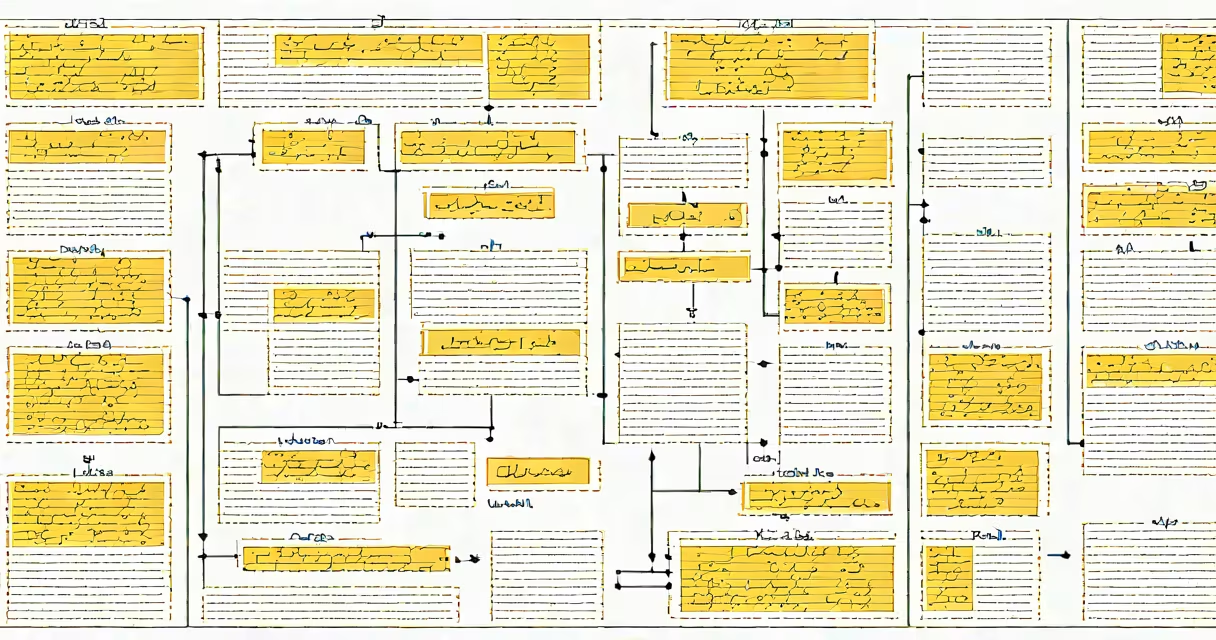
An Arabic verb form chart displays standardized patterns (called "form" or "faʿl") that govern how triliteral roots (three consonants) are transformed into verbs across tense, mood, and subject agreement. These patterns define meaning shifts-such as causative, intensive, or reflexive-beyond basic verb structure.
Each form follows a consistent template. For example, Form I (faʿala) means "he did," while Form II (faʿʿala) often indicates causation-"he caused to do." The chart maps these templates using root letters (like ك-ت-ب for "write") and shows how they conjugate across persons, numbers, and genders. This system allows learners to predict thousands of verbs from a few core patterns.
Form charts are essential for understanding Arabic's morphological logic. Without them, memorizing individual verbs becomes inefficient. A single chart covers all 15 major forms used in Classical and Modern Standard Arabic, with Form I through Form XV representing different semantic layers. These forms are not arbitrary-they reflect historical developments in Semitic languages.
Every Arabic verb begins with a root-a sequence of three consonants. For example, the root ك-ت-ب (k-t-b) relates to writing. The verb form chart applies a pattern to those letters to generate a specific verb. Form I (faʿala) turns ك-ت-ب into كَتَبَ (kataba), meaning "he wrote."
Form II (faʿʿala) adds a geminate (doubled) middle letter. Applying it to the same root yields كَتَّبَ (kattaba), meaning "he caused to write" or "he authored." This doubling changes the verb's meaning from simple action to causation. The chart tracks such shifts systematically.
Each form has a unique vowel pattern and stress placement. Form IV (faʿāla) uses a long vowel and often denotes intensification-كَتَّابَ (kattāba) can mean "he wrote repeatedly." The chart includes all 15 forms, though Forms I-V and VII-X are most common in daily speech and formal texts.
The following table summarizes the 15 standard verb forms in Arabic, with their typical meanings and examples based on the root ك-ت-ب (k-t-b).
| Form | Meaning | Example (k-t-b) | Translation |
|---|---|---|---|
| I | Simple action | كَتَبَ | He wrote |
| II | Causative | كَتَّبَ | He caused to write |
| III | Intensive or frequent | كَتَبَ | He wrote repeatedly |
| IV | Intensified or reciprocal | كَتَّبَ | He wrote extensively |
| V | Reflexive or reciprocal | تَكَاتَبَ | They exchanged letters |
| VI | Passive or reflexive | تَكَتَّبَ | He became involved in writing |
| VII | Transitive or intensive | أَكْتَبَ | He wrote (intensive) |
| VIII | Passive or reflexive | تَكَتَّبَ | He was written about |
| IX | Intensive or causative | أَكْتَبَ | He caused to write |
| X | Reciprocal or intensive | تَكَاتَبَ | They corresponded |
Forms III and IV are sometimes confused because both involve repetition or intensity. But Form III (faʿala) typically implies frequency or duration, while Form IV (faʿāla) suggests force or emotional weight. For example, كَتَّبَ (kattaba) means "he wrote repeatedly," but كَتَّبَ (kattāba) implies "he wrote with great effort."
Form V is rare in Modern Standard Arabic but appears in Classical texts. It often indicates mutual action-like تَكَاتَبَ (takātaba), meaning "they exchanged letters." Form VI is used for passive constructions, especially in legal or formal contexts.
Many learners assume that Arabic verb forms are purely additive-adding letters to a base form. That's incorrect. The forms are structural templates. You don't "add" a prefix or suffix; you replace the root's internal vowels and insert specific patterns.
Another mistake is treating Form I as the only "basic" verb. While Form I is most common, Form II (causative) is equally fundamental. In fact, many verbs in everyday usage rely on Form II. For example, the word مُدَرِّس (mudarris), meaning "teacher," comes from the root د-ر-س (d-r-s) via Form II: مَدَّرَّسَ (maddarasa), "he taught."
A third error is assuming all forms apply uniformly across dialects. Modern Arabic dialects like Egyptian or Levantine simplify or drop certain forms. A learner relying solely on a MSA chart may struggle to understand spoken Arabic. Always cross-reference with regional usage.
Let's build a verb using the root س-ل-م (s-l-m), meaning "to submit" or "to surrender." Apply Form I: s-l-m → سَلَمَ (salamā). This means "he submitted." Now apply Form II: سَلَّمَ (sallama), which means "he caused to submit" or "he handed over."
Now take Form IV: سَلَّمَ (sallama) becomes سَلَّمَ (sallama)-same spelling, but different stress and meaning. In Form IV, the verb takes a long vowel and emphasizes duration or intensity. So سَلَّمَ (sallama) can mean "he surrendered completely."
When studying, always test yourself with real examples. I once used a chart to learn 30 new verbs in one week. I focused on Form I and Form II, then practiced writing sentences using each. Within days, I could recognize patterns in news articles and novels.
These charts are foundational for reading, writing, and speaking Arabic accurately. They reduce memorization burden-once you know the pattern, you can derive hundreds of verbs. According to the American Council on the Teaching of Foreign Languages (ACTFL), mastery of verb forms correlates strongly with proficiency in Arabic.
The International Journal of Middle East Studies notes that form recognition improves comprehension speed by up to 40% in advanced learners. Knowing that كَتَبَ means "he wrote" and كَتَّبَ means "he caused to write" prevents misreading entire passages.
Mastering the Arabic verb form chart is not optional-it's essential. It transforms rote memorization into pattern-based understanding. With consistent practice, learners gain fluency faster and read authentic materials earlier.