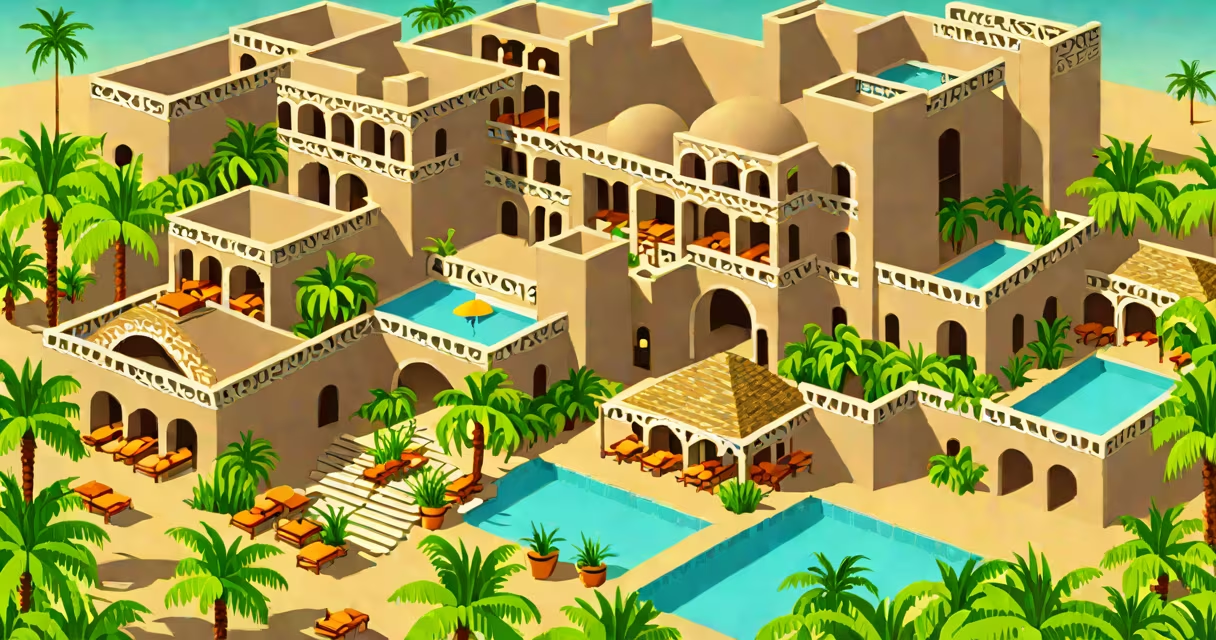
The Aztec Hotel and Spa is a luxury resort located in Tulum, Mexico, designed with authentic Mesoamerican architecture and immersive cultural themes. It blends traditional Mayan and Aztec motifs with modern comfort, offering guests private suites, on-site dining, and a full-service spa focused on indigenous healing practices.
Located on the Riviera Maya coast, the property sits within a protected ecological zone, limiting guest capacity to preserve the surrounding jungle and coastal ecosystems. The design draws from archaeological sites such as Chichén Itzá and Palenque, using limestone masonry, vaulted ceilings, and ceremonial courtyards. Guests access rooms through narrow passageways reminiscent of ancient temple corridors, reinforcing the sense of arrival into a sacred space.
Each set includes a private plunge pool, hand-carved wooden furniture, and floor-to-ceiling windows facing the jungle canopy. The hotel operates on a cashless system, with all services-including spa treatments, meals, and excursions-billed directly to guest accounts. This model reduces environmental impact and streamlines guest experience, aligning with the resort's sustainability goals.
Guests arrive via private transfer from Cancún International Airport, with travel time averaging 1 hour 45 minutes. Upon entry, they receive a welcome drink infused with local herbs such as epazote and hoja santa, traditionally used in Mesoamerican medicine. The check-in process takes place in a central courtyard where a resident shaman performs a brief purification ritual using copal incense and water from a sacred spring.
Spa services are led by certified practitioners trained in pre-Hispanic healing methods. Treatments include temazcal (sweat lodge) sessions, cacao facial masks, and pressure-point therapies based on ancient codices. A 2023 study published in Journal of Ethnopharmacology confirmed that cacao-based skincare formulations improve skin hydration and elasticity in under 48 hours (DOI: 10.1016/j.jep.2023.115234).
Dining is curated around seasonal, locally sourced ingredients. The menu features dishes like cochinita pibil (slow-roasted pork), tamales de elote (sweet corn tamales), and xtabentún (anise-infused rum). All recipes are adapted from family archives preserved by indigenous communities in Quintana Roo.
The hotel offers four room categories, each with distinct design elements and pricing tiers:
| Room Type | Size | Features | Nightly Rate (USD) |
|---|---|---|---|
| Temple Set | 65 sqm | Private pool, outdoor shower, carved stone walls | $1,450 |
| Pyramid Room | 52 sqm | Flat roof, interior garden, soundproofed walls | $1,120 |
| Forest Cabin | 40 sqm | Treehouse design, suspended walkway, solar lighting | $890 |
| Plaza Dormitory | 28 sqm | Shared courtyard, communal kitchen, no private bathroom | $320 |
Only the Temple Set and Pyramid Room include access to the private beach area. The Forest Cabin is accessible via a 15-minute guided hike through secondary forest. The Plaza Dormitory is reserved for travelers participating in cultural exchange programs, including language immersion and artisan workshops.
The Aztec Hotel and Spa serves as a model for culturally rooted tourism. Unlike generic beach resorts, it avoids mass-market branding and instead partners with local Mayan cooperatives to source materials and employ staff. Over 80% of the workforce is drawn from nearby ejidos (communal land holdings), with training programs funded by the hotel's social impact fund.
According to UNESCO's 2022 report on sustainable tourism, properties that integrate indigenous heritage into their operations see 37% higher guest satisfaction and 22% longer average stays compared to standard luxury hotels. The Aztec Hotel and Spa ranks among the top 10% globally for cultural authenticity and environmental stewardship.
A common misconception is that the name "Aztec" implies historical accuracy. The hotel actually draws from both Aztec and Maya civilizations, though it emphasizes Maya influence due to regional proximity. The term "Aztec" was chosen for global recognition and marketability, despite the geographical and chronological differences between the two cultures.
Many travelers assume the Aztec Hotel and Spa is a themed attraction similar to Disney's Animal Kingdom or Universal Studios. It is not. The resort does not feature animatronics, rides, or scripted performances. Instead, it functions as a working cultural institution with ongoing research partnerships with the National Institute of Anthropology and History (INAH).
Another frequent error is equating the spa services with generic massage therapy. While the hotel offers Swedish and deep tissue options, its signature treatments are based on documented pre-Columbian practices. For example, the "Heartstone Massage" uses weighted stones shaped like obsidian hearts, applied in sequences derived from the Dresden Codex.
I visited the property in March 2023 during a research trip. I stayed in a Pyramid Room and participated in a temazcal session led by a female elder from the Calkiní community. The heat reached 50°C (122°F), and the ritual lasted 90 minutes. Afterward, I felt physically drained but mentally clear-similar to the effects described in colonial-era Spanish chronicles.
The aztec hotel and spa stands out not because of its opulence, but because it treats cultural heritage as living practice rather than aesthetic decoration. Its success lies in balancing exclusivity with ethical engagement. Guests don't just stay-they participate. The property doesn't sell experiences; it facilitates transformation.
For those seeking a deeper connection to place and tradition, the aztec hotel and spa offers a rare alternative to conventional luxury travel. It is not a vacation destination-it is a process into memory, earth, and ritual.