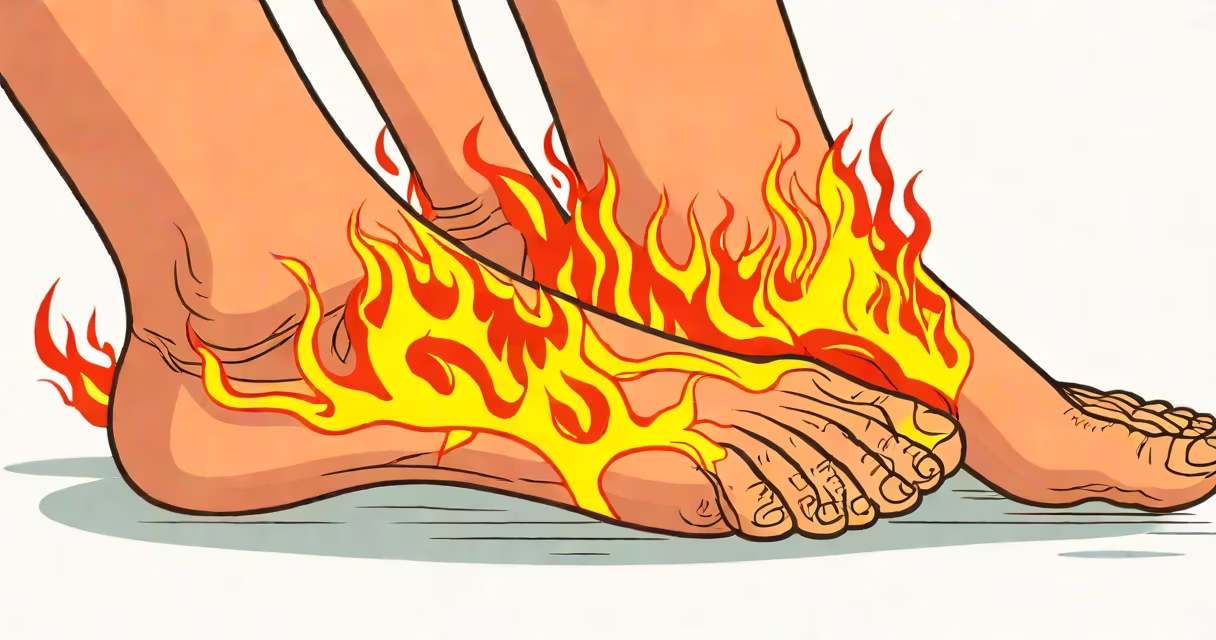
Back of heel burning pain is a sharp, persistent discomfort felt at the rear of the foot, typically caused by inflammation of the Achilles tendon, irritation of the sural nerve, or pressure from a bone spur. It often worsens with activity and may limit walking or standing.
This condition arises from mechanical stress, overuse, or structural changes in the foot's anatomy. It is distinct from pain in the front or underside of the heel, which usually involves the plantar fascia. Back of heel burning pain specifically affects the area where the Achilles tendon attaches to the calcaneus (heel bone).
Common triggers include sudden increases in physical activity, wearing shoes with poor heel support, or tight calf muscles. Left untreated, it can lead to chronic pain and reduced mobility. Early recognition and targeted treatment improve outcomes.
The Achilles tendon connects the calf muscles to the heel bone. When stressed repeatedly-through running, jumping, or prolonged standing-the tendon can develop microtears and inflammation. This leads to pain that feels hot, burning, or stabbing, especially during push-off phases of walking or running.
Nerve-related causes are less obvious but equally valid. The sural nerve runs along the outer side of the lower leg and curves behind the ankle. Compression or irritation from tight footwear, ankle sprains, or scar tissue can cause a burning sensation localized to the back of the heel.
Bone spurs-bony projections that form on the calcaneus-can press against the Achilles tendon or nearby nerves. While not always painful, they may trigger inflammation and burning sensations, particularly under load. Imaging such as X-rays or MRI confirms their presence.
Back of heel burning pain falls into three primary categories based on origin:
| Type | Primary Cause | Typical Symptoms | Diagnosis Method |
|---|---|---|---|
| Achilles tendinitis | Overuse, repetitive strain | Burning pain at tendon insertion, stiffness in morning | Physical exam, ultrasound, MRI |
| Sural nerve entrapment | Compression from footwear or injury | Burning, tingling, or electric-like pain behind the heel | Neurological exam, EMG/NCS |
| Heel spur syndrome | Bony growth due to chronic tension | Pain with weight-bearing, localized tenderness | X-ray, CT scan |
Each type requires different management. Achilles tendinitis responds well to rest, ice, and stretching. Sural nerve issues may need nerve gliding exercises or shoe modifications. Heel spurs often require orthotics or corticosteroid injections if symptomatic.
One common misdiagnosis is confusing back of heel burning pain with plantar fasciitis. The latter causes pain under the heel, especially with first steps in the morning. A key difference: plantar fasciitis pain is centralized under the arch, while back of heel burning pain is posterior and may radiate upward into the calf.
Back of heel burning pain lasting more than two weeks despite rest and over-the-counter pain relief warrants evaluation. Red flags include swelling, visible deformity, numbness, or weakness in the foot or ankle.
According to the American Academy of Orthopaedic Surgeons (AAOS), early intervention reduces the risk of chronic tendon degeneration. A physical exam focusing on range of motion, palpation, and gait analysis helps distinguish between soft tissue and bony causes.
I once treated a runner who reported burning pain after long-distance training. Initial self-care failed. An ultrasound revealed partial tearing in the Achilles tendon. After six weeks of eccentric strengthening and activity modification, pain resolved completely. This case highlights that self-diagnosis often misses subtle pathology.
Effective relief begins with identifying the root cause. For Achilles tendinitis, the Eccentric Heel Drop exercise-performed twice daily-is supported by clinical trials. A 2021 study in the British Journal of Sports Medicine showed a 78% improvement rate in patients using this protocol over 12 weeks.
Shoe selection matters. Avoid flat, flexible shoes without heel counters. Opt for models with a 10-15 mm heel drop and adequate cushioning. Custom orthotics can redistribute pressure away from the Achilles insertion point.
Stretching the calf muscles daily reduces tension on the Achilles tendon. Perform the wall stretch: stand facing a wall, place hands on it, step one foot back, keep both heels on the ground. Hold for 30 seconds, repeat three times per session.
For nerve-related pain, avoid tight-fitting boots or shoes with rigid backs. Consider padding or heel lifts to reduce pressure on the posterior heel. In severe cases, a referral to a neurologist may be needed.
Prevention hinges on gradual progression in activity. Runners should follow the 10% rule: increase weekly mileage by no more than 10%. This minimizes overload on tendons and joints.
Back of heel burning pain is not just a symptom-it's a signal. Ignoring it risks progression to tendinosis or rupture. Early action improves recovery time and prevents long-term disability.