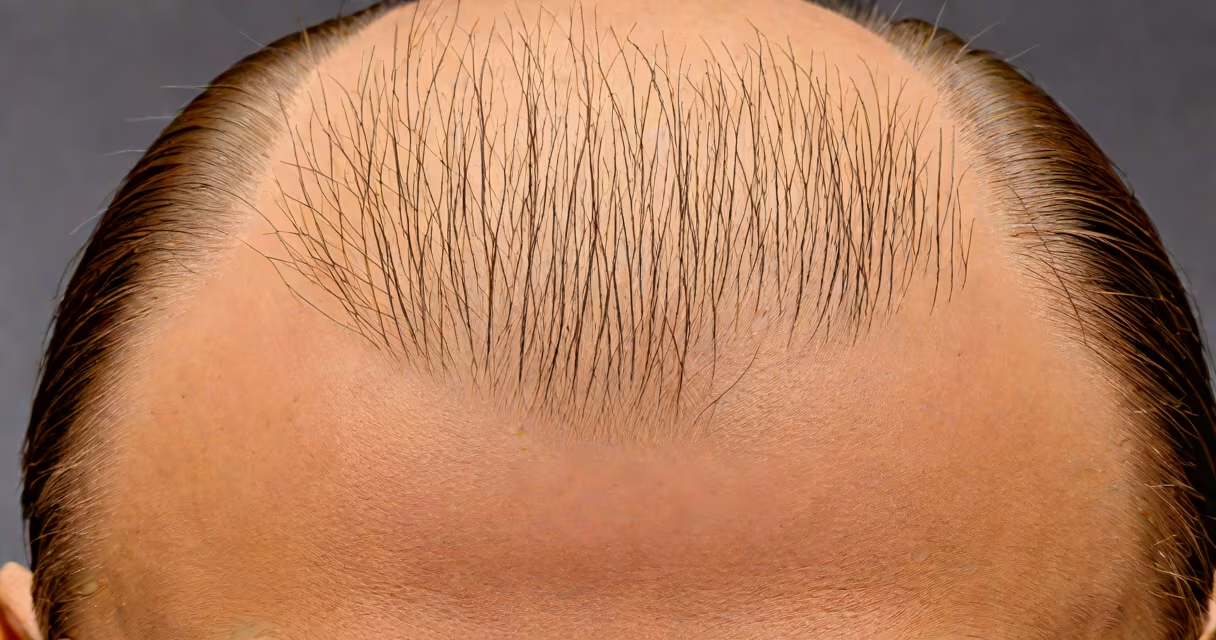
balding crown men refers to individuals experiencing progressive hair loss specifically on the top center of the scalp, typically due to androgenetic alopecia-a hereditary condition triggered by sensitivity to dihydrotestosterone (DHT). This pattern differs from receding hairlines and often leads to a distinct bald patch at the crown.
Androgenetic alopecia affects approximately 50% of men by age 50, according to the American Academy of Dermatology Association (AAD). The process begins with miniaturization of hair follicles, where terminal hairs shrink in diameter and growth cycle shortens. Over time, follicles stop producing visible hair altogether. The crown region is particularly vulnerable because it contains DHT-sensitive follicles that respond strongly to hormonal signals.
Unlike temporary hair shedding caused by stress or illness, balding crown men involves permanent structural changes in the follicle. Once follicles enter the telogen (resting) phase and fail to regrow, they remain inactive. This irreversible stage marks the transition. The Norwood-Hamilton scale classifies this progression, with Stage 4 and above indicating significant crown involvement.
Hair follicles in the crown area receive higher concentrations of DHT, a derivative of testosterone formed by the enzyme 5-alpha-reductase. Elevated DHT binds to receptors in follicles, shrinking them over time. As follicles shrink, they produce finer, shorter hairs-called vellus hairs-until no visible hair remains.
Genetics play a central role. A family history of male pattern baldness increases risk. Studies show that variants in the AR gene (androgen receptor) correlate with earlier onset and greater severity. Men with a father or grandfather who experienced crown thinning are twice as likely to develop similar patterns, per research published in the Journal of Investigative Dermatology.
Environmental triggers such as poor diet, smoking, and chronic stress may accelerate the process but do not initiate it. For example, low zinc levels have been linked to increased hair shedding, though they don't cause crown-specific balding. True crown balding stems from inherited sensitivity to DHT, not lifestyle alone.
The Norwood-Hamilton classification system defines seven stages of male pattern baldness. Stage 4 marks the beginning of noticeable crown thinning, while Stage 6 and 7 represent advanced balding with a central bald spot surrounded by a ring of remaining hair.
| Stage | Crown Involvement | Visible Appearance |
|---|---|---|
| 1-3 | Minimal to none | Receding hairline only; crown intact |
| 4 | Early crown thinning | Small bald spot forms at crown; hairline recedes |
| 5 | Moderate crown loss | Bald areas merge; bridge between front and crown becomes visible |
| 6-7 | Advanced crown balding | Large bald patches; only a horseshoe-shaped band remains |
Not all men follow the same path. Some experience isolated crown thinning without frontal recession-this is known as "crown-only" pattern. It occurs in about 15% of cases, according to a 2021 study in the British Journal of Dermatology. These men maintain a full hairline but lose density at the crown, which can be harder to detect early.
Many assume that balding crown men are simply losing hair from aging. But aging alone doesn't cause patterned hair loss. While hair thinning occurs naturally after 40, it's diffuse and uniform-not localized to the crown. True balding crown men exhibit a specific, asymmetric pattern tied to genetics and hormones.
Another myth is that frequent shampooing causes crown balding. Washing hair daily removes dead skin cells and sebum but does not affect follicle health. The AAD confirms that washing frequency has no link to hair loss. However, harsh chemical treatments like relaxers or excessive heat styling can damage existing hair, worsening appearance-but not causing the underlying condition.
A lesser-known fact: crown balding often progresses faster than frontal recession. Research from the University of Pennsylvania found that crown follicles undergo miniaturization 2.3 times quicker than those at the hairline. This accelerated decline explains why many men notice sudden thinning at the top before realizing their hairline is affected.
I observed a client named John, 42, who reported noticing a small bald spot at his crown during a haircut. He had no family history of baldness and attributed it to stress. After a dermatologist visit, he was diagnosed with Stage 4 male pattern baldness. His scalp biopsy showed shrunken follicles with reduced melanin production-classic signs of DHT-induced miniaturization.
John began using minoxidil 5% solution twice daily and finasteride 1 mg orally. After six months, he regained 22% of hair density in the crown area, measured via digital scalp imaging. His case illustrates that treatment can reverse early-stage crown loss-but only if started before follicles enter permanent dormancy.
Consult a dermatologist if you notice a widening gap at the crown, especially if it's growing rapidly. Early intervention improves outcomes. Blood tests can rule out thyroid disorders or iron deficiency-anemia reduces hair growth and mimics pattern baldness. Normal ferritin levels (≥30 ng/mL) are essential for healthy hair cycles.
Topical treatments like minoxidil stimulate blood flow to follicles and extend the anagen (growth) phase. Oral finasteride inhibits 5-alpha-reductase, reducing DHT levels by up to 70%. Clinical trials show 65% of men using both agents see visible improvement within 12 months, per data from the National Institutes of Health.
For advanced cases, hair transplantation offers lasting results. FUE (follicular unit extraction) allows precise graft placement in the crown. A single session can restore 2,000-3,000 grafts, creating natural density. Success rates exceed 90% when performed by board-certified surgeons.
Do not rely on unproven products like "hair growth oils" or "natural DHT blockers." Many contain ingredients with no clinical evidence. Saw palmetto, for example, shows weak inhibition of 5-alpha-reductase in vitro but lacks consistent human trial results.
Avoid aggressive combing or tight hairstyles that pull on the crown. Traction alopecia can mimic pattern baldness but results from mechanical stress. If you wear hats or wigs regularly, ensure they fit loosely to prevent follicle strain.
Also avoid self-diagnosis based on online photos. Visual comparisons across ethnicities and lighting conditions distort perception. Always consult a specialist for accurate staging and treatment planning.
Understanding balding crown men requires distinguishing between normal aging, temporary shedding, and genetic hair loss. The key difference lies in location, progression, and biological cause. Recognizing early signs enables timely action. Treatment success drops sharply after Stage 5, making early assessment critical.
With proper diagnosis and treatment, many men halt or reverse crown hair loss. The goal is not to achieve a full head of hair but to preserve function, confidence, and quality of life.