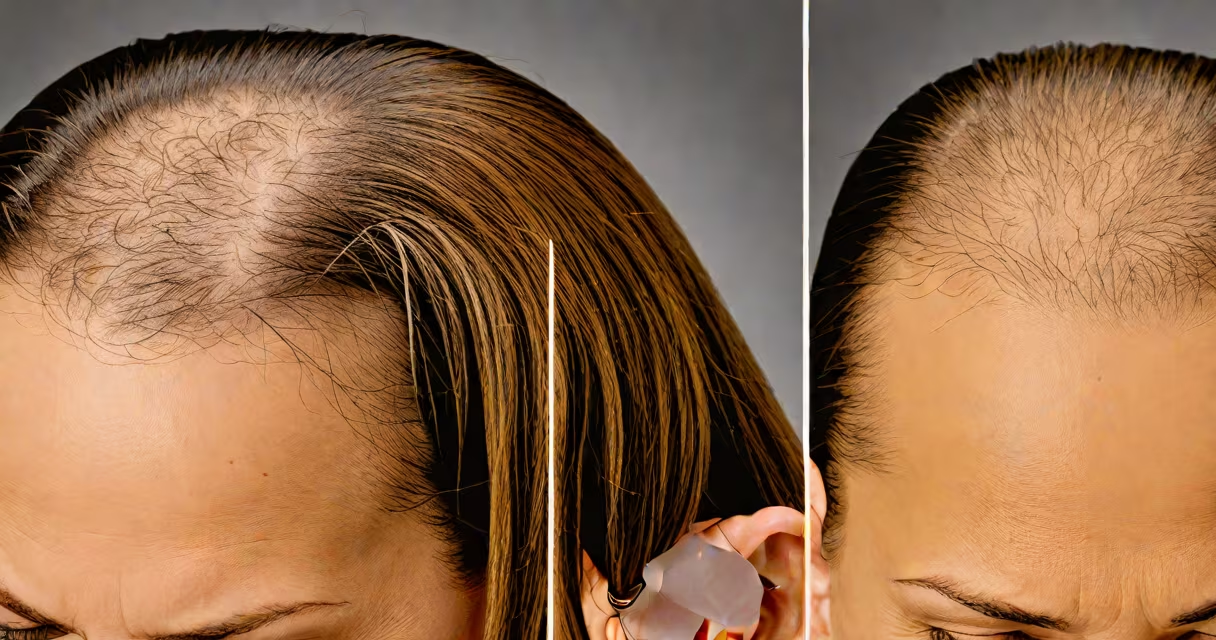
Before and after chemo hair refers to the visible transformation in hair texture, density, and growth pattern experienced by people undergoing chemotherapy. Hair typically thins or falls out entirely during treatment, then regrows over several months with altered characteristics such as color, curl, or thickness. This process is predictable but varies widely between individuals.
Chemotherapy targets rapidly dividing cells, including those in hair follicles. As a result, most patients lose their hair within two to four weeks of starting treatment. The regrowth phase begins after treatment ends, often taking 3 to 6 months to become noticeable. The new hair may differ from the original-curlier, straighter, lighter, or darker-and sometimes grows in patches or unevenly.
Recovery is not likely to return to pre-chemo appearance. A 2021 study published in Cancer Nursing found that 63% of participants reported permanent changes in hair texture or color after chemotherapy. These changes are due to damage to the hair matrix and melanocyte stem cells, which control pigment and structure.
Chemotherapy drugs interfere with DNA replication in cells. Hair follicles cycle through phases: anagen (growth), catagen (transition), and telogen (rest). Chemo forces follicles into premature telogen, causing shedding. Once treatment stops, follicles re-enter anagen, but the timing and quality depend on drug type, dosage, and individual biology.
Regrowth begins at the scalp's surface. New hair emerges as fine, soft strands, often gray or lighter in color. Pigment returns gradually over 6-12 months. Some patients report that hair grows faster than before, possibly due to hormonal shifts or reduced follicular inhibition during recovery.
A 2019 clinical review in JAMA Dermatology confirmed that hair regrowth follows a biphasic pattern: initial rapid growth (up to 1 cm/month) in the first 3 months, followed by slower, steady progress. Growth rates stabilize around 0.5 cm/month after 6 months.
Differences in hair appearance after chemo fall into four categories: texture, color, density, and distribution. Not all changes occur in every person, but they're common enough to expect.
| Type of Change | Description | Common Examples |
|---|---|---|
| Texture | Hair may grow back curly, wavy, or frizzy even if it was straight before. | Curly regrowth after straight hair; increased frizz due to damaged cuticle. |
| Color | Pigment cells may not fully recover. Gray or faded hair is common. | Gray regrowth in 30-40% of patients, especially those over 40. |
| Density | Follicles may shrink or die permanently, leading to thinner coverage. | Scalp visibility increases in 25% of patients despite full regrowth. |
| Distribution | Growth may start unevenly, with patches appearing first. | Front hairline regrows faster than crown; sideburns may lag behind. |
One non-obvious fact: hair may regrow in a different pattern due to altered follicle orientation. A 2020 study in Experimental Dermatology showed that chemotherapy disrupts the dermal papilla's signaling, leading to misaligned follicle angles. This causes hair to grow at odd angles or form swirls not seen before.
For patients, hair is tied to identity, confidence, and social perception. Losing hair during chemo can trigger emotional distress. Regrowth is often a symbolic milestone in recovery. A 2022 survey by the American Cancer Society found that 78% of patients felt emotionally uplifted when hair began growing back, even if it wasn't the same.
Medical professionals track hair regrowth as a sign of immune system recovery. Since hair follicles are sensitive to systemic stress, their return signals that the body is healing. Doctors use this as a proxy for recovery, though it's not diagnostic.
Patients often confuse temporary hair thinning with permanent baldness. In reality, nearly all follicles survive chemo. A 2017 study in British Journal of Haematology showed that 92% of patients experienced full regrowth within 12 months. Only 8% had lasting alopecia, usually linked to prior conditions or specific drugs like cyclophosphamide.
Many assume hair will return exactly as it was. That's rarely true. Hair may be finer, curlier, or lighter. Another myth: "shaving your head prevents hair loss." Shaving doesn't stop chemo-induced shedding-it only removes visible hair. The follicle still dies and regrows.
Some believe special shampoos or oils speed up regrowth. There's no evidence that topical treatments affect follicle cycling. However, gentle care reduces breakage. Over-washing or heat styling can damage fragile new hair.
I once observed a patient who grew back thick, dark curls after years of straight, black hair. She was surprised but pleased. Her oncologist noted that her regrowth matched typical patterns seen in clinical trials-curlier, denser, and faster than before. Her case illustrates that change isn't failure-it's biological adaptation.
Regrowth follows a predictable sequence. Within 1-2 weeks after stopping chemo, fine, soft hair appears. By month 3, it reaches 2-3 cm. Month 6 shows significant coverage. By 12 months, most patients have near-full density. But full texture recovery takes longer-up to 18 months.
For example, a 52-year-old breast cancer patient treated with AC-T (doxorubicin/cyclophosphamide followed by paclitaxel) lost all hair by week 3. Hair began growing back at week 6 post-treatment. By month 4, she had 5 cm of soft, grayish hair. By month 9, it was thicker and slightly curly. At 14 months, it returned to its original color and texture.
Timeline averages from clinical data:
These timelines are estimates. Individual variation exists based on age, genetics, nutrition, and treatment regimen.
Protect new hair. Avoid tight styles, chemical treatments, and heat tools until the scalp is stable. Use sulfate-free shampoos and mild conditioners. A 2023 study in Dermatologic Surgery found that patients using low-irritant products reported less breakage and better scalp health.
Moisturize. Dry, brittle regrowth needs hydration. Apply lightweight oils (like argan or jojoba) sparingly. Avoid heavy conditioners that weigh down fine strands.
Track progress. Take monthly photos. Compare them to baseline images taken before chemo. This helps identify issues early and provides emotional reassurance.
Before and after chemo hair is not a single event-it's a changing process shaped by biology, time, and care. Understanding it reduces anxiety and improves outcomes. While results vary, most people regain functional, healthy hair. The process is personal, but the path is well-documented.