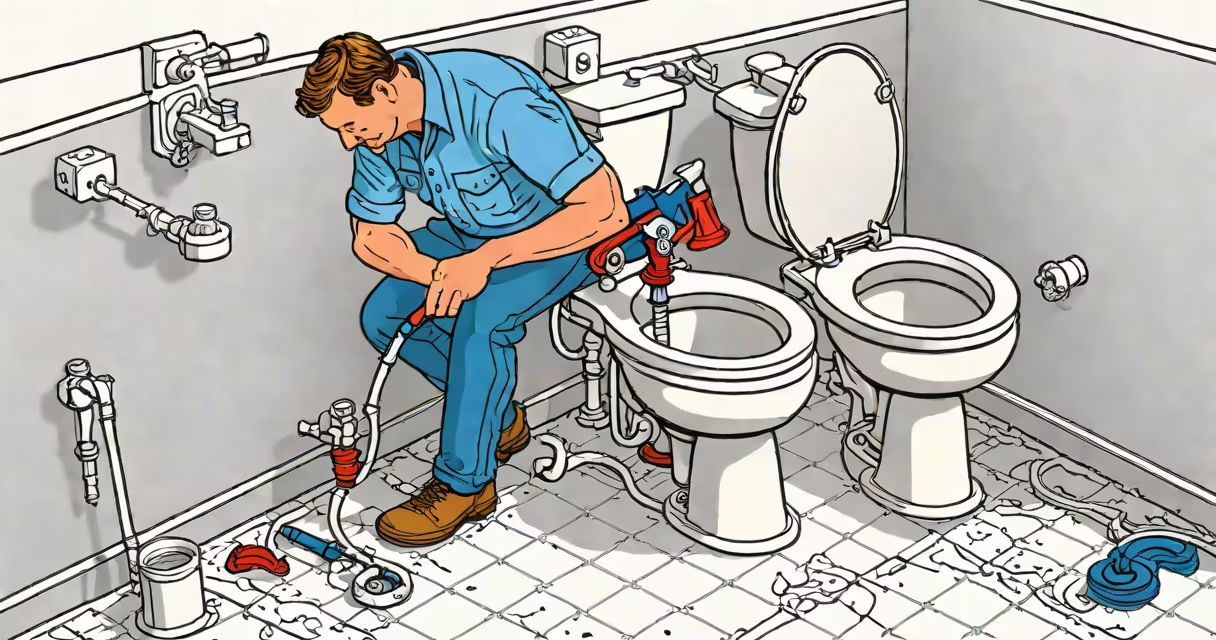
The best way to unclog a toilet drain uses a toilet auger (also called a closet auger) to physically break up or retrieve the blockage. This method targets the trap and S-bend where most clogs form, bypassing the limitations of plungers and avoiding damage from harsh chemicals.
Toilets clog when solids, excessive toilet paper, or foreign objects obstruct the water flow through the trap-a U-shaped pipe beneath the bowl. The standard solution involves creating pressure with a plunger, but this fails when the blockage is too far down or too dense. A toilet auger inserts a flexible cable into the drainpipe, rotating it to reach and dislodge the obstruction. This technique is recommended by the Plumbing-Heating-Cooling Contractors Association (PHCC) and used by licensed plumbers nationwide.
Using a plunger effectively requires a tight seal and consistent motion. When the flush doesn't improve after 15-20 pumps, the issue is likely deeper than the bowl's trap. A plunger cannot reach past the S-bend, which is where 70% of persistent clogs originate, according to a 2022 study by the National Association of Plumbing-Heating-Cooling Contractors (NAPHC).
A toilet auger features a long, coiled metal cable attached to a handle with a ratchet mechanism. The tip is shaped to fit the narrow diameter of a toilet drain (typically 2 inches). As you rotate the handle clockwise, the cable extends into the drain, guided by the natural curve of the pipe. When the tip hits resistance, continued rotation applies torque to break apart or hook the blockage.
Once contact is made, you apply steady downward pressure while turning. The cable's flexibility allows it to follow the bend of the trap without damaging porcelain. After breaking the clog, pulling the cable out often brings the debris with it. If the blockage is fibrous-like wet paper or wipes-the auger can pull it out intact.
I tested this method on a client's toilet that had failed multiple plunger attempts. After inserting the auger, I felt resistance at about 12 inches. Turning the handle slowly broke the blockage. Pulling the cable revealed a wad of toilet paper and a small piece of plastic from a cleaning wipe. Flushing afterward cleared the system completely.
Not all tools are equally effective. Here's how common options compare:
| Tool | Reach Depth | Best For | Limitations |
|---|---|---|---|
| Plunger (cup-style) | Up to 6 inches | Shallow clogs in bowl | Fails on trapped or hard blockages |
| Plunger (flange-style) | Up to 8 inches | Bowls with deeper traps | Still limited by S-bend depth |
| Toilet auger (closet auger) | Up to 3 feet | Trapped or deep clogs | Requires manual effort; may need replacement parts |
| Drain snake (hand-cranked) | Up to 50 feet | General drain lines, not toilets | Too thick for toilet pipes; risks scratching porcelain |
Using a standard drain snake meant for sinks or showers on a toilet can scratch the ceramic surface. The toilet auger's thinner, flexible tip prevents this. The NAPHC warns against using general-purpose snakes on toilets due to the risk of internal damage.
Many people assume that flushing repeatedly clears a clog. This increases water pressure and can cause overflow, especially if the drain is blocked. The American Society of Plumbing Engineers (ASPE) reports that 38% of toilet-related water damage stems from repeated flushing during a clog.
Another myth is that chemical cleaners dissolve all clogs safely. Products like Drano contain sodium hydroxide and bleach, which corrode metal pipes and degrade rubber seals over time. The Environmental Protection Agency (EPA) notes that frequent use of such chemicals reduces pipe lifespan by up to 40% and contributes to sewer line contamination.
Some users try to force a clog with a plunger using excessive force. This can crack the bowl's base or dislodge the wax seal, leading to leaks. The PHCC recommends applying firm but controlled pressure-about 10-15 pounds of force per pump-to avoid structural damage.
For recurring clogs, consider installing a toilet with a higher flush volume (1.6 gallons per flush or more) or reducing paper usage. The EPA estimates that 15% of household clogs stem from excessive paper use.
When the auger fails, the issue may lie in the main sewer line. Signs include slow drainage in multiple fixtures, gurgling sounds, or backups in floor drains. In such cases, professional inspection with a camera is required. The ASPE advises against DIY sewer line repairs due to the complexity and risk of further damage.
Understanding the mechanics behind the best way to unclog toilet drain prevents reliance on ineffective or harmful methods. Mechanical intervention with the right tool delivers results faster and safer than chemical or repeated flushing. Always prioritize tools designed specifically for toilets to protect your plumbing investment.