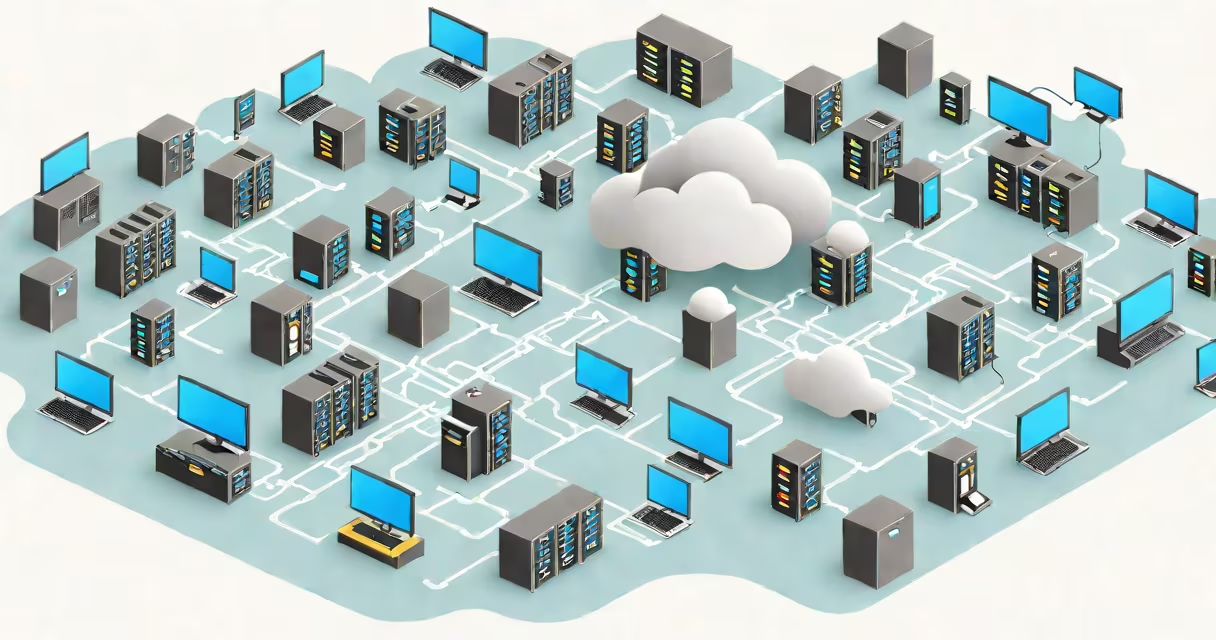
broad network access cloud computing refers to the ability to deliver scalable IT resources-such as storage, processing power, and software-over a network, typically the internet, to users anywhere with an authenticated connection. This capability is foundational to cloud service models and enables organizations to deploy workloads instantly without owning physical hardware.
This model relies on standardized interfaces and secure authentication protocols to ensure consistent access across diverse devices and locations. It supports changing scaling based on demand, allowing users to provision or release resources within minutes. The core principle is that computing capacity is treated as a utility, much like electricity or water.
According to the National Institute of Standards and Technology (NIST), broad network access is one of the five essential characteristics of cloud computing. NIST defines it as "capability to access the cloud through standard mechanisms that promote use by heterogeneous client platforms such as mobile phones, tablets, laptops, and traditional desktops." This ensures interoperability and reduces dependency on specific hardware configurations.
When a user requests a cloud-based application or service, their device sends a request over the internet to a remote data center hosting the resource. The cloud provider's orchestration system authenticates the request, verifies permissions, and routes the user to a virtualized environment provisioned on shared physical infrastructure.
Behind the scenes, load balancers distribute traffic across multiple servers. Virtual machines or containers run isolated instances of operating systems and applications. These environments are managed via APIs, which allow automated provisioning and monitoring. All communication occurs over encrypted channels to protect data in transit.
For example, a startup launching a new e-commerce site uses AWS Elastic Beanstalk. They deploy their web app with a single command. Within 90 seconds, the system creates a virtual server, configures networking, sets up a database, and exposes the site via a public URL-all accessible from any internet-connected device.
broad network access cloud computing operates across three primary service models:
| Model | What It Provides | Use Case Example |
|---|---|---|
| Infrastructure as a Service (IaaS) | Virtual machines, storage, and networking | Running a custom analytics pipeline on Linux VMs |
| Platform as a Service (PaaS) | Development tools, databases, runtime environments | Deploying a Node.js app with automatic scaling |
| Software as a Service (SaaS) | Ready-to-use applications accessed via browser | Using Microsoft 365 for email and document collaboration |
Each model offers different levels of control and abstraction. IaaS gives users full control over the OS and configuration, while SaaS abstracts all infrastructure details. Despite differences, all rely on broad network access to function.
Cloud providers maintain geographically distributed data centers. Resources are replicated across regions to improve availability and reduce latency. For instance, Google Cloud's global network spans 35+ regions, enabling low-latency access for users in Europe, Asia, and North America.
Many assume broad network access means unlimited bandwidth or zero latency. That's incorrect. While the network enables access, performance depends on the user's local connection speed, distance to the nearest data center, and congestion levels. A user in rural Kenya may experience higher latency than someone in downtown Tokyo-even when accessing the same cloud service.
Another misconception is that broad network access eliminates security risks. In reality, exposing services over the internet increases attack surface. Misconfigured access policies have led to high-profile breaches. In 2021, a misconfigured Amazon S3 bucket exposed 17 million records from a healthcare provider due to overly permissive network settings.
A key distinction: broad network access is not synonymous with public internet access. Private cloud deployments use internal networks or dedicated connections (like AWS Direct Connect) to provide controlled access. These still qualify as broad network access under NIST if they support scalable, on-demand delivery to authorized users.
During the 2020 pandemic, Zoom scaled its video conferencing platform using broad network access cloud computing. As daily meetings jumped from 10 million to over 300 million, Zoom automatically spun up additional servers in AWS regions worldwide. Users accessed the service from smartphones, laptops, and even smart TVs-without needing to install software locally.
Similarly, Netflix streams content to over 220 million subscribers globally. Its content delivery network (CDN) leverages cloud infrastructure across multiple regions. When a user in Brazil watches a show, the video is served from a nearby edge location, reducing buffering and improving quality.
On a smaller scale, a freelance developer in Argentina uses GitHub Actions hosted on Azure to automate testing and deployment of a React-based dashboard. Every time they push code, the system builds the app, runs tests, and deploys it to a staging environment accessible via a public URL-all triggered by a commit.
I once deployed a machine learning model for a climate research project using broad network access cloud computing. The dataset was 1.2 terabytes, too large to transfer over a home internet connection. I uploaded it to Google Cloud Storage, then launched a Compute Engine instance in the same region. The model trained in 47 hours-faster than my local workstation could process a fraction of the data. After training, I used a public endpoint to serve predictions to researchers worldwide.
The entire workflow--was managed through APIs and web consoles. No on-site hardware, no setup delays. I accessed everything from a tablet during a flight.
broad network access cloud computing enables innovation at scale. It removes barriers to entry for startups, allows enterprises to rapidly respond to market shifts, and supports global collaboration. Without it, many digital services we rely on-streaming, remote work, AI training-would not exist in their current form.
It also drives cost efficiency. Instead of buying servers that sit idle 80% of the time, organizations pay only for what they use. A small business running a website might spend $15/month on a basic cloud plan, compared to $1,200 for equivalent on-premise hardware.
At its core, broad network access cloud computing is not just a technical feature-it's a shift in how we think about computing. Resources are no longer bound by physical location or ownership. They're available on demand, from anywhere, through a secure, standardized interface.