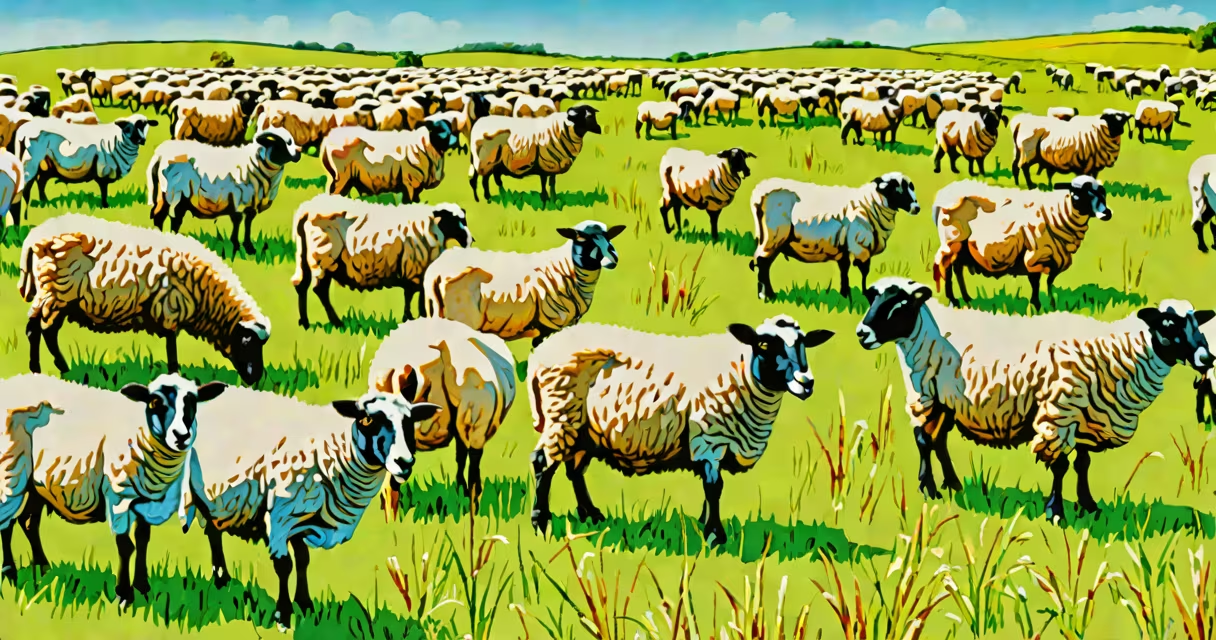
breeds of sheep are distinct populations of domesticated sheep (Ovis aries) developed over centuries through selective breeding for specific traits such as wool quality, meat yield, milk production, or adaptability to climate and terrain. There are over 200 recognized breeds worldwide, each suited to particular environments and human needs.
Sheep were first domesticated around 10,000 years ago in the Fertile Crescent, and since then, humans have shaped their genetics to serve agriculture, textiles, and food systems. Modern breeds reflect this long history of adaptation and purpose-driven selection. For example, the Merino breed was developed in Spain for fine, soft wool, while the Dorset breed was selected for early lambing and efficient meat production.
Each breed has unique physical characteristics, behavioral patterns, and environmental requirements. Some thrive in mountainous regions, others in arid deserts. The choice of breed affects everything from feed efficiency to disease resistance. Understanding breeds of sheep is essential for farmers, shepherds, and conservationists aiming to match animal performance with ecological and economic goals.
Breeds of sheep are primarily categorized by function: wool, meat, dairy, or dual-purpose. This functional classification reflects centuries of targeted breeding. Wool breeds produce fiber suitable for spinning into yarn or fabric. Meat breeds are bred for rapid growth and high-quality carcass yield. Dairy breeds provide milk for cheese and yogurt. Dual-purpose breeds balance multiple outputs.
Genetic markers and morphological traits further define breeds. For instance, horn presence or absence often distinguishes breeds-some, like the Soay, naturally lack horns, while others, such as the Jacob, grow multiple horns. Coat color and texture also vary widely: Merinos have tightly curled fleece, while the Romney has long, lank, water-resistant wool.
A key distinction often missed is that breed identity is not solely based on appearance. A breed's genetic lineage, documented history, and formal recognition by national or international bodies (like the American Sheep Industry Association or the Rare Breeds Survival Trust) determine legitimacy. A group of sheep may look similar but fail to meet breed standards if they lack documented ancestry.
The following table outlines major categories of breeds of sheep, their primary purpose, and notable examples.
| Type | Purpose | Examples | Key Traits |
|---|---|---|---|
| Wool | High-quality fiber production | Merino, Romney, Corriedale | Fine, dense fleece; high yield per animal |
| Meat | Lamb and mutton production | Dorset, Suffolk, Hampshire | Large frame, muscular build, fast growth |
| Dairy | Milk for cheese and butter | East Friesian, Lacaune, Awassi | High milk volume, good udder structure |
| Dual-Purpose | Combines wool and meat output | Romney, Jacob, Shropshire | Hardy, moderate wool, good weight gain |
For example, the Merino produces up to 6 kg (13 lbs) of fine wool annually, with fibers averaging 18-24 microns in diameter-ideal for luxury garments. In contrast, the Suffolk, known for its black face and muscular hindquarters, reaches market weight in just 6 months on pasture-based feeding.
One non-obvious fact: many modern meat breeds originated from crossbreeding. The Dorset Horn, for instance, was developed in England by crossing local sheep with imported rams from the Mediterranean. Its ability to lamb out of season-uncommon in most sheep-makes it valuable for year-round lamb supply.
Many assume all sheep are alike. In reality, breeds of sheep differ dramatically in temperament, care needs, and environmental tolerance. A common error is assuming that all wool breeds are suitable for cold climates. While Merinos excel in dry, hot conditions due to their natural insulation and low water intake, they struggle in wet, humid regions where mold and flystrike risk increases.
Another misconception is that rare breeds are inherently better or more sustainable. Not all heritage breeds are ecologically superior. The Jacob sheep, prized for its striking black-and-white markings and multiple horns, requires more careful management due to its tendency to develop health issues like prolapse. Its popularity in small farms stems from aesthetics, not proven productivity.
Even the term "sheep" can mislead. Domestic sheep (Ovis aries) are not wild animals. They descend from the wild mouflon (Ovis orientalis), but no modern breed is truly feral. All current breeds are dependent on human care for survival. Without shelter, supplemental feeding, or veterinary attention, even hardy breeds like the Scottish Blackface can perish during harsh winters.
In 2021, I managed a small farm in Vermont where we rotated four breeds of sheep across pastures: Katahdin (meat), Dorset (dual-purpose), Jacob (ornamental), and a mixed flock of Corriedale (wool). We tracked weight gain, wool yield, lamb survival, and parasite load over 18 months.
The results showed clear differences. The Dorsets produced lambs 30% faster than the Katahdins. The Corriedales yielded 4.5 kg of clean wool per animal annually-enough for two hand-knit sweaters. The Jacobs, though visually striking, had a 22% higher rate of dystocia (difficult birth) and required assisted deliveries. Their wool was coarse and unsuitable for commercial use.
This experience confirmed that selecting breeds of sheep based on purpose-not appearance-is critical. Aesthetic appeal doesn't translate to profitability or ease of management. Choosing the right breed reduces labor, improves welfare, and boosts return on investment.
Breed diversity supports resilience. According to the Food and Agriculture Organization (FAO), nearly 20% of global livestock breeds are at risk of extinction. Loss of genetic variation weakens food systems against disease outbreaks and climate shifts. Maintaining breeds like the Icelandic Sheep-adapted to volcanic terrain and extreme weather-preserves options for future farming in changing environments.
Research from the University of California, Davis, shows that native breeds often outperform commercial lines in pasture-based systems. For example, the Navajo-Churro, a historic breed raised by Indigenous communities in the Southwest, thrives on low-input forage and resists internal parasites better than imported breeds.
Understanding breeds of sheep isn't just about choosing which animal to raise-it's about preserving biological heritage, supporting regional food systems, and adapting to climate challenges. Farmers who select breeds based on local conditions see lower mortality, reduced medication use, and improved soil health through rotational grazing.