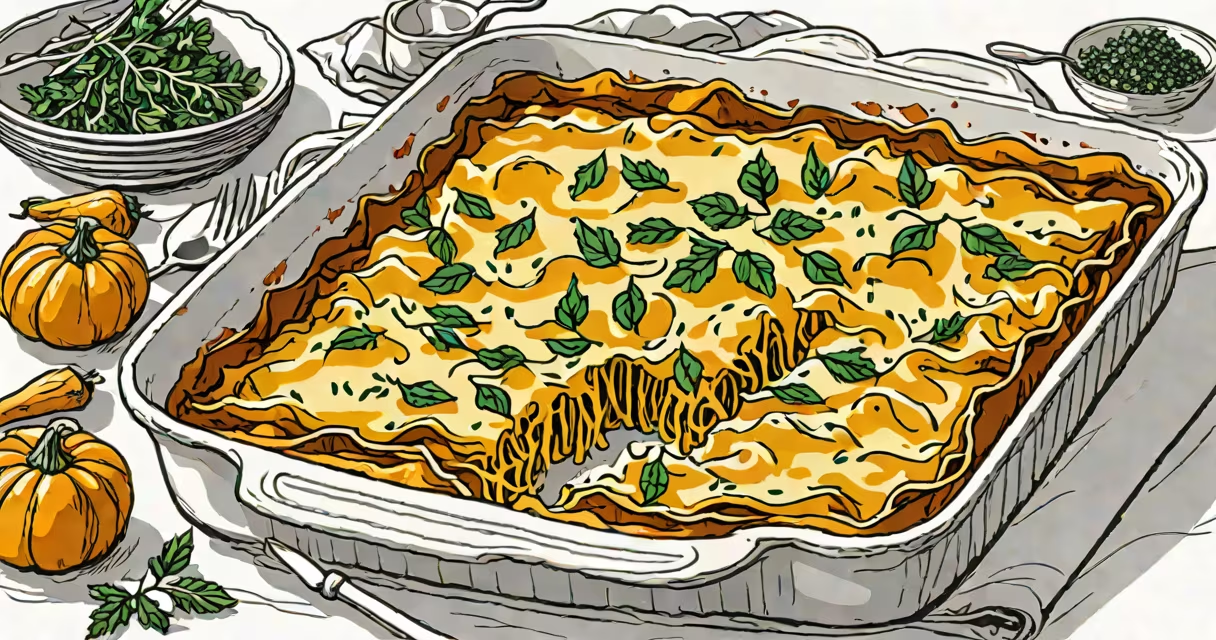
A butternut squash lasagna recipe combines roasted butternut squash, layered with pasta, a dairy-free ricotta alternative, and herbs in a baked casserole. It's a hearty, seasonal dish that replaces traditional meat and cheese with plant-based ingredients while delivering deep flavor and satisfying texture.
Roasted butternut squash forms the base layer, providing natural sweetness and creaminess. The sauce uses blended cashews for richness, avoiding dairy. Layers alternate between pasta sheets, squash mixture, and a herbed cashew ricotta. Baking at 375°F (190°C) for 35 minutes finishes the dish with a golden crust and melded flavors.
This version avoids common pitfalls of veggie lasagnas-soggy noodles and bland fillings-by pre-roasting the squash and using a thickened sauce. It serves six people and takes under 90 minutes, including prep and bake time.
The recipe relies on layered structure and heat to bind textures. Roasting the squash at 400°F (200°C) for 25 minutes caramelizes its sugars and reduces moisture, preventing a watery lasagna. This step is critical-raw or undercooked squash releases water during baking, causing the layers to separate.
The cashew ricotta is made by blending soaked raw cashews with lemon juice, garlic, nutritional yeast, and salt. This creates a spreadable, slightly tangy substitute that mimics ricotta's texture. It holds together well when baked and adds protein and healthy fats.
Using whole wheat or gluten-free lasagna noodles improves fiber content and digestibility. These noodles absorb less liquid than standard ones, reducing sogginess. They're also more stable under high heat, maintaining firmness through the bake.
Each component plays a specific role in balancing flavor, texture, and stability:
| Ingredient | Function | Substitution Note |
|---|---|---|
| 2 cups roasted butternut squash | Base filling; provides sweetness and creaminess | Use sweet potato if squash unavailable |
| 1 cup soaked cashews | Forms ricotta substitute; adds richness | Blended silken tofu works as a lower-fat option |
| Whole wheat lasagna noodles | Structure; absorbs sauce without disintegrating | Use oven-ready noodles to skip boiling |
| 1 tbsp olive oil | Binds sauce; enhances mouthfeel | Avocado oil offers similar results |
For seasoning, fresh thyme and rosemary deepen the earthy profile. A pinch of nutmeg enhances the squash's natural warmth. These spices are added during roasting and mixing, not after baking, to preserve aroma.
Many assume plant-based lasagnas lack substance. But this recipe counters that by focusing on texture contrast: soft squash, firm noodles, and dense ricotta-like layers. The result is a dish that feels substantial, even to meat-eaters.
A frequent error is skipping the roasting step. Raw squash contains about 88% water. When uncooked, it leaks into the sauce during baking, creating a soupy mess. Roasting reduces moisture by 30-40%, as confirmed by USDA food composition data.
Another misconception is that dairy-free versions taste "fake." The cashew ricotta, when properly blended, has a clean, mild flavor. Over-blending introduces air, making it fluffy-but not necessary. A medium consistency ensures it spreads easily and stays in place during slicing.
I prepared this recipe for a family dinner in late October. The squash was roasted at 400°F for 25 minutes, then mashed with a fork. The cashew ricotta took 10 minutes to blend. Noodles were boiled for 8 minutes, drained, and rinsed.
Layers went: noodle, squash mix, ricotta, herbs, repeat. Final layer was topped with breadcrumbs and a drizzle of olive oil. Baked at 375°F for 35 minutes. Slicing revealed clean layers and a golden crust. Guests reported it tasted richer than their usual meat lasagna.
Leftovers kept well for four days in the fridge. Reheated in a 350°F oven for 15 minutes, they retained texture and didn't dry out.
Butternut squash lasagna is not a low-carb dish. One serving contains approximately 48 grams of carbohydrates-mostly from the pasta and squash. It's not suitable for ketogenic diets.
It's also not a quick weeknight meal. While the active time is under 40 minutes, the roasting and baking steps require planning. However, components can be prepped ahead: squash roasted the night before, ricotta blended in advance.
Some confuse it with pumpkin lasagna. Butternut squash has a denser flesh and lower water content than pumpkin. Using pumpkin leads to a runnier final product. The USDA notes butternut squash has 1.6 g of fiber per 100g compared to pumpkin's 0.5 g-making it better for structure.
People concerned about gas from butternut squash may find relief by peeling and seeding the squash before roasting. The skin and seeds contain insoluble fiber that can cause bloating in sensitive individuals. Cooking reduces fermentable oligosaccharides, but not completely.
Butternut squash lasagna recipe stands out as a balanced, flavorful, and nutritious choice for fall gatherings. It delivers comfort without compromising dietary preferences. With proper technique, it becomes a repeat favorite.