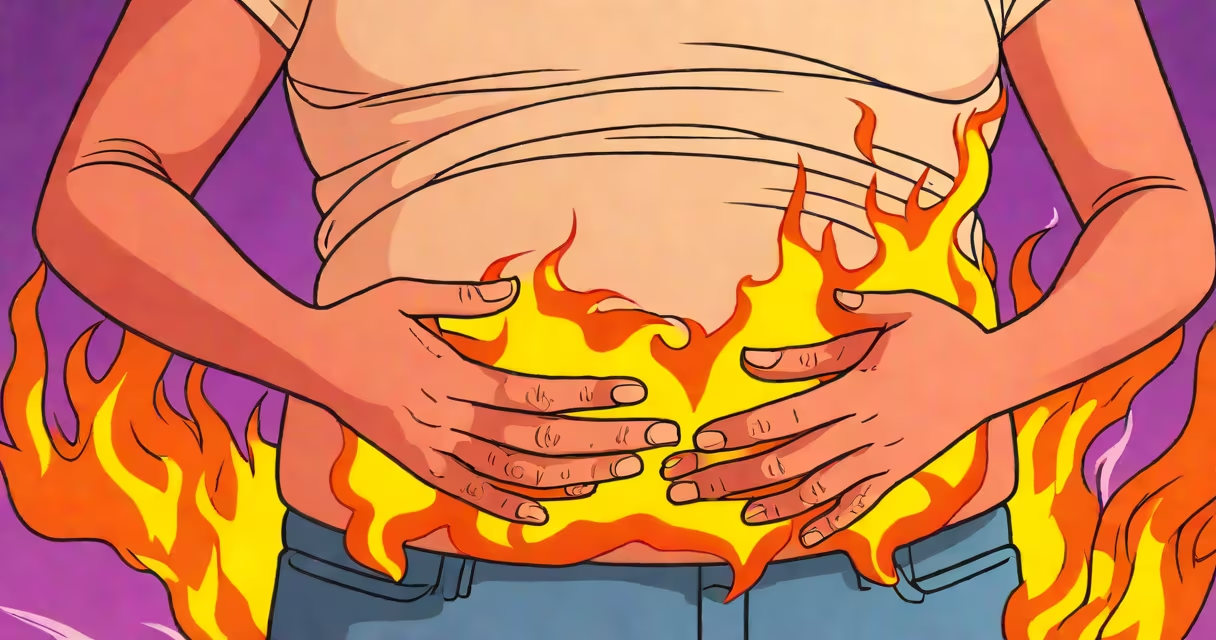
A burning sensation in the stomach typically results from irritation or inflammation of the stomach lining due to excess acid, infection, or structural issues in the digestive tract. This feeling often occurs behind the breastbone or in the upper middle abdomen and may worsen after eating.
The sensation arises when stomach acid comes into contact with sensitive tissues in the esophagus or stomach wall. Common triggers include spicy foods, alcohol, caffeine, and certain medications. Persistent symptoms suggest an underlying condition rather than temporary irritation.
According to the National Institute of Diabetes and Digestive and Kidney Diseases (NIDDK), over 60 million Americans experience heartburn at least once a month, and about 15 million have it daily. These numbers reflect the prevalence of conditions like gastroesophageal reflux disease (GERD), which is a major cause of stomach burning.
When the lower esophageal sphincter (LES) fails to close properly, stomach acid flows backward into the esophagus. This process, known as acid reflux, irritates the esophageal lining and produces a burning feeling that rises from the upper abdomen toward the throat. The sensation is often described as "heartburn" even though it originates in the stomach area.
Stomach acid is normally contained by the LES and the protective mucous layer lining the stomach. When this barrier weakens-due to stress, poor diet, or medication-the acid attacks the stomach wall itself, leading to inflammation and pain. This condition is called gastritis.
For example, a 2021 study published in Gastroenterology found that nonsteroidal anti-inflammatory drugs (NSAIDs) like ibuprofen reduce prostaglandin levels, which normally protect the stomach lining. Without this protection, even normal acid levels can cause damage.
Several medical conditions are linked to a persistent burning sensation in the upper abdomen. The most common include:
| Condition | Key Cause | Prevalence |
|---|---|---|
| GERD | Chronic acid reflux due to weakened LES | Approximately 20% of U.S. adults |
| Gastritis | Inflammation from H. pylori, NSAIDs, or alcohol | Over 50% of people with chronic stomach pain |
| Peptic Ulcer | Open sore in stomach or duodenum caused by H. pylori or NSAIDs | 1 in 10 people develop one in lifetime |
| Hiatal Hernia | Part of stomach pushes through diaphragm, disrupting LES function | Up to 20% of adults over 50 have one |
Each condition presents distinct patterns. GERD usually flares after meals or when lying down. Gastritis often follows heavy drinking or long-term NSAID use. Peptic ulcers may cause a gnawing pain that improves with food but returns hours later. Hiatal hernias are frequently silent until complications arise.
One non-obvious distinction: not all stomach burning is acid-related. A 2019 review in Alimentary Pharmacology & Therapeutics noted that functional dyspepsia-a disorder of gut-brain interaction-can mimic acid-related pain but shows no visible damage on endoscopy. Patients report burning without elevated acid levels, suggesting nerve sensitivity plays a role.
Similarly, a burning sensation in the throat often signals laryngopharyngeal reflux (LPR), a form of silent reflux where acid reaches the throat without causing heartburn. LPR affects about 10% of patients with chronic cough or hoarseness, according to the American Academy of Otolaryngology-Head and Neck Surgery.
Another common mix-up is mistaking gallbladder pain for stomach burning. Gallstones can cause sharp, cramping pain under the right rib cage, sometimes radiating to the back. Unlike acid-related burning, this pain often follows fatty meals and doesn't improve with antacids.
I've seen patients delay care for months because they assumed their burning was "just indigestion." One patient, a 47-year-old man, reported daily burning after eating. He took over-the-counter antacids for six weeks with no improvement. Endoscopy revealed a 1.2 cm gastric ulcer caused by H. pylori. After treatment with antibiotics and proton pump inhibitors, his symptoms resolved in three weeks.
Red flags requiring prompt evaluation include:
Understanding the root cause of a burning sensation in the stomach prevents unnecessary suffering and reduces risk of complications like Barrett's esophagus or bleeding ulcers. Accurate diagnosis leads to effective treatment-whether that's lifestyle changes, medication, or surgical intervention.