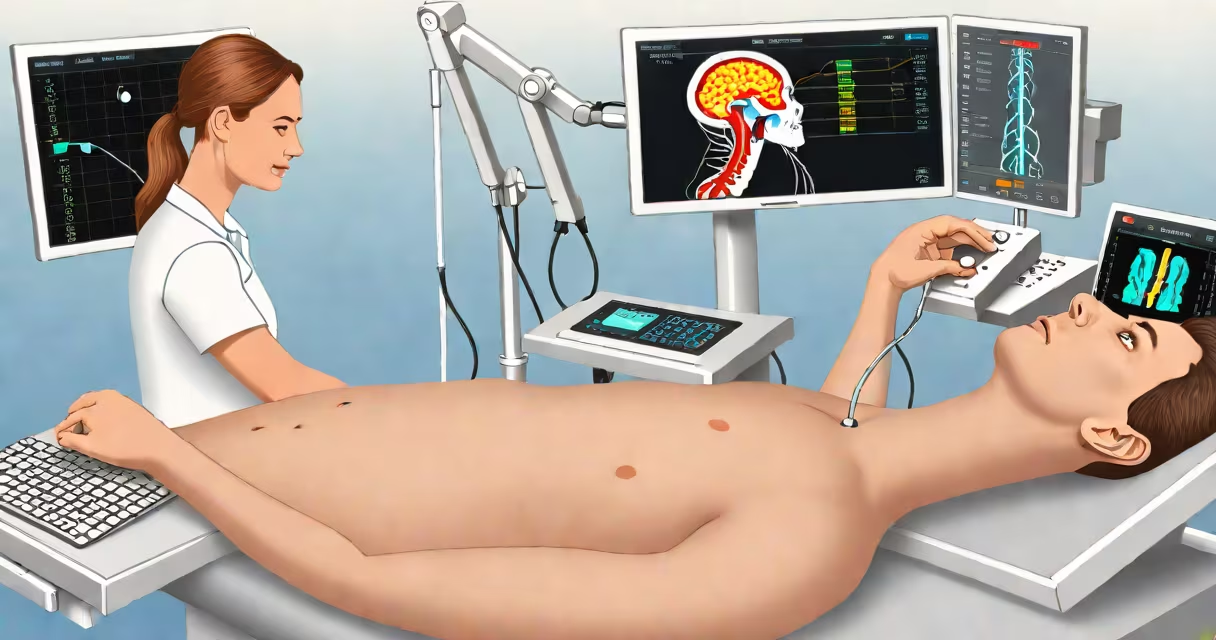
A carotid artery scan is a non-invasive ultrasound test that evaluates blood flow and detects plaque buildup in the carotid arteries-the major vessels supplying blood to the brain. It identifies narrowing or blockages that increase stroke risk, enabling early intervention.
The procedure uses high-frequency sound waves to create real-time images of the carotid arteries. A technician applies gel to the neck and moves a handheld device called a transducer over the skin. The device captures echoes from blood cells and vessel walls, translating them into detailed visuals displayed on a monitor. No radiation or contrast dye is involved.
Doctors recommend a carotid artery scan for people with risk factors such as hypertension, high cholesterol, smoking history, or prior transient ischemic attacks (TIAs). It's especially useful in patients with unexplained dizziness, vision changes, or weakness on one side of the body. The American Heart Association notes that carotid stenosis-narrowing of the artery-can increase stroke risk by up to fivefold if left untreated.
During a carotid artery scan, the transducer emits sound waves that bounce off moving red blood cells. The returning signals are processed to show blood flow velocity and direction. Doppler ultrasound measures how fast blood moves through the arteries. Abnormal speeds indicate narrowing or blockage.
For example, a normal carotid artery has blood flow below 125 cm/s. If flow exceeds 230 cm/s, it suggests significant stenosis-typically 70% or greater narrowing. This threshold is based on guidelines from the North American Symptomatic Carotid Endarterectomy Trial (NASCET), which established standardized criteria for interpreting results.
Scans take 20 to 30 minutes. Patients lie flat, turn their head slightly away from the side being scanned, and remain still. No fasting or sedation is required. Results are available within hours, often during the same visit.
There are two primary methods used: B-mode imaging and Doppler ultrasound. B-mode shows the structure of the artery wall and any plaques. Doppler assesses blood flow dynamics. Both are combined to give a complete picture.
| Type | What It Shows | Common Use |
|---|---|---|
| B-mode | Artery wall thickness, plaque location, calcification | Structural assessment |
| Doppler | Blood flow speed, turbulence, direction | Flow obstruction detection |
Results are reported using percentage stenosis. A 50% to 69% narrowing is moderate; 70% or higher is severe. Severe stenosis may require surgery or medication. The National Institute of Neurological Disorders and Stroke (NINDS) states that patients with symptomatic stenosis above 70% benefit from carotid endarterectomy-a surgical procedure to remove plaque.
A carotid artery scan does not diagnose stroke. It assesses risk. A patient may have no symptoms but still have critical blockages. One study published in JAMA Internal Medicine found that 38% of asymptomatic individuals with 70% stenosis had no warning signs until a stroke occurred.
Many confuse a carotid artery scan with a CT angiogram or MRI. While those provide detailed anatomical views, they involve radiation or contrast agents. A carotid ultrasound is faster, safer, and cheaper-making it ideal for screening.
Another misunderstanding is that a normal scan guarantees no stroke risk. That's false. Stroke causes include small vessel disease, heart conditions, and emboli from other sources. A carotid scan only addresses one potential cause-large artery blockage.
Some assume scans are only for older adults. But younger patients with migraines, Raynaud's syndrome, or family history of early stroke may also benefit. The U.S. Preventive Services Task Force recommends screening only for adults aged 50-70 with cardiovascular risk factors-not for everyone.
In 2021, a 63-year-old man with a history of diabetes and high blood pressure visited his doctor complaining of sudden numbness in his left arm. His primary care provider ordered a carotid artery scan. The test revealed 85% stenosis in the right internal carotid artery. He underwent carotid endarterectomy within 48 hours. Post-op imaging confirmed clearance of the blockage. He experienced no further symptoms and remained stroke-free over two years of follow-up.
This case illustrates how timely scanning prevents irreversible damage. Without the scan, the blockage might have gone undetected until a full stroke occurred.
I once observed a carotid artery scan at a community health fair. A woman in her late 50s with no symptoms had a scan showing 75% stenosis. She was referred to a vascular specialist. After lifestyle changes and statin therapy, her stenosis stabilized. She later told me she'd never known she was at risk. The scan caught something that routine exams missed.
Carotid artery scans are recommended for:
They're not routinely done in healthy adults without symptoms. Overuse leads to unnecessary anxiety and treatment. The American College of Radiology advises against population-wide screening due to low yield and high false-positive rates.
One non-obvious fact: plaque composition matters. Soft, lipid-rich plaques are more likely to rupture and cause clots than hard, calcified ones. Ultrasound can't always distinguish between them-this is why advanced techniques like shear wave elastography are being studied for better plaque characterization.
If a scan shows significant stenosis, doctors evaluate whether to proceed with medication, surgery, or monitoring. For stenosis above 70%, surgery is often advised. For 50-69%, medications like aspirin and statins are first-line treatments.
For mild cases (<50%), lifestyle changes-diet, exercise, smoking cessation-are emphasized. Follow-up scans are scheduled every 1–2 years to track progression.
Patients should discuss results with a vascular specialist. Understanding the full anatomy of the carotid system helps interpret findings accurately.
A carotid artery scan is a important tool in stroke prevention. It's not a diagnostic test for stroke itself, but it identifies a key modifiable risk factor. Early detection enables timely action-potentially avoiding permanent disability or death.