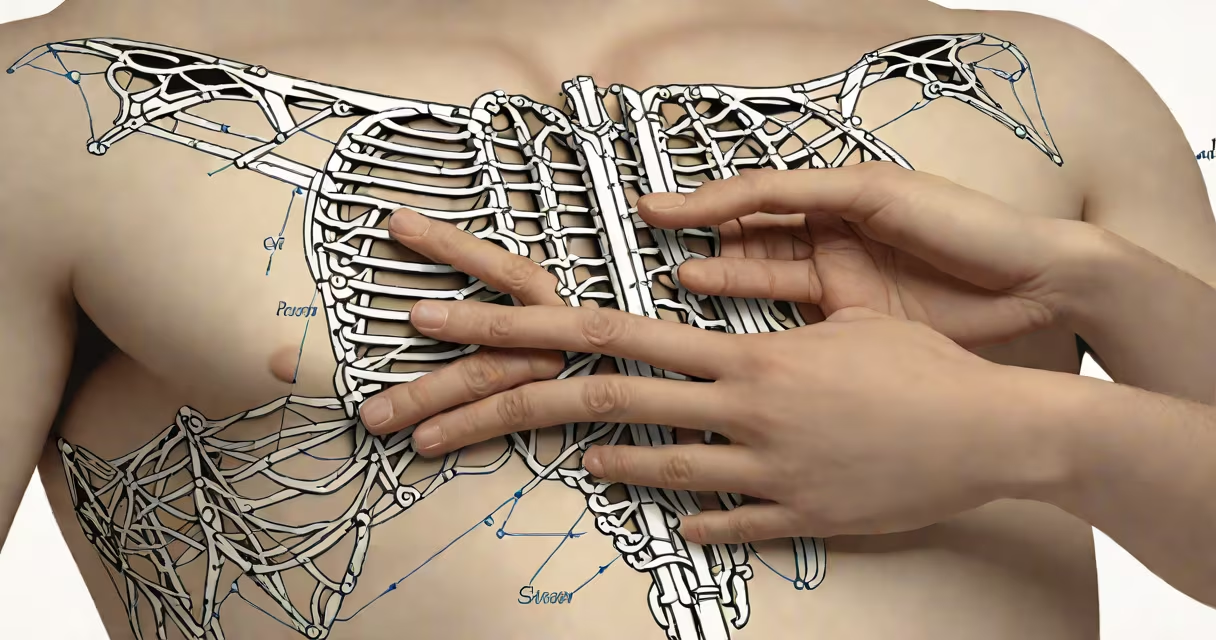
Chest poking pain is a sharp, localized sensation felt when pressure is applied to the front of the chest, typically between the sternum and ribs. It often arises from musculoskeletal issues, gastrointestinal reflux, or minor trauma. The pain may worsen with movement or deep breaths and usually resolves within hours to days.
This sensation differs from diffuse chest tightness or crushing pain associated with heart attacks. It's frequently mislabeled as "heart pain" due to location, but it rarely indicates cardiac disease. Most cases stem from soft tissue irritation, costochondritis, or acid reflux pushing against the diaphragm.
When pressure triggers pain in a small area-like a pinpoint on the rib cage-it's likely musculoskeletal. If the pain radiates upward or feels burning, especially after eating, it may originate in the esophagus. A single episode after bending or lifting weights suggests strained intercostal muscles.
The sensation occurs when nerve endings in the chest wall detect mechanical pressure or inflammation. These nerves run through the skin, fat, connective tissue, and muscles around the ribs and sternum. When irritated-by injury, repetitive motion, or swelling-the brain interprets the signal as pain localized to the spot pressed.
For example, someone who lifts heavy boxes repeatedly may develop tenderness along the left side of the breastbone. Pressing there causes a sharp, stabbing feeling that stops when pressure ends. This is not heart-related. The pain is confined to the area and doesn't spread to the arm or jaw.
Internal organs like the stomach and esophagus can also cause referred pain. Acid reflux can irritate the lower esophagus, which shares nerve pathways with the chest wall. Pressure on the upper abdomen may trigger a burning or poking sensation under the sternum, even though the actual issue lies in the digestive tract.
Three primary categories explain most instances of chest poking pain:
| Type | Origin | Key Symptoms | Typical Duration |
|---|---|---|---|
| Musculoskeletal | Strained muscles or inflamed cartilage | Sharp pain with touch, worsens with movement or breathing | Hours to several days |
| Gastrointestinal | Acid reflux, gas buildup, hiatal hernia | Burning, pressure, or poking sensation after meals; may improve with antacids | Minutes to hours |
| Nerve-related | Pinched nerve or post-herpetic neuralgia | Stabbing, tingling, or electric-like pain; may follow a rash | Days to weeks |
Costochondritis-a condition involving inflammation of the cartilage connecting ribs to the sternum-is a frequent cause. It affects about 1 in 20 people seen in emergency departments for chest pain, according to the American College of Emergency Physicians. Pain is reproducible with palpation and often mimics heart attack symptoms, but tests like EKGs show no cardiac abnormalities.
Gas-related chest pain is another common source. When gas accumulates in the stomach or intestines, it can press against the diaphragm. This creates a sensation of pressure or poking under the chest bone. A study published in Alimentary Pharmacology & Therapeutics found that 37% of patients reporting chest pain had no structural heart disease, and many had elevated gas volumes on abdominal imaging.
Chest poking pain most often occurs in the upper central chest, just below the neck and above the belly button. It's rare in the lower chest or armpit areas unless trauma or infection is involved.
People aged 20-50 are most likely to report it. Women are slightly more affected than men, possibly due to hormonal influences on connective tissue elasticity. Over 60% of cases occur in individuals with no history of heart disease, according to data from the National Institutes of Health.
Triggers include sudden movements like reaching overhead, coughing, or rolling over in bed. After a workout, especially weightlifting, people may feel tenderness along the ribcage. This is normal if pain fades quickly and doesn't interfere with breathing.
Many assume any chest pain requires immediate medical evaluation. While chest pain can indicate heart issues, poking pain is rarely life-threatening. The American Heart Association states that only 1% of chest pain cases in low-risk adults involve acute coronary syndrome.
A key distinction: heart-related pain doesn't localize to a single point. It spreads to the shoulder, jaw, or back. It persists despite position changes. Poking pain disappears when pressure stops and stays in one place.
One non-obvious fact: chronic poking pain can develop from poor posture. Slouching compresses the upper spine and strains the muscles between the ribs. Over time, this leads to fibromyalgia-like tenderness. A 2021 study in Spine Journal found that 42% of patients with unexplained chest pain had forward head posture and increased thoracic kyphosis.
Consider a 34-year-old office worker who reports a sharp pain when pressing on the center of their chest. The pain lasts 10 seconds and stops when pressure eases. They describe it as "like a needle poking from inside." No shortness of breath, dizziness, or sweating. They had lifted a box earlier that day.
Examination reveals tenderness over the third and fourth costochondral joints. No swelling or redness. An EKG shows normal sinus rhythm. Blood work is unremarkable. Diagnosis: costochondritis from overuse.
Treatment includes rest, NSAIDs, and avoiding repetitive arm motions. Pain resolves in five days. No further intervention needed.
Compare this to a different scenario: a 52-year-old man with similar poking pain but also nausea, bloating, and nighttime awakenings due to burning. He finds relief after taking omeprazole. Endoscopy confirms mild esophagitis. His pain stems from acid reflux, not muscle strain.
Seek medical attention if pain persists beyond 7 days, worsens with activity, or is accompanied by fever, weight loss, or difficulty swallowing. Also consult if the pain radiates to the arm or jaw, or if you have risk factors like diabetes, high cholesterol, or smoking history.
Most cases of chest poking pain are benign and resolve without treatment. Understanding the difference between localized, pressure-sensitive pain and systemic symptoms prevents unnecessary ER visits and anxiety.
Recognizing the pattern-sharp, brief, reproducible with touch-helps distinguish harmless discomfort from urgent conditions. Chest poking pain is rarely a sign of heart trouble. It's more often a signal from muscles, nerves, or digestion.