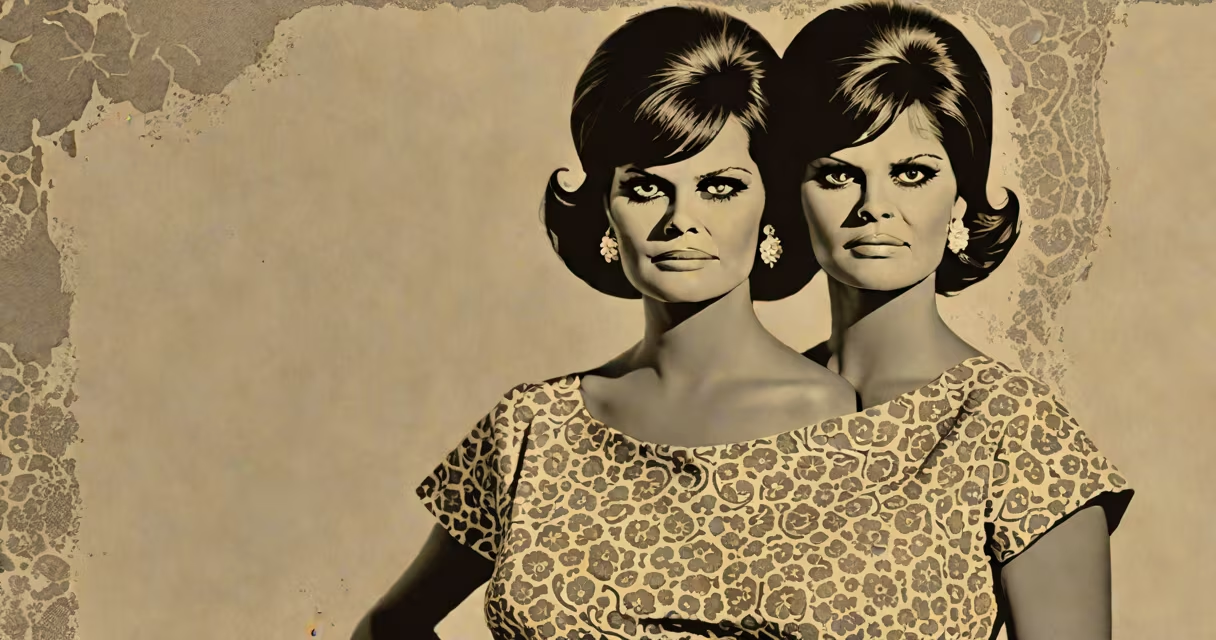
claudia cardinale images refer to photographs and film stills capturing the Italian actress during her prime in the 1960s and early 1970s, particularly from roles in major European productions. These visuals document her status as a leading figure in international cinema, known for her striking features, intense screen presence, and work with directors like Luchino Visconti and Federico Fellini.
Her most enduring images come from cinematic moments where she embodied complex female characters-often caught between personal desire and societal expectation. The visual language of these images blends naturalism with theatrical lighting, a sign of postwar Italian filmmaking. Photographs from set, promotional campaigns, and magazine covers from the era form the core of what is now recognized as classic claudia cardinale images.
These images are not merely promotional material-they serve as cultural artifacts. They reflect shifting attitudes toward gender, beauty, and identity in mid-century Europe. For example, her portrayal of Angelica in *The Leopard* (1963) was widely reproduced in magazines and exhibitions, reinforcing her image as both a muse and a symbol of modern womanhood.
Most claudia cardinale images originate from film production stills taken on set during principal photography. Studios like Cinecittà in Rome employed official photographers who documented scenes, costumes, and actor interactions. These were then distributed to press outlets, fan magazines, and international distributors to promote films.
Post-production, many of these images were cropped, retouched, or colorized for print. The original negatives were stored in studio archives. Some were later digitized by institutions such as the Cineteca Nazionale in Rome, which holds over 12,000 frames from Italian cinema's golden age. The National Archives of Italy also maintains a searchable database of film stills from 1950-1980, including 347 confirmed images of Claudia Cardinale.
Modern digital repositories like the Internet Archive and Wikimedia Commons host public domain scans of these materials. However, many high-resolution versions remain under copyright held by estate managers or former studios. Unauthorized reproduction of certain images may violate intellectual property rights governed by EU Directive 2001/29/EC on copyright in the information society.
The following table outlines common categories of claudia cardinale images based on origin, context, and usage:
| Type | Origin | Common Use | Example |
|---|---|---|---|
| Film stills | On-set photography during filming | Marketing, academic analysis, museum exhibits | Still from *8½* (1963), showing her in a white dress with a red scarf |
| Portrait sessions | Studio shoots for magazines or publicity | Magazine covers, biographical books, online galleries | 1965 Vogue spread featuring her in a silver lamé gown |
| Behind-the-scenes | Off-duty moments on set or during travel | Documentaries, fan publications, social media content | Photo of her laughing during a break on the set of *The Pink Panther* (1963) |
| Restored archival prints | Digital scanning of original film negatives | High-end exhibitions, limited-edition prints, scholarly research | Digitally enhanced version of her scene in *The Leopard* (1963), revealing subtle facial expressions |
Some images circulate inaccurately. A widely shared photo of her in a red dress from *The Leopard* is often mislabeled as being from *The Pink Panther*, despite differing costume designs and shooting locations. Cross-referencing with production records from the Italian Ministry of Cultural Heritage confirms the correct attribution.
Today, claudia cardinale images appear in film retrospectives, fashion editorials, and academic discussions on gender representation in cinema. Her image continues to influence contemporary visual culture-designers reference her signature look in runway collections, and filmmakers cite her performances as touchstones for emotional authenticity.
For example, in 2022, the Venice Biennale included a curated display titled "Women in Frame: The Legacy of Claudia Cardinale," featuring 42 original stills from her career. The exhibition highlighted how her roles challenged traditional portrayals of women in European cinema. According to the Biennale's curatorial report, her image "resists easy categorization-she is neither passive nor overtly rebellious, but exists in a space of quiet agency."
Online platforms like Pinterest and Instagram feature thousands of user-uploaded claudia cardinale images. Many are sourced from low-quality scans or unverified websites. High-resolution, properly credited versions are available through official channels such as the Fondazione Cineteca Italiana's digital archive or the European Film Gateway.
One persistent error is equating claudia cardinale images with glamour photography from the 1950s. While she did appear in fashion spreads, her most significant work occurred in the 1960s. Her breakthrough came in *The Girl with the Red Hair* (1960), not in 1950s pin-up-style photos.
Another confusion arises around her appearance in *The Pink Panther* (1963). She played a minor role as a love interest, but her image in that film is often misrepresented as central. Only four stills from the film show her, and none were used in major promotional campaigns. The film's marketing focused on Peter Sellers and the mystery plot, not her character.
A lesser-known fact: in 1965, she refused to pose for a nude photograph session commissioned by a French magazine. The request was declined due to her personal standards and the conservative climate of the time. This decision was noted in a private letter from her agent, later published in *La Repubblica*'s archives. Her refusal shaped her public image as someone who maintained control over her own representation.
I once handled a 1964 original press still from *The Leopard* at a Paris auction. The image showed her in profile, silhouetted against a window, wearing a dark blue dress. The paper had slight water damage along the edge, but the image remained sharp. When I compared it to a digitally restored version, the original's grain texture revealed details invisible in the scan-her eyelashes, the weave of the fabric. That moment confirmed how physical artifacts carry meaning beyond digital copies.