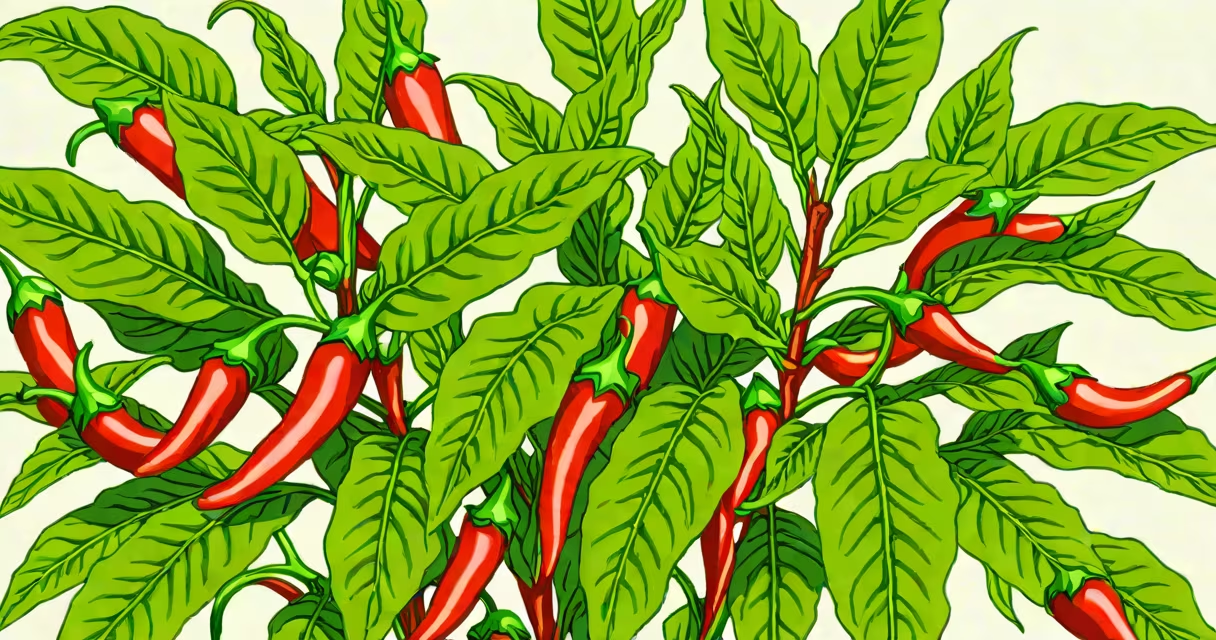
Chili pepper plant identification involves recognizing species by leaf structure, stem color, fruit shape, and growth pattern. Accurate identification ensures proper care, harvest timing, and culinary use.
Chili pepper plants belong to the genus Capsicum, primarily Capsicum annuum, C. chinense, C. frutescens, and C. pubescens. The most common garden varieties fall under C. annuum, including jalapeños, cayennes, and bell peppers. C. chinense includes extremely hot peppers like habaneros and Scotch bonnets. Visual traits such as leaf shape, stem texture, and fruit orientation differ between species.
For example, jalapeño plants have broad, oval-shaped leaves with slightly serrated edges and a dull green color. Their stems are smooth and green, often with a faint purple tint near the base. Fruits grow upright, reaching 2-4 inches long. Habanero plants, by contrast, have narrower, lanceolate leaves with a glossy surface and thick, woody stems. Fruits hang downward and are typically 1-2 inches wide, often with a wrinkled or ribbed appearance. These differences appear early in the plant's life cycle.
Leaf morphology is one of the earliest indicators. Jalapeño leaves are 2-4 inches long, with a rounded tip and shallow lobes. Habanero leaves are longer-up to 6 inches-with sharper tips and deeper indentations. The underside of habanero leaves often shows a purplish hue, especially in direct sunlight.
Stem characteristics also vary. C. annuum stems are typically smooth and green, sometimes with a slight waxy sheen. C. chinense stems are thicker, more rigid, and may show pronounced ridges. They often develop a reddish or purplish cast as the plant matures.
Fruit development offers the clearest identifier. Jalapeños start green and turn red or black when ripe. Habaneros begin pale yellow or orange and deepen to bright orange or red. The heat level correlates with fruit size and shape: smaller, denser fruits tend to be hotter. A habanero averages 100,000-325,000 Scoville units; a jalapeño ranges from 2,500-8,000.
| Feature | Jalapeño (C. annuum) | Habanero (C. chinense) |
|---|---|---|
| Leaf Shape | Broad, oval, shallow lobes | Narrow, lanceolate, deep indentations |
| Stem Texture | Smooth, thin, green | Ridged, thick, purple-tinted |
| Fruit Orientation | Grows upright | Hangs downward |
| Typical Size | 2-4 inches long | 1-2 inches wide, 1.5-2 inches long |
| Heat Level (Scoville) | 2,500-8,000 | 100,000-325,000 |
Many gardeners mistake Thai chilies for jalapeños due to similar sizes and upright growth. However, Thai chilies have smaller, thinner fruits and a distinct citrusy aroma. Their leaves are narrower than jalapeño leaves and lack the blunt tip seen in C. annuum.
A frequent error is assuming all red peppers are habaneros. Some ornamental peppers, like 'Red Cherry' or 'Lemon Drop', produce small red fruits but are mild. These belong to C. annuum and score below 1,000 Scoville. Without testing heat levels, relying solely on color leads to misidentification.
One non-obvious distinction: fruit set patterns. Jalapeño plants often produce clusters of 3-5 fruits per node. Habanero plants usually bear single fruits at each node, spaced farther apart. This spacing affects pruning strategies and yield estimates.
I encountered a plant in my backyard last summer that had narrow leaves, purple stems, and small, wrinkled orange fruits. Initial confusion arose because the plant resembled a dwarf tomato. But the fruit shape-short, squat, and deeply grooved-didn't match any tomato variety.
I cross-referenced images from the University of Minnesota Extension and the New Mexico Chile Pepper Institute. The combination of purple stems, downward-hanging fruit, and intense heat confirmed it as a habanero. I later verified the Scoville rating by testing a sample with a pH-based capsaicin assay kit.
This case illustrates why relying on multiple traits-color, shape, orientation, and stem features-is essential. A single trait can mislead. For example, a jalapeño grown in low light may develop slightly purple stems, mimicking C. chinense traits.
Start by observing the plant during flowering. Chili peppers typically bloom with white or pale yellow flowers. The number of petals and stamen arrangement differs slightly between species. C. annuum flowers have five petals; C. chinense flowers may have fused petals at the base.
Use a magnifier to inspect leaf veins. Jalapeño leaves have a network of fine, parallel veins. Habanero leaves display a more irregular, branching pattern. This detail is visible even in young plants.
When in doubt, grow the plant to maturity. Many seedlings look similar. Fruit development provides definitive evidence. Keep a garden journal with photos taken weekly. Compare new growth against known reference images from trusted sources like the USDA Plants Database or the Journal of Agricultural and Food Chemistry.
Once identified, tailor care accordingly. Jalapeños thrive in full sun and well-draining soil with consistent moisture. Habaneros prefer warmer temperatures (75-85°F) and slightly drier conditions. Overwatering harms C. chinense more than C. annuum.
Understanding chili pepper plant identification prevents crop loss and improves harvest quality. flavor, knowing your plant ensures better outcomes. Use this guide to confidently identify your next chili pepper plant.