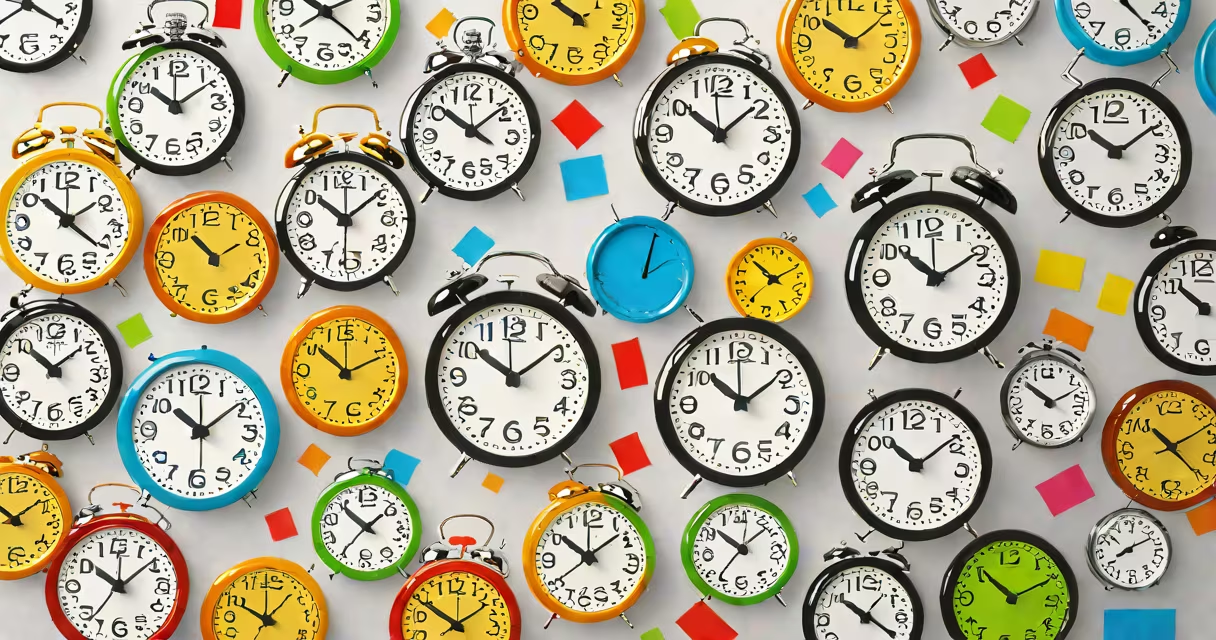
A clock reading worksheet is a structured exercise designed to teach students how to read time on an analog clock, using visual representations of clock faces and specific time values. These materials typically ask learners to draw hour and minute hands, write the time in words or numbers, or match clock faces to corresponding digital times.
These worksheets are commonly used in K-5 classrooms and homeschool settings to build foundational math and real-world reasoning skills. They align with Common Core State Standards for Mathematics, specifically under Measurement and Data (CCSS.MATH.CONTENT.1.MD.B.3), which requires first graders to tell and write time in hours and half-hours using analog and digital clocks.
Each worksheet presents a series of clock faces with varying configurations of hour and minute hands. Students then identify the correct time, often writing it in both digital format (e.g., 3:15) and written form (e.g., "three fifteen"). Some versions include word problems or missing hand tasks to deepen understanding.
Worksheets function by presenting a static image of an analog clock face with hands positioned at specific angles. The student must determine the time based on the position of the hour and minute hands. This process reinforces spatial reasoning and number sense.
For example, a clock showing the hour hand between 4 and 5, and the minute hand on 6, indicates 4:30. The student writes "4:30" or "four thirty" in a designated space. More advanced worksheets may show times like 2:47 or 11:53, requiring estimation and precision.
Some worksheets incorporate color-coding or labeled tick marks to support learning. A green line might mark the 30-minute point, helping students associate the halfway position with "half past." Others use dotted lines to show where the hands should go, guiding initial placement.
Worksheets vary in complexity and focus. The most common types include:
| Type | Focus | Example Task |
|---|---|---|
| Basic Time Recognition | Matching clock face to time | Draw the hands to show 7:00 |
| Hand Drawing Practice | Positioning hour and minute hands | Draw the hands for 10:15 |
| Time Writing | Writing time in words and numbers | Write "quarter past nine" as 9:15 |
| Word Problems | Applying time to real-life events | If school starts at 8:30 and it's 8:15 now, how many minutes until class? |
Advanced versions may include elapsed time calculations, such as "If the movie starts at 2:45 and lasts 1 hour 20 minutes, what time does it end?" These require sequential thinking and reinforce arithmetic alongside time concepts.
Students often confuse the hour and minute hands. The hour hand moves slowly and points near the hour number, while the minute hand moves quickly and points to the minute markers. A common error is placing the hour hand at 12 when the time is 12:05.
Another frequent mistake occurs with times close to the hour, such as 1:58. Learners may misread the minute hand as being on 11 instead of 11.6, leading them to think it's 1:55. Clear labeling of minute intervals (every 5 minutes) reduces this confusion.
Teachers and parents should emphasize that the hour hand doesn't jump instantly from one number to the next. At 3:30, it's halfway between 3 and 4. This concept is critical for accurate interpretation. A 2019 study by the National Council of Teachers of Mathematics (NCTM) found that 43% of third graders struggled with this idea, underscoring the need for consistent practice.
Clock reading worksheets prepare students for daily routines. Knowing how to read time supports independence in managing schedules, waking up on time, and meeting deadlines. According to the U.S. Department of Education's National Assessment of Educational Progress (NAEP), 78% of fourth graders who practiced regularly with analog clocks scored above basic proficiency in time-related math tasks.
I've used a clock reading worksheet during a summer tutoring session with a second grader who struggled with time concepts. After three weeks of daily 10-minute sessions using a mix of drawing and matching tasks, he correctly identified 15 out of 16 times on a test. His confidence improved, and he began asking about time during family activities.
Understanding time is a core life skill. Clock reading worksheets provide a low-stakes environment to practice and master this ability. They offer immediate feedback through teacher review or self-checking keys, allowing students to recognize and correct errors.
They also support differentiated instruction. A teacher can assign simpler sheets to struggling learners and complex ones to advanced students, all within the same classroom. Digital versions allow for interactive features like drag-and-drop hands or instant scoring.
When used consistently, clock reading worksheets build automaticity-the ability to read time without conscious effort. This frees cognitive resources for higher-order tasks like scheduling, budgeting, and planning.
Every child who learns to read an analog clock gains a deeper understanding of fractions, measurement, and patterns. The clock face is a circle divided into 12 parts, each representing 5 minutes. This visual model makes abstract math tangible.
Regular practice with a clock reading worksheet strengthens number sense, spatial awareness, and logical reasoning-all essential for long-term academic success.