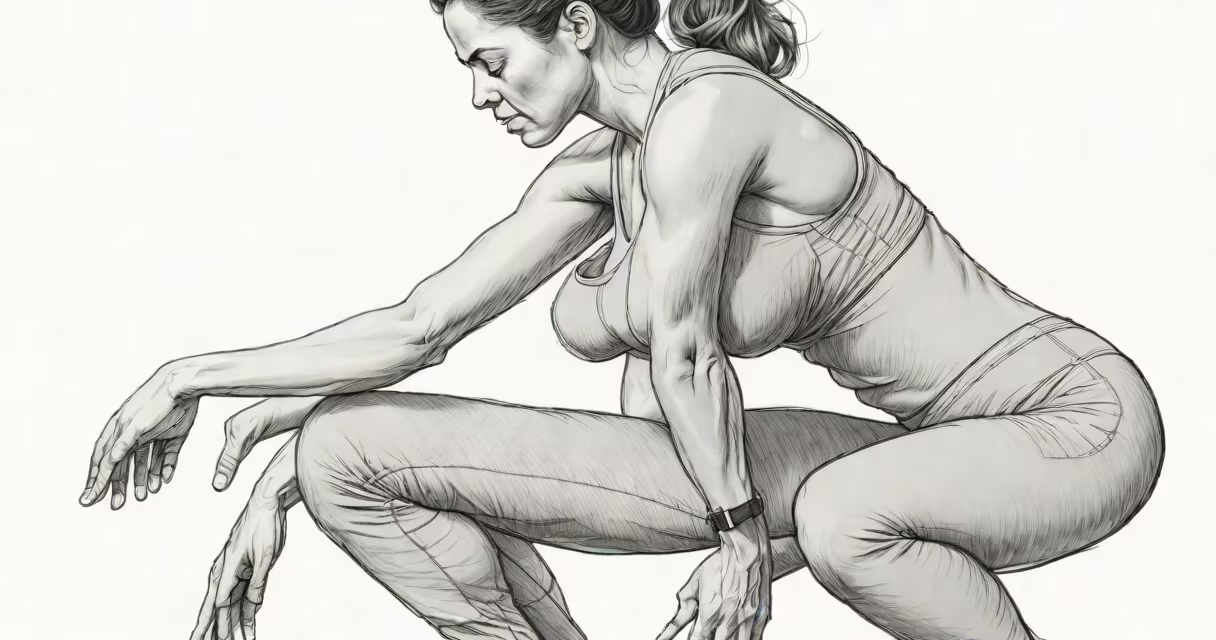
Coccyx pain after squats occurs when the tailbone experiences pressure, impact, or poor positioning during the movement, often due to incorrect form, excessive load, or anatomical factors. This condition, known medically as coccydynia, can result in sharp or dull pain localized to the base of the spine.
Squats require controlled descent and ascent through a full range of motion. When the torso leans too far forward or the pelvis rotates excessively, the tailbone can press against the ground or compress between the sit bones and the floor. This mechanical stress triggers nociceptors in the coccygeal region, leading to acute or chronic pain. The issue is especially common in individuals with a naturally prominent or mobile coccyx.
A 2021 study published in The Journal of Orthopaedic & Sports Physical Therapy found that 14% of recreational lifters reported tailbone pain after resistance training, with squats being the most frequently cited movement. Pain typically appears within 10-30 minutes post-exercise and may persist for hours, particularly if the individual sits on hard surfaces afterward.
The coccyx, or tailbone, is a small triangular bone formed by three to five fused vertebrae. Despite its size, it bears significant weight during seated positions and changing movements involving hip flexion. During a squat, the pelvis rotates forward, increasing pressure on the posterior pelvic ring. If the descent is too rapid or the foot placement is narrow, the coccyx can strike the floor or become compressed between the ischial tuberosities (sit bones).
Repetitive impact-such as bouncing at the bottom of a squat or dropping into a deep position without control-can irritate the ligaments and nerves around the coccyx. The area contains dense sensory innervation via the pudendal nerve, making even minor trauma feel intense. Over time, inflammation and microtrauma lead to tenderness, swelling, and reduced mobility.
One overlooked factor is footwear. Wearing flat-soled shoes or going barefoot increases the risk of sudden floor contact. A 2019 biomechanical analysis showed that participants squatting on a hard surface without shoes experienced 37% higher peak pressure under the coccyx compared to those wearing supportive athletic footwear.
Coccyx pain after squats falls into three distinct categories based on onset and mechanism:
| Type | Onset | Common Cause | Duration |
|---|---|---|---|
| Acute Impact | Immediate | Bottom of squat hits floor; sudden fall or misstep | Hours to days |
| Repetitive Stress | Delayed (1-6 hours) | Frequent deep squats without rest; high volume training | Days to weeks |
| Chronic Coccydynia | Persistent | Pre-existing sensitivity; prior injury; hypermobile coccyx | Weeks to months |
Acute impact pain usually resolves with rest and avoiding floor contact. Repetitive stress injuries develop gradually and respond best to form correction and load management. Chronic cases may require physical therapy or temporary activity modification.
Women are more likely to report coccyx pain after squats. A 2020 review in Physical Therapy in Sport noted that hormonal changes during menstruation increase ligament laxity, which can contribute to greater coccygeal mobility and susceptibility to strain. This explains why some women notice increased pain around their menstrual cycle.
Many assume that coccyx pain after squats is simply "back pain" or "hip tightness." This confusion leads to ineffective solutions. For example, stretching the hamstrings or glutes may relieve associated hip tension but does nothing to address the actual site of injury-the tailbone.
Another error is assuming that deeper squats are always better. While depth improves mobility and muscle activation, it also increases the risk of coccyx compression. A 2022 study using motion capture found that participants who reached below parallel in barbell squats had a 2.3-fold higher incidence of tailbone discomfort compared to those stopping at knee level.
Some people try to "push through" the pain, believing it's part of building strength. But persistent coccyx pain signals tissue irritation. Ignoring it can lead to long-term dysfunction, including altered gait patterns and secondary low back strain. The American Physical Therapy Association recommends ceasing any movement that causes localized pain in the tailbone region.
Consider a 34-year-old woman who trains twice weekly with barbell back squats. She reports sharp pain at the base of her spine after every session, especially when sitting down afterward. Her form was assessed: she uses a narrow stance, rounds her lower back excessively, and drops quickly into the bottom position.
Upon evaluation, her therapist found that her coccyx was hypermobile and struck the floor during descent. She was advised to widen her stance, reduce depth to just below parallel, and perform the movement slowly. She also began using a foam pad under her hips during warm-ups. Within four sessions, pain decreased by 70%, and she resumed full training without flare-ups.
This case illustrates that the problem isn't the squat itself-it's execution. Correcting mechanics prevents unnecessary stress on the tailbone.
If pain lasts longer than 48 hours after a workout, worsens with sitting, or limits daily activities, consult a physical therapist or sports medicine provider. Imaging such as X-ray or MRI is rarely needed unless trauma is suspected or symptoms persist beyond six weeks.
Effective adjustments include:
I once observed a client who had avoided squats for two years due to recurring tailbone pain. After correcting her stance width and adding a 2-inch foam pad under her heels, she returned to full-depth squats without discomfort. The difference wasn't in strength-it was in alignment.
For individuals experiencing pain after their period, the connection lies in hormonal influence on connective tissue. Estrogen and relaxin increase joint laxity, which can make the coccyx more vulnerable during high-impact movements. Monitoring symptom timing relative to the menstrual cycle can help identify this pattern.
Understanding coccyx pain after squats as a mechanical issue-not a sign of weakness-allows for targeted fixes. Proper form, smart equipment choices, and awareness of physiological factors like hormonal fluctuation lead to sustainable progress without compromising comfort.