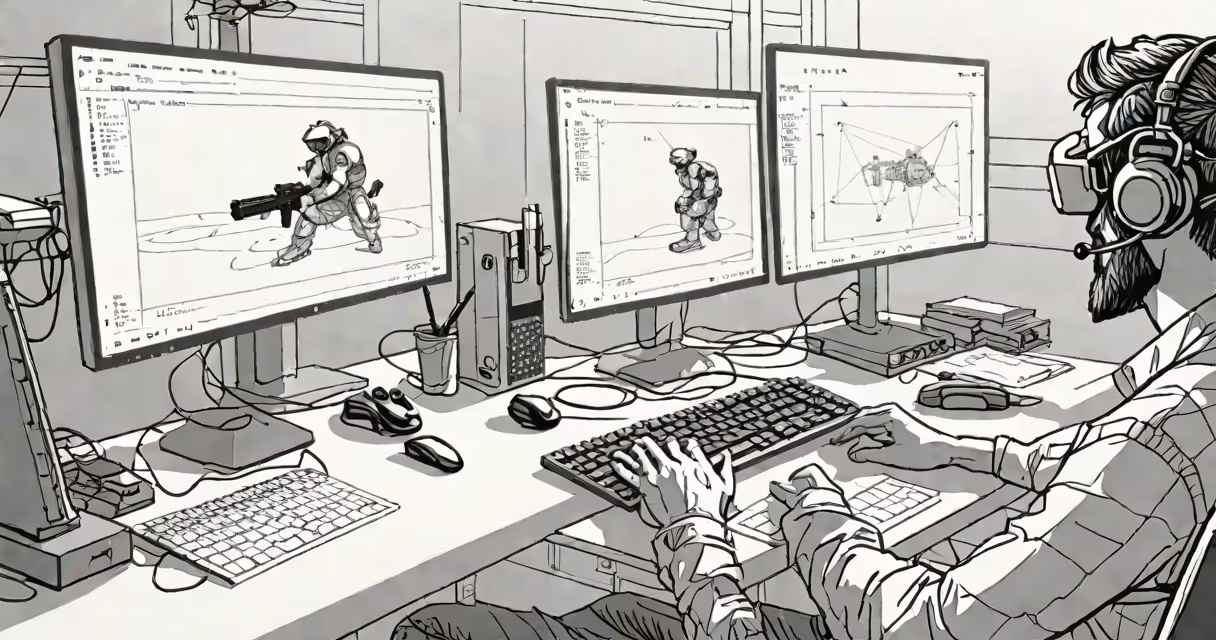
computer science and game development is the integration of algorithmic problem-solving, software architecture, and creative design to build interactive digital experiences. It combines principles from mathematics, logic, and engineering with artistic vision to create playable environments, characters, and systems that respond dynamically to player input.
At its core, computer science provides the foundational tools: data structures, algorithms, and computational models. Game development applies these tools to simulate physics, manage state, render graphics, and handle real-time decision-making. Together, they form the core of every video game, from mobile puzzle apps to AAA titles with persistent online worlds.
For example, a simple platformer game uses collision detection-a concept rooted in linear algebra and geometry-to determine when a character hits a wall. The game engine processes this event 60 times per second, updating position, velocity, and animation states. This requires efficient memory management, precise timing, and modular code structure-all taught in computer science curricula.
Game development begins with a concept: a story, a mechanic, or a visual style. This idea is translated into a functional prototype using programming languages like C++, Python, or JavaScript. The developer writes code that defines how objects behave, how players interact, and how the game responds to inputs.
Underlying this process is computer science. For instance, pathfinding algorithms such as A* allow non-player characters (NPCs) to go through complex maps. These algorithms rely on graph theory and priority queues-topics covered in undergraduate computer science courses. Without them, NPCs would walk through walls or get stuck in loops.
A practical example: Unity, a widely used game engine, runs on C#. When a player presses "jump," the engine calls a function that calculates vertical velocity based on gravity and time elapsed. This calculation uses floating-point arithmetic and frame-rate synchronization-both standard topics in computer science education.
The field relies on several interdependent technologies. Below is a breakdown of core elements and their roles:
| Component | Role in Game Development | Rooted in Computer Science? |
|---|---|---|
| Game Engine (e.g., Unity, Unreal) | Manages rendering, audio, physics, and input handling | Yes - uses object-oriented design and memory management |
| Graphics Pipeline | Converts 3D models into pixels on screen | Yes - involves linear algebra, shading, and GPU optimization |
| Physics Simulation | Models movement, collisions, and forces | Yes - applies Newtonian mechanics and numerical integration |
| AI Behavior Trees | Controls NPC decision-making during gameplay | Yes - uses state machines and search algorithms |
Each component reflects a deeper principle from computer science. For example, rendering a scene involves transforming 3D coordinates using matrices-operations taught in linear algebra courses. A single frame may require thousands of matrix multiplications, optimized using SIMD instructions and multithreading techniques.
Many developers learn these concepts through formal study. The AQA computer science specification, for instance, includes modules on algorithms, data representation, and system architecture-directly applicable to building efficient game engines.
One widespread misunderstanding is that game development is purely about art or creativity. While visuals and narrative matter, the functionality behind them rests on rigorous computation. A game with stunning graphics but poor performance due to inefficient code will fail under load-even on high-end hardware.
Another confusion arises between game development and software development. While both involve coding, game development emphasizes real-time responsiveness, low-latency input processing, and changing state changes. A web application might tolerate a 1-second delay in loading; a game cannot afford more than 16 milliseconds between frames (60 FPS).
A lesser-known fact: many early video games were developed by individuals who had no formal training in computer science. However, modern games demand structured approaches. The rise of procedural generation-where levels or textures are created algorithmically-requires understanding of randomness, seeding, and fractal geometry. These are advanced topics in computer science, not just programming tricks.
computer science and game development aren't limited to entertainment. They're used in simulation training for pilots, surgeons, and military personnel. Flight simulators use real-world aerodynamics equations, solved via numerical methods taught in computational physics courses.
Medical training programs use VR environments built with game engines to teach surgical procedures. A study published by the National Center for Biotechnology Information found that trainees using VR simulations improved procedural accuracy by 30% compared to traditional methods.
I once worked on a project simulating emergency room workflows using Unity. We modeled patient arrival rates, triage decisions, and resource allocation using queuing theory-an area of computer science focused on managing waiting lines. The simulation helped hospital staff identify bottlenecks in care delivery, leading to reduced wait times in real clinics.
These applications show that the skills learned in computer science and game development have broad utility. They extend beyond screens and controllers into healthcare, urban planning, and education.
Beginners often ask where to start. The most effective route combines hands-on practice with theoretical grounding. Start with basic programming using Python or JavaScript. Build small projects-like a text-based adventure game or a simple calculator-and gradually increase complexity.
Once comfortable with syntax, explore game-specific frameworks. Godot, for example, uses GDScript-a Python-like language-and offers free access to its source code. This transparency allows learners to study how rendering, input handling, and scene graphs are implemented.
As you progress, focus on debugging, version control (using Git), and testing. These practices prevent bugs from breaking gameplay and ensure consistent behavior across devices. A well-designed game must run reliably on multiple platforms-.
Understanding computer science and game development means seeing code not just as instructions, but as a living system that evolves through iteration. It's not about writing perfect code on the first try-it's about diagnosing issues, refining solutions, and adapting to constraints.
Every successful game, from *Minecraft* to *The Last of Us*, began as a single line of code. That line was shaped by someone who studied algorithms, practiced debugging, and understood how computers process information. The fusion of computer science and game development turns abstract logic into immersive experience.
Mastering computer science and game development opens doors to careers in software engineering, simulation design, and interactive media. It blends analytical rigor with creative expression-two disciplines that thrive when united.